
Why storing water is essential
In times of unforeseen chaos, when the world around us shifts, water is often the first vital resource to vanish. Its absence isn't exclusive to cataclysmic events like war or natural disasters; even a routine utility outage or unexpected plumbing repairs can sever a household's access to this fundamental necessity for days. While the human body possesses a remarkable resilience, allowing survival without food for up to three weeks, the timeline shrinks drastically when deprived of water-mere days can prove fatal. Yet, paradoxically, our preparedness plans frequently overlook water until it's critically scarce, an afterthought to food supplies.
In such moments of desperate need, a simple plastic jerrycan filled with clear, life-sustaining liquid transforms into something priceless. It becomes more than just a drink; it embodies survival, a calming anchor in uncertainty, and a tangible sense of control amidst chaos.
He who safeguards water, safeguards tranquility in tumultuous times.
Principles of long-term water storage
Transforming ordinary water into a strategic, life-sustaining reserve requires more than just filling a container; it demands a mindful, systematic approach. This isn't merely about technique; it's an embodiment of foresight, care, and the primal instinct for survival-a knowledge system designed to safeguard you and your loved ones through any emergency.
Here are the cornerstones of effective long-term water storage
Utilize only food-grade containers
Ensure your water is stored in vessels specifically designed for potable liquids, materials that will not leach chemicals or react with the water over time.
Sanitize containers before filling
Prior to storage, rigorously clean and disinfect each container. A dilute bleach solution or hot water with vinegar can effectively eliminate bacteria and pathogens.
Store in a cool, dark environment
Shield your water from direct sunlight and fluctuating temperatures. Exposure to light can promote algae growth, while heat can accelerate spoilage and container degradation.
Regularly inspect your reserves
Every few months, check the integrity of your containers for leaks and assess the water for any unusual odors or discoloration. Promptly address any issues.
Rotate your water supply diligently
Even under optimal conditions, water does not last indefinitely. Establish a routine to use and replenish your stored water, ensuring freshness and preventing stagnation.
By integrating these straightforward practices into your routine, you can forge a resilient water security system, prepared to withstand the most unexpected emergencies.
How much water to store
The human body, an intricate biological marvel, requires a constant supply not just of air, but of liquid. In our everyday lives, we consume, cook with, and cleanse ourselves with water without a second thought. Yet, under emergent circumstances or restricted access, every single liter becomes a precious commodity, demanding careful planning and meticulous calculation.
Individual daily needs
2 to 3 liters for drinking alone
An additional 10 to 15 liters for personal hygiene, food preparation, and other essential technical uses.
Recommended volume for a family of three
For a 7-day reserve – Approximately 120–150 liters (about 32-40 gallons)
For a 30-day reserve – Up to 500 liters (about 132 gallons)
While these figures might initially seem daunting, they are surprisingly manageable. By distributing the total volume across multiple containers and strategically planning their placement, even urban apartment dwellers can comfortably store 200-300 liters of water without overwhelming their living space.
In a world gripped by panic, those with a water reserve remain masters of their domain.
Storage conditions
Darkness, coolness, and stillness are the foundational pillars supporting the long-term viability of your water supply. Direct sunlight acts as a catalyst for microbial growth, while warmth significantly accelerates the formation of undesirable slime and off-flavors. Therefore, the chosen storage location must be selected with the utmost care, much like preparing a clandestine sanctuary for life's most indispensable element.
Optimal storage locations include
Basements, cellars, or utility rooms
Closets away from heated windows
Pantries or walk-in wardrobes
Underneath a bed (in sturdy, sealed containers)
Crucially, avoid storing water near heat sources such as radiators, on sun-drenched balconies, or on windowsills. Plastic containers, in particular, are susceptible to degradation from heat and UV light, which can cause them to leach chemicals into the water, compromising its purity and taste.
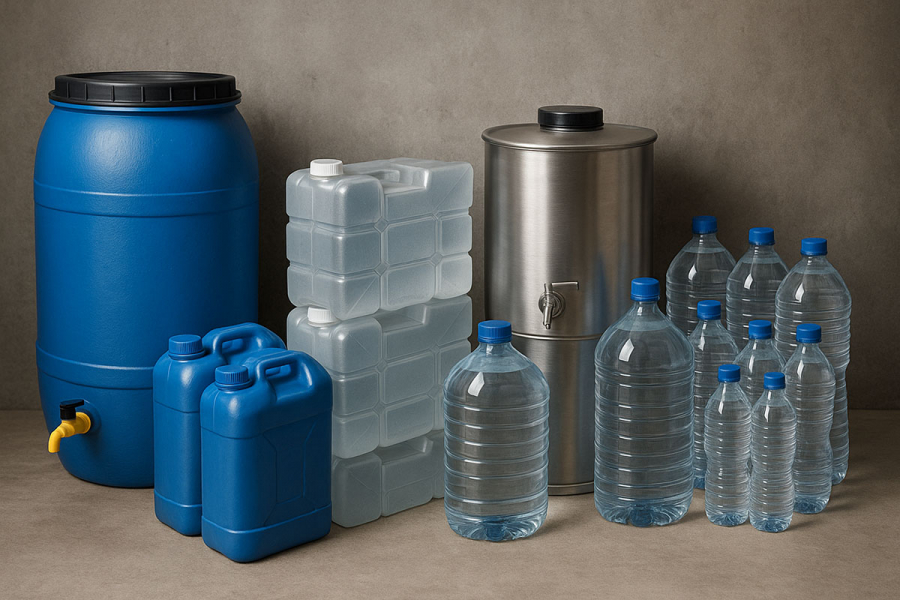
Water containers
While water itself endures, the vessels we use to contain it do not. When selecting your water storage containers, envision yourself constructing a secure vault for an invaluable treasure. Just as not all banks offer equal security, there can be no compromises when it comes to safeguarding your water supply.
Here are the most common and effective container options
Large Barrels (100–200 liters / 25-55 gallons)
Ideal for: Homes with basements or dedicated storage areas, particularly in rural or suburban settings.
Pros: Offer significant volume, often durable, and can be very long-lasting.
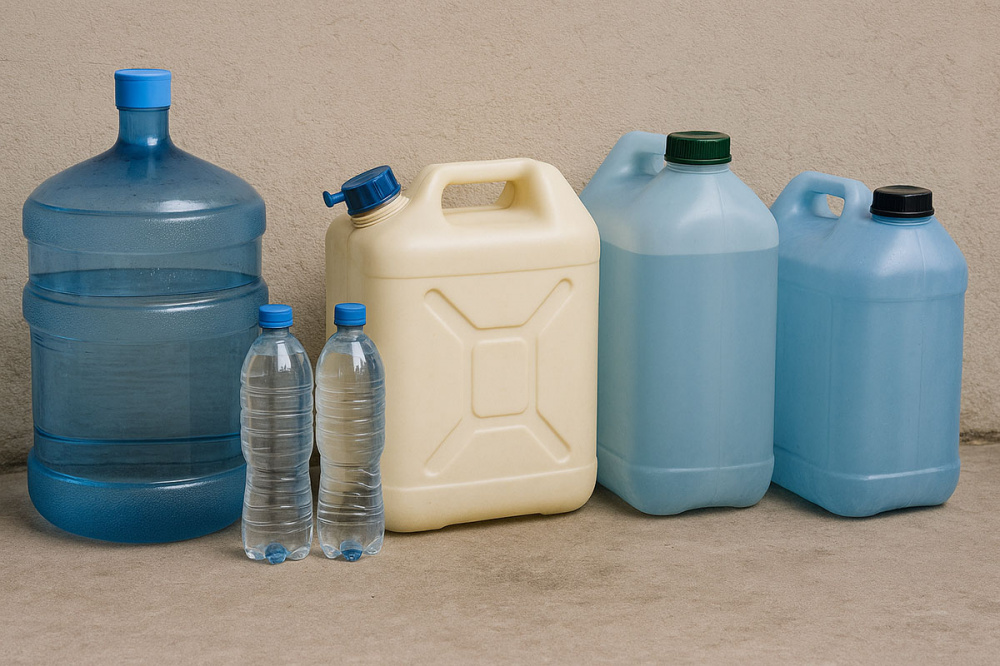
Jerrycans / Water Jugs (10–30 liters / 2.5-8 gallons)
Ideal for: Urban environments and situations requiring portability.
Pros: Versatile, relatively easy to transport and handle, and fit well in smaller spaces.
Smaller Bottles (1–5 liters / 0.25-1.3 gallons)
Ideal for: Daily use and distribution, or as part of an emergency go-bag.
Pros: Convenient for individual servings.
Cons: Not optimal for very long-term, large-volume storage due to space inefficiency and potential material degradation over extended periods.
Stackable Water Bricks / Foldable Reservoirs
Ideal for: Maximizing space in apartments or small homes.
Pros: Designed for efficient stacking, easily moved, and flexible for confined storage areas.
Stainless Steel Tanks
Ideal for: Those seeking the ultimate in durability and purity.
Pros: Although a significant investment, they are incredibly robust, do not absorb odors, and can last for decades without degrading.
"Choosing your water container is akin to selecting a safe. Water tolerates no errors."
Advanced methods for maintaining water quality
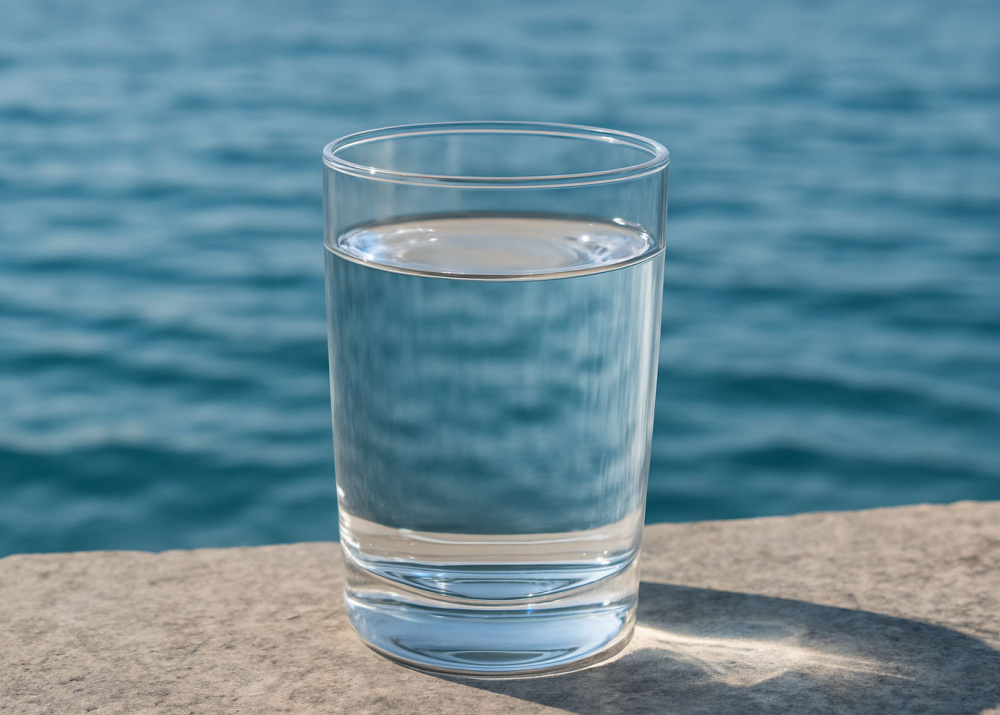
Even the most pristine water, over extended periods, can subtly alter in taste or develop an undesirable odor. To preempt these changes and preserve its quality without the burden of frequent replacement, several proactive methods can be employed.
Consider these strategies to enhance your water's longevity
Boiling before storage
The simplest and most effective method to neutralize bacteria and other pathogens before sealing the water in its containers.
Chlorine drops
A few drops of plain, unscented household bleach (1-2 drops per liter) can sanitize and extend water's shelf life for up to six months. Ensure it's not scented or "splashless."
Water purification tablets
Products like Aquatabs or Micropur are designed to purify water without significantly altering its taste, offering a reliable chemical treatment for stored water.
A silver coin
An age-old practice, placing a pure silver coin in stored water is believed to inhibit the growth of microorganisms due to silver's oligodynamic effect.
Periodic agitation
For water stored in sealed containers, gently stirring or rotating the containers every few weeks can help "aerate" and revitalize the water, preventing staleness.
Alternative water sources
Beyond simply storing water, true resilience in preparedness means cultivating a 'Plan B' for replenishment. If you're envisioning long-term self-sufficiency or fortifying against prolonged disruptions, understanding and implementing alternative water acquisition methods is paramount. Stored water is a finite resource; sustainable living demands the ability to replenish it.
Here are viable alternatives for long-term water security
Rainwater harvesting
Implement a system to collect rainwater, coupled with robust filtration. This can provide a continuous supply for technical uses like flushing toilets or gardening, and with advanced filtration, even for drinking.
Wells or boreholes
For those in private homes with access to groundwater, a personal well or borehole offers a powerful, independent water source, provided it's properly maintained and tested.
Advanced membrane filters
Utilizing filters with reverse osmosis or ultrafiltration membranes can achieve water purity levels approaching distillation, effectively removing a vast array of contaminants for safe consumption.
Portable outdoor filters (survival filters)
Essential for emergency kits, these compact filters allow you to safely drink from natural sources like rivers, lakes, or streams when conventional supplies are unavailable, offering immediate access to potable water.