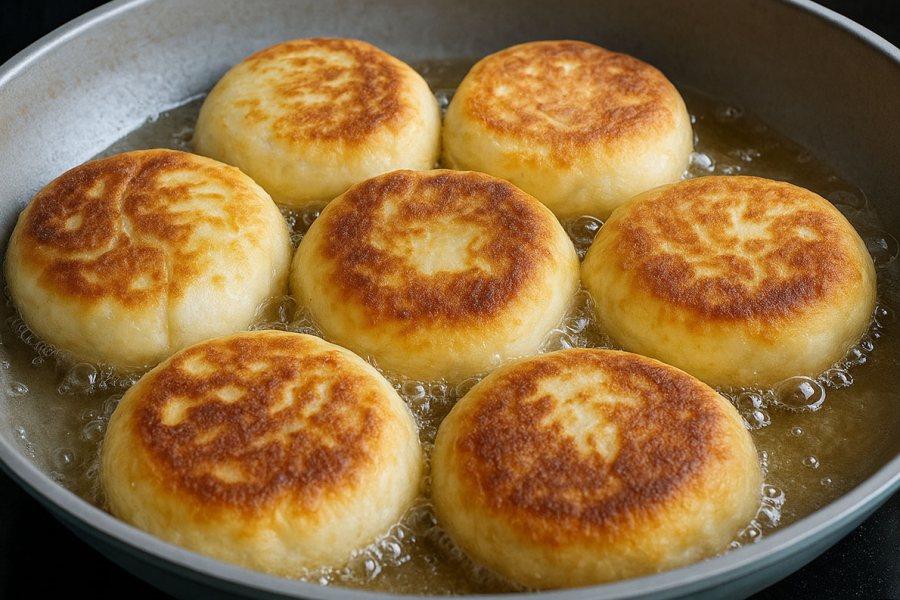
Syrniki evoke cherished memories: the warmth of a childhood kitchen, the comforting aroma of fresh baking, and the pure joy of that first tender bite. Yet, achieving the perfect syrnik can be elusive. Too often, instead of beautifully round, golden-brown discs, we're left with a shapeless, soft, and frustratingly flat creation that dampens the morning's mood.
But here's the good news: crumbly, "floating" syrniki are not a culinary curse, but merely the consequence of a few common missteps. These are easily corrected once you know what to look for. Remember, cooking isn't magic; it’s a blend of love, logic, and a dash of patience.
Syrniki are like people: they thrive on the right conditions, tenderness, and attention.
Let's uncover the exact factors that prevent syrniki from being both firm and tender, and what you can do to ensure they are always perfect.
Reason 1
Overly moist cottage cheese
This is often the root cause: cottage cheese with an excess of liquid. If your cheese resembles cream or sour cream, it simply won't hold together without a substantial amount of flour. And too much flour, in turn, inevitably compromises the delicate flavor.
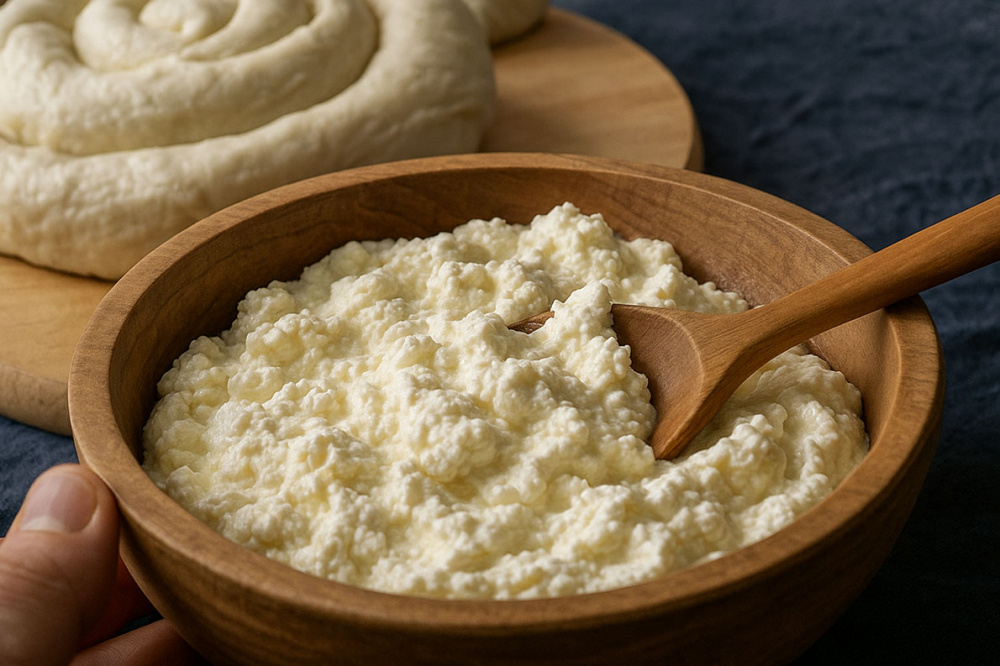
The ideal cottage cheese for syrniki should be crumbly, tender, and distinctly granular. It might be tempting to reach for soft, creamy cheese, hoping for extra tenderness, but in practice, this creates a runny mixture that’s impossible to manage.
What to do
- Opt for granular cottage cheese with 5-9% fat content.
- Drain any excess liquid through cheesecloth or a thin towel.
- Allow the cheese to "breathe" on a sieve for 15-20 minutes.
- Incorporate a small amount of semolina; it gently binds the structure.
Imagine cottage cheese that holds its shape in soft clumps rather than flowing. This is the foundation of perfect syrniki. The drier the cheese, the more tender the result, requiring less flour.
Reason 2
Too much flour or semolina
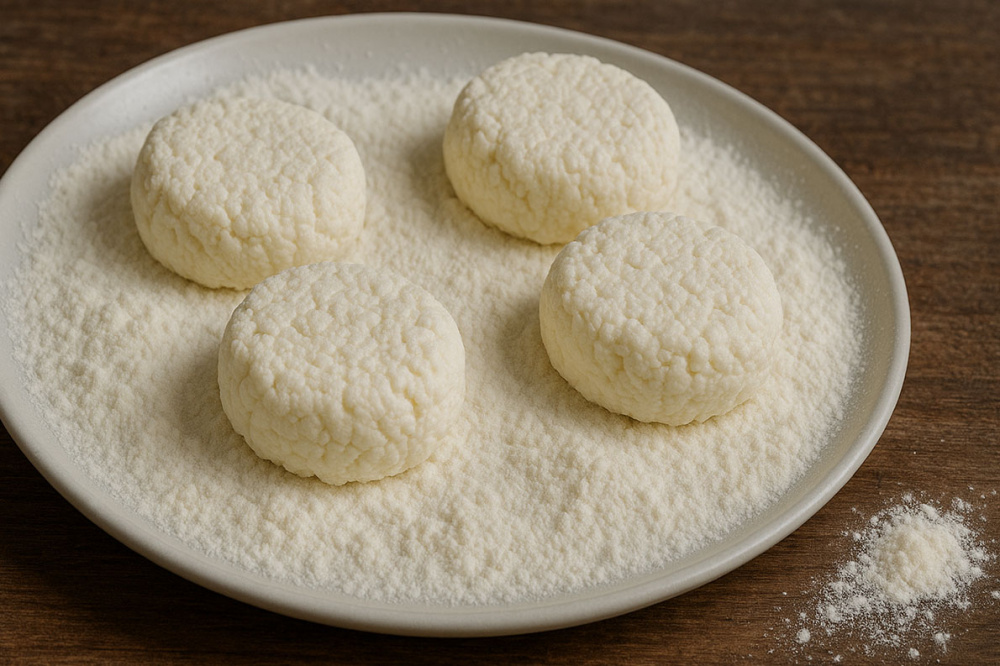
When the dough feels too wet, the immediate impulse is often to "just add more flour." But this common mistake doesn't save the syrniki; it transforms them into dense, rubbery "dough patties." They become heavy, chewy, and can even crack or disintegrate further during frying.
What to do
- Add the absolute minimum amount of flour.
- Introduce semolina in tiny portions, allowing it time to swell.
- Avoid "overworking" the dough; keep it light and tender.
Less flour means more tenderness and the true, natural taste of cheese.
Consider this: you are not making dumplings or pancakes. Syrniki are meant to taste primarily of cottage cheese, not dough. This is why delicacy is crucial-like a dance where every movement matters.
Reason 3
Incorrect cheese choice
Even visually similar types of cottage cheese can behave very differently in the pan. Cheese containing stabilizers or cheap, paste-like products are simply not designed for syrniki and will refuse to cooperate.
Choose cottage cheese that smells distinctly of milk, has a pleasant tangy aroma, and a crumbly texture. Homemade or farm-fresh cheese is always the best option. If the cheese is a bit too dry, it’s an easy fix with a spoonful of sour cream.
What to do
- Select natural cottage cheese without additives.
- Avoid overly sour or "rubbery" cheeses.
- Adjust consistency gently with a small addition of fat.
Remember: syrniki are, above all, about the cheese. It plays the starring role, and everything else is merely an accompaniment.
Reason 4
Overly liquid batter
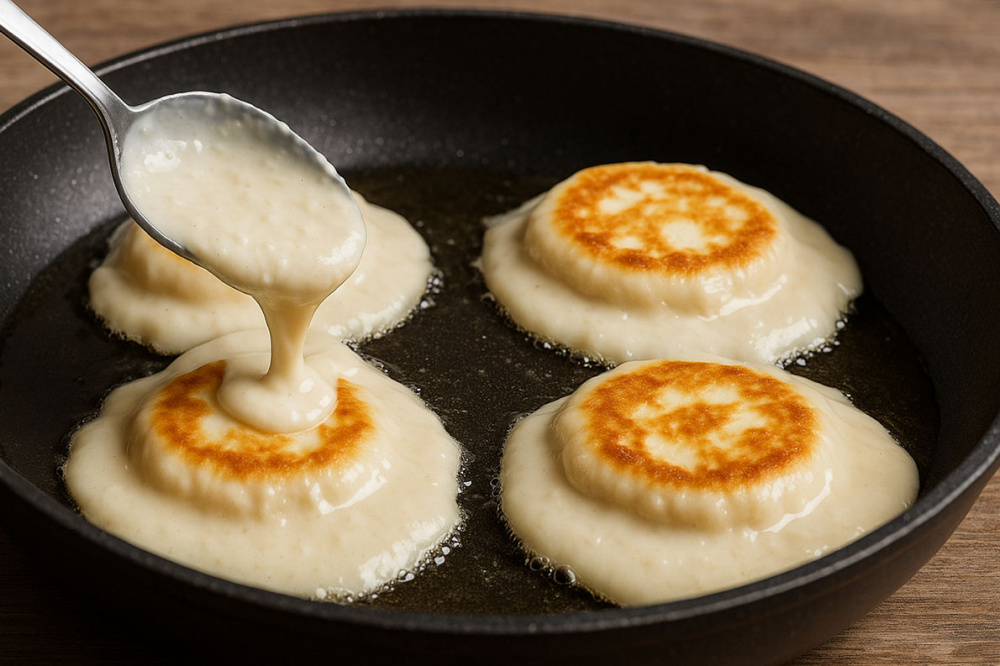
Often, this error stems from a desire to make syrniki exceptionally fluffy. We add too many eggs, too much sour cream, too much sugar-and suddenly, the mixture becomes runny. Such syrniki not only lose their flavor but also their ability to hold shape.
What to do
- 1 egg per 300-400g of cottage cheese is ideal.
- Less sugar equals better structure.
- Do not over-blend the mixture into a cream; maintain its granular texture.
The perfect batter is soft and tender, yet not excessively sticky. It resembles plasticine: it holds its form but isn’t stiff.
Reason 5
Incorrect frying temperature
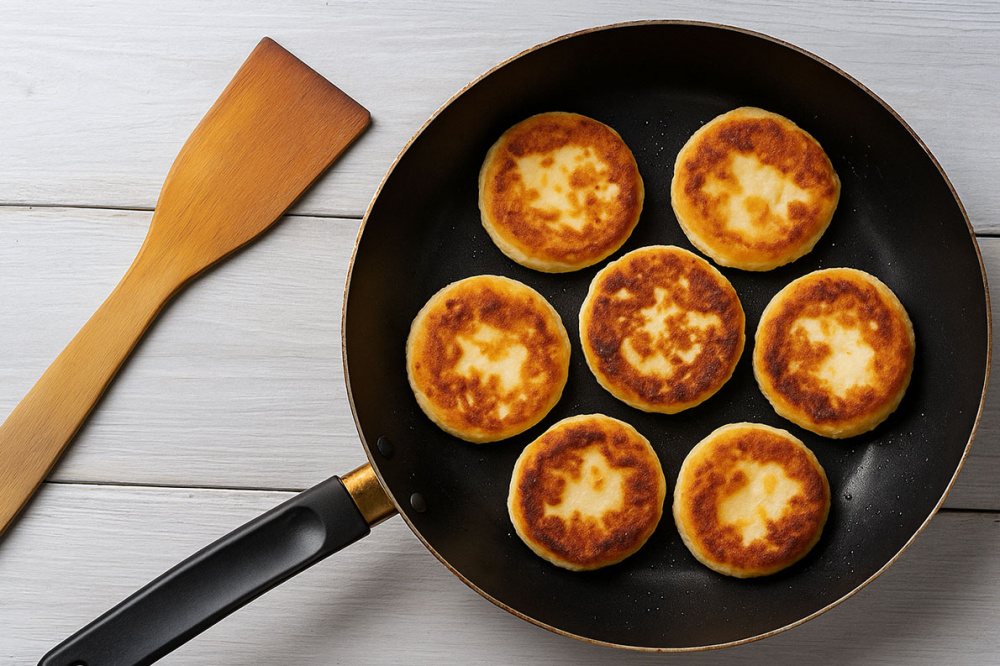
Temperature is like human mood: if it’s not right, everything goes wrong. On a cold pan, syrniki "spread"; on a too-hot pan, they burn on the outside and remain raw inside.
What to do
- Fry over medium heat.
- Use a thick-bottomed pan.
- Flip only when the bottom is already golden.
- If necessary, finish baking in the oven at 285-320 °F (140-160 °C).
Syrniki love calm and balance-don’t rush and don’t overheat.
Imagine a cozy evening where everything is done unhurriedly. The same applies to syrniki-haste rarely brings beauty.
Reason 6
Over-mixing the dough
A mixer is the enemy of syrniki. Over-beaten dough becomes runny, stringy, and starts to "escape" its shape. That natural, rustic texture simply disappears.
What to do
- Mix gently with a fork or spoon.
- Preserve the natural structure of the cottage cheese.
- Form lightly and tenderly, without excessive squeezing.
The mixture should feel alive. When it retains its texture, syrniki turn out airy and tender, just like the homemade ones from childhood.
Reason 7
Excess sugar
Sugar is a deceptive ingredient. It "pulls" moisture from the cottage cheese, making the dough wet and unstable. Sweet doesn't necessarily mean lots of sugar.
What to do
- Use minimal sugar in the base recipe.
- Sweeten after serving
With honey, jam, or berries.
- Add vanilla, raisins, or citrus zest for aroma instead.
Syrniki love balance: sweetness is an accent, not the foundation.
Less sugar results in a more delicate flavor, a cleaner aroma, and a beautifully stable form.