- Percentage of a number
- How to calculate a percentage of a number - a formula to remember forever
- Where the percentage of a number calculator is used and why everyone needs it
- Examples of everyday percentage calculations
- How to calculate percentages manually if a calculator isn
- Common percentage calculation mistakes and how to avoid them
- Why understanding percentages is crucial
Percentage of a number
To truly grasp percentages, imagine an apple, meticulously sliced into a hundred perfect wedges. Each single wedge represents one percent — a modest but distinct fragment of a grander whole. Suddenly, what might seem like intricate mathematics transforms into a remarkably simple visual: every slice is a component, capable of being added or subtracted to achieve a desired outcome.
For centuries, the world has embraced percentages as the universal language for expressing change and proportion: the escalation of prices, enticing store discounts, critical bank interest rates, the revealing outcomes of public polls, or the stark statistics of success and failure. We encounter them daily, and often, without conscious realization, they subtly yet powerfully steer our choices.
Understanding a percentage of a number empowers us to discern the magnitude of change within a whole, to quantify the exact share a part holds, to evaluate the true profitability of a purchase, or to measure the surge in earnings. The more frequently we engage with this fundamental tool, the clearer the inherent logic of numbers becomes.
Percentages demand no convoluted algorithms — merely an intuitive grasp of their core principle. This foundational knowledge, once acquired, truly remains with an individual for a lifetime.
How to calculate a percentage of a number - a formula to remember forever
At the very heart of all percentage calculations lies one elegantly simple formula. It possesses such inherent clarity that often, a single utterance is enough for it to embed itself in your memory, perhaps enduring forever:
Number × Percent / 100 = Result
This formula operates flawlessly, every time, in any conceivable scenario, with any number — be it large or small, fractional or whole. It is as universally applicable as a master key designed to unlock every door.
Imagine facing the task of calculating a discount, a sales tax, or a service commission. Where previously you might have felt a flicker of confusion, everything now distills down to this single, unwavering rule.
For instance:
To find 12 percent of 600:
600 × 12 / 100 = 72
It becomes clear that a percentage is, quite simply, a specified portion we extract from a larger whole. And the more you practice, the faster your mind begins to perceive these computations not as a chore, but as an engaging mental exercise.
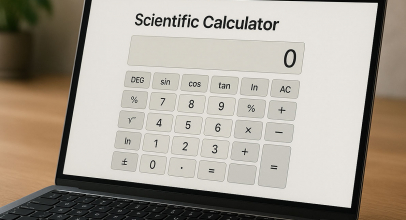
This inherent simplicity is precisely why a percentage of a number calculator proves so invaluable: it executes this formula instantaneously, devoid of errors, conserving precious time and undeniably simplifying life.
Where the percentage of a number calculator is used and why everyone needs it
You might be inclined to think that percentages are the exclusive domain of accountants or financial analysts. However, this perception is far from accurate. In reality, almost every individual encounters daily situations that are effortlessly resolved with the aid of a percentage calculator.
The array of such scenarios is vast and varied:
-
Calculating a discount on a purchase
-
Determining a bonus or raise to your salary
-
Working out the interest earned on a savings deposit
-
Understanding the true cost of a loan
-
Finding a bank's commission fee
-
Comparing the terms and benefits of different promotions
-
Calculating applicable taxes
-
Evaluating the potential effectiveness of an investment
When a percentage of a number calculator is readily available, each of these actions transforms into a calculation that is not only easy and understandable but also remarkably efficient.
And considering how frequently marketers strategically manipulate figures to make discounts appear more compelling, the ability to swiftly calculate percentages becomes not merely a useful tool but an indispensable life skill.
«In a world where everything is increasingly expressed in percentages, a calculator emerges as your foremost instrument of clarity.»
Examples of everyday percentage calculations
To truly internalize the logic of percentages, it is profoundly beneficial to explore a few illustrative examples. They are deceptively simple, yet remarkably revealing in their demonstration of the underlying principle.
Consider these scenarios:
-
Find 15 percent of 800
800 × 15 / 100 = 120 -
Find 9 percent of 1450
1450 × 9 / 100 = 130.5 -
Find 50 percent of 300
300 × 50 / 100 = 150
These straightforward examples vividly illustrate that the core formula consistently yields accurate results, regardless of the specific situation.
Now, let's consider a slightly more intricate example:
Find 2.5 percent of 980
980 × 2.5 / 100 = 24.5
Even when dealing with fractional percentages, no obstacles arise — the formula retains its inherent simplicity and universal applicability.
It is precisely this simplicity that fuels the widespread popularity of a percentage of a number calculator — it conserves valuable time, eradicates potential errors, and facilitates rapid, informed decision-making.
How to calculate percentages manually if a calculator isn't at hand
Occasionally, we might find ourselves in circumstances where immediate access to the internet, a phone, or a dedicated calculator is unavailable. Yet, even in such moments, percentages can be computed using mental arithmetic or with a simple pen and paper.
A straightforward method:
Divide the original number by 100 — this will give you the value of one percent.
Multiply that result by the desired percentage.
For example:
To find 7 percent of 350:
350 / 100 = 3.5 (this is one percent)
3.5 × 7 = 24.5
And just like that — the percentage is found.
This technique is particularly valuable as it provides an internal glimpse into the process. It cultivates a refined sense of numbers, fostering a deeper comprehension of how percentage logic truly operates. With consistent practice, these manual calculations can become remarkably swift and almost intuitive.
Common percentage calculation mistakes and how to avoid them
While percentages appear deceptively simple, there are several common pitfalls that individuals frequently encounter.
Key errors include:
-
Forgetting to divide the percentage by 100
-
Confusing "finding a percentage of a number" with "increasing a number by a percentage" (e.g., 20% of X vs. X + 20% of X)
-
Misinterpreting discount structures — a 20 percent discount on a price is not always intuitively clear without calculation
-
Overlooking the correct order of operations in more complex formulas
-
Rounding numbers incorrectly, especially in financial contexts
Avoiding these errors is greatly facilitated by consistent practice, a firm grasp of the fundamental formula, and the judicious use of a percentage of a number calculator, which effectively minimizes the impact of human error.
«A percentage embodies precision, a quality that is born directly from the elegant simplicity of its formula.»
Why understanding percentages is crucial
Percentages are akin to the rhythm in music: often imperceptible, yet fundamentally defining. Without them, it becomes impossible to truly discern the harmony of finance, comprehend the nuances of change, or accurately predict future outcomes.
When an individual truly comprehends percentages, they begin to perceive the intricate, often hidden connections: understanding the forces behind price increases, the rationale for fluctuating interest rates, the genuine value of a promotional offer, and the subtle distinctions between competing propositions.
The ability to work confidently with percentages transcends mere skill; it evolves into a distinct way of thinking.
It paves the path to robust financial literacy, fostering independence and self-assurance. Percentages illuminate the underlying mechanisms of growth, economics, investments, tempting discounts, and undeniable advantages.
It is, unequivocally, a language one must master to navigate the complexities of the modern world with competence and clarity.