
- The science behind geomagnetic storms
- Historical encounters and the washington, d.c. context
- Potential impacts on washington, d.c.
- Interesting facts about magnetic storms and d.c.
- Mitigation and preparedness in the nation
- The atmospheric spectacle awaiting d.c.
- Beyond the immediate impact long-term considerations
Washington, D.C., a city synonymous with power, policy, and history, rarely considers the celestial forces that could subtly, or dramatically, influence its daily rhythm. While its iconic monuments stand resolute against terrestrial winds and political tides, a more elusive phenomenon originating millions of miles away holds the potential to stir invisible currents within its very fabric: magnetic storms. These colossal energetic eruptions from the sun’s volatile surface, traveling across the vast expanse of space, can interact with Earth's protective magnetic field, creating what we know as geomagnetic storms. For a city so reliant on complex technological networks and precise communication, understanding the nature of these cosmic disturbances is not merely an academic exercise but a crucial aspect of modern resilience. Far from the typical meteorological concerns, magnetic storms present a unique challenge, capable of disrupting everything from the subtle hum of the power grid to the intricate dance of satellite communications, echoing a silent, yet potent, celestial dialogue with the capital’s intricate infrastructure. Their potential for widespread impact demands a careful examination, especially for a city so vital to national and international affairs.
The science behind geomagnetic storms
At the heart of every magnetic storm lies the sun, our star, a colossal fusion reactor whose turbulent surface constantly ejects plasma and energy into the solar system. While this celestial engine sustains life, its occasional outbursts send ripples through the heliosphere that can profoundly affect Earth. Understanding these mechanisms is the first step in appreciating their potential reach, even to a bustling urban center like Washington, D.C., where unseen cosmic forces can translate into tangible terrestrial challenges.
Understanding solar flares and coronal mass ejections
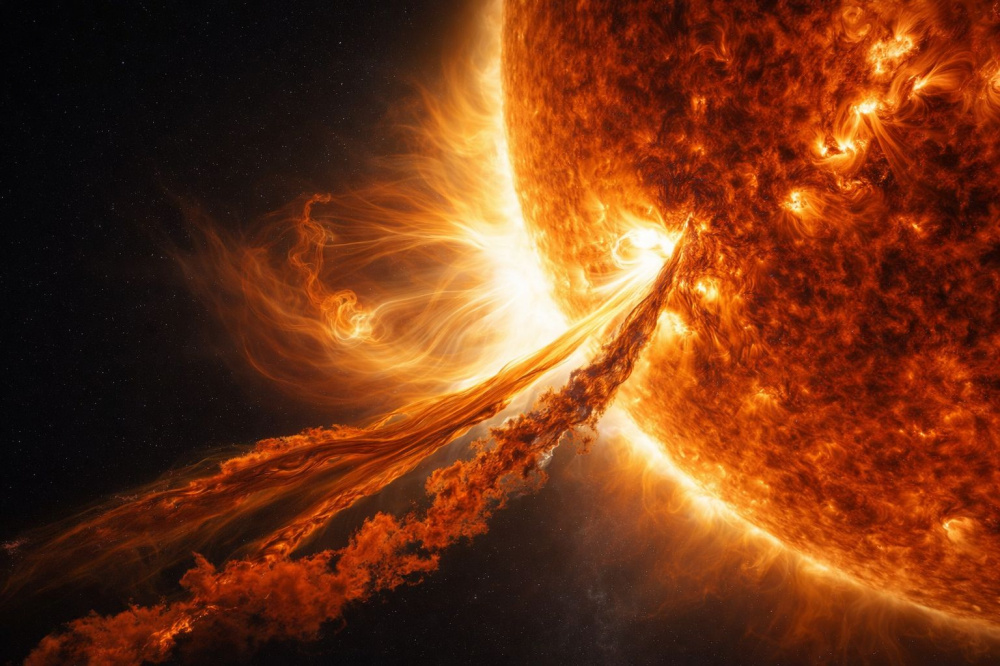
The primary instigators of geomagnetic storms are two distinct, yet often related, solar phenomena: solar flares and coronal mass ejections. Solar flares are sudden, intense bursts of radiation emanating from the sun's surface, releasing energy equivalent to millions of hydrogen bombs in mere minutes. While the electromagnetic radiation from flares travels at the speed of light, reaching Earth in about eight minutes, its direct impact on ground-based infrastructure is minimal, primarily affecting high-frequency radio communications on the sunlit side of Earth. The real orchestrators of severe geomagnetic storms are coronal mass ejections, or CMEs. These are massive expulsions of plasma and magnetic field from the sun's corona, weighing billions of tons, hurtling through space at speeds ranging from a few hundred to over two thousand kilometers per second. When a CME is directed towards Earth, it can take anywhere from one to five days for this charged particle cloud to traverse the 93 million miles and collide with our planet's magnetosphere, setting the stage for a magnetic storm capable of shaking Earth’s invisible shield.
Earth's magnetic shield and its vulnerability
Our planet is encircled by an invisible, yet immensely powerful, magnetic field, generated by the convective currents of molten iron in its outer core. This magnetosphere acts as a vital shield, deflecting the constant stream of charged particles known as the solar wind. When a CME strikes this shield, especially if its magnetic field is oriented opposite to Earth's, it can cause the magnetosphere to compress, reconfigure, and even briefly 'open up' like a cosmic valve. This allows solar wind particles to penetrate deep into the upper atmosphere, particularly at the polar regions. This interaction transfers energy from the solar wind into the magnetosphere, leading to fluctuating magnetic fields and inducing powerful electrical currents within the Earth itself. It is these geomagnetically induced currents (GICs) that pose the greatest threat to ground-based infrastructure, regardless of geographical latitude, making even a mid-latitude city like Washington, D.C., susceptible to their effects, as these currents seek the path of least resistance through conductive systems.
The Kp-index and measuring storm intensity
To quantify the global intensity of geomagnetic storms, scientists use the Kp-index, a scale ranging from 0 (very quiet) to 9 (extremely severe). This index is derived from magnetometer readings worldwide, reflecting disturbances in the Earth's magnetic field over a three-hour period. A Kp-value of 0-3 signifies minor or no disturbance, while Kp-values of 4-6 indicate active to strong storms. Kp-values of 7-9 represent severe to extreme storms, capable of causing widespread disruptions. While the stunning aurora borealis is typically seen at high latitudes (Kp 5-6), extremely powerful storms (Kp 7-9) can push the auroral oval equatorward, making a rare and breathtaking appearance possible even over cities like Washington, D.C., transforming its night sky into a canvas of otherworldly hues, a stark reminder of the sun's distant power and its capacity for celestial artistry.
Historical encounters and the washington, d.c. context
While modern technology makes us more vulnerable, geomagnetic storms are not new phenomena. Humanity has experienced these solar outbursts for millennia, albeit with vastly different consequences in pre-technological eras. For Washington, D.C., historical records offer glimpses, though often indirect, into how past celestial events might have manifested over the capital, showcasing a continuity of cosmic influence.
Echoes of the Carrington event
The most famous and powerful geomagnetic storm on record is the Carrington Event of 1859. This extreme solar event caused widespread telegraph disruptions, even setting some telegraph offices ablaze, and produced auroras visible as far south as the Caribbean. While detailed, localized accounts for Washington, D.C. itself are scarce regarding direct infrastructure impact (telegraph lines were nascent), historical newspaper archives from the era across the Eastern Seaboard confirm that the auroral displays were spectacular and unprecedentedly low in latitude. Imagine the sight over the nascent U.S. Capitol Building, then still under construction with its dome nearing completion, as vibrant red and green lights danced across the Potomac sky, witnessed by a generation unfamiliar with such wonders. This event serves as a stark historical benchmark, illustrating the sheer power of an extreme space weather event and the potential for a modern recurrence to dwarf 19th-century inconveniences.
"The sun's temper tantrums are an ancient spectacle, but our modern world offers a far more delicate canvas for their disruptive artistry."
Minor disturbances and local observations
Throughout the 20th and 21st centuries, numerous less severe geomagnetic storms have impacted Earth. While these typically don't generate headline-grabbing aurora over D.C., they do cause measurable fluctuations in the Earth's magnetic field that are recorded by geomagnetic observatories, including those in regions relatively close to the capital. These minor disturbances might cause subtle shifts in high-frequency radio communications, slight variations in power grid operations, or affect satellite signals, often going unnoticed by the general public. However, for scientific researchers and grid operators, these events provide valuable data points, helping to refine models and improve preparedness. The quiet persistence of these lesser storms underscores the continuous, though often invisible, interaction between our planet and its star, a constant reminder of the dynamic cosmos that envelops Washington, D.C., subtly shaping the electromagnetic environment in which its technological heart beats.
Potential impacts on washington, d.c.'s infrastructure
Washington, D.C., as the nexus of American governance and a highly developed urban area, possesses a unique profile of vulnerabilities to severe magnetic storms. Its reliance on advanced technology for everything from national security to daily commuter traffic means that disruptions could have far-reaching consequences, extending well beyond the city limits and potentially impacting national stability.
The power grid and cascading failures
Perhaps the most concerning threat posed by a major geomagnetic storm is to the electric power grid. When strong magnetic field fluctuations induce geomagnetically induced currents (GICs) in long conductors like transmission lines, they can cause transformers, particularly high-voltage transformers crucial for long-distance power transmission, to saturate and overheat. This can lead to widespread power outages and even permanent damage to equipment. In Washington, D.C., such an outage would not only plunge the capital into darkness but could cripple essential services. Traffic lights would cease, metro systems would halt, critical government buildings would switch to limited generator power, and communication networks would struggle as backup power systems are depleted. The sheer density of critical infrastructure in D.C. means that a localized outage could quickly cascade, affecting federal agencies, diplomatic missions, and the millions who live and work in the metropolitan area, creating a complex emergency management challenge.
GPS and satellite communication disruptions
Modern society, and particularly a sophisticated capital city, is profoundly dependent on satellite technology. Global Positioning System (GPS) signals are vital for navigation, timing, and synchronization across countless applications, from financial transactions to emergency services. Geomagnetic storms can heat and expand Earth's upper atmosphere, causing GPS signals to scatter, experience significant errors, or even temporary loss. Furthermore, satellites themselves are vulnerable to increased radiation doses and direct electrical charging, which can lead to malfunction or permanent damage to sensitive electronics. For Washington, D.C., this means potential disruptions to air traffic control, precision timing for cybersecurity systems, critical communications for law enforcement, and even the everyday functions of ride-sharing apps and delivery services. The integrity of the nation’s defense and intelligence apparatus, heavily reliant on satellite communications, would also face unprecedented challenges, highlighting the invisible threads that tie the capital to orbiting technology.
Aviation and transportation systems
The Washington metropolitan area is served by several major airports, including Ronald Reagan Washington National Airport and Dulles International Airport, which handle millions of passengers annually. Aviation relies heavily on GPS for navigation, radio communications, and ground-based radar systems, all of which can be affected by severe space weather. Air traffic controllers could face signal degradation, pilots might experience instrument malfunctions, and even routine flight paths could be altered or delayed. Beyond air travel, the region’s extensive road networks and metro system, while less directly susceptible to GICs than the power grid, depend on electronic signaling, communications, and power supply for their operation. A significant magnetic storm could create widespread chaos in transportation, stranding commuters, delaying emergency responders, and isolating segments of the population, thereby impeding the seamless movement that defines a modern capital.
Government operations and data integrity
As the seat of the U.S. federal government, Washington, D.C. is home to countless agencies, data centers, and critical command-and-control facilities. These operations are predicated on reliable power, secure communications, and accurate data. A severe geomagnetic storm could compromise all three. Data centers, while often equipped with backup power, are susceptible to GICs affecting long network cables or sudden power fluctuations. The electromagnetic interference from a storm could also corrupt data transmission or storage, leading to data loss or integrity issues that could have profound national security implications, from financial records to intelligence archives. For an administration that relies on instantaneous global communication and resilient data networks, a major magnetic storm represents a silent, yet formidable, threat to the very continuity of governance, demanding robust protective measures and agile response plans.
Interesting facts about magnetic storms and d.c.'s preparedness
- While often associated with high latitudes, an extreme geomagnetic storm could produce auroras visible from Washington, D.C., transforming the skyline into a celestial spectacle rarely witnessed so far south. The last time significant aurora was widely reported over D.C. was during the 1859 Carrington Event.
- The U.S. government, with its headquarters in D.C., officially recognized space weather as a significant national security threat in 2016 through an executive order, prompting increased interagency coordination and research into mitigation strategies across various federal departments.
- D.C.'s metro system, while powered by the regional grid, could face unique challenges during an outage, including passenger evacuation from underground tunnels and the complete cessation of services, requiring robust contingency plans specific to such an event.
- Some of the earliest observations of Earth's magnetic field and its variations were made centuries ago, long before the solar connection was understood, highlighting humanity's ancient curiosity about these invisible forces that shape our planet.
- Scientists estimate that the probability of another Carrington-level event impacting Earth in the next decade is approximately 12%, a figure that underscores the urgency of preparedness for vulnerable regions like Washington, D.C., given the modern technological landscape.
- The National Oceanic and Atmospheric Administration (NOAA) Space Weather Prediction Center (SWPC), though located in Boulder, Colorado, provides critical forecasts and warnings that would directly inform emergency response efforts in Washington, D.C., bridging the gap between solar science and earthly resilience.
Mitigation and preparedness in the nation's capital
Recognizing the multifaceted vulnerabilities, significant efforts are underway, both nationally and locally, to bolster Washington, D.C.'s resilience against the threat of severe magnetic storms. This proactive stance reflects a growing understanding that preparation is paramount in an increasingly interconnected world, where unseen forces can have very real consequences.
Governmental strategies and interagency coordination
The federal government, headquartered in D.C., plays a pivotal role in coordinating national space weather preparedness. Initiatives involve agencies such as NASA, NOAA, the Department of Homeland Security (DHS), and the Department of Energy (DOE). These efforts focus on improving space weather forecasting models, sharing intelligence, and developing comprehensive response plans. For Washington, D.C., specifically, this means ensuring that critical federal operations have robust backup systems, redundant communication channels, and clearly defined protocols for continuity of government during an extreme event. Regular drills and simulations are vital to test these plans, ensuring that the intricate web of federal agencies can maintain essential functions even in the face of widespread disruption, safeguarding national security and public welfare.
"Resilience against the unseen hand of solar fury is not just a technological challenge, but a testament to human foresight and collaborative spirit."
Technological safeguards and grid hardening
Protecting the power grid, the most vulnerable link, involves several technological safeguards. Utilities serving the D.C. metropolitan area are increasingly implementing measures to harden their infrastructure. This includes installing neutral-blocking devices on transformers to mitigate the impact of GICs, maintaining strategic reserves of spare high-voltage transformers (which are expensive and time-consuming to replace), and developing advanced monitoring systems to detect geomagnetic disturbances in real-time. Investments in smart grid technologies, while offering many benefits, also require careful consideration of their susceptibility to space weather, ensuring that they contribute to resilience rather than introduce new vulnerabilities. The goal is to create a more robust and adaptable power delivery system capable of withstanding the induced currents of a severe magnetic storm with minimal long-term damage, ensuring the capital's continued operation.
Public awareness and emergency protocols
Beyond federal and utility-level actions, public awareness is a critical component of overall preparedness. Educating the residents and workforce of Washington, D.C. about the potential impacts of space weather allows individuals to take personal responsibility for emergency planning, much like preparing for a hurricane or severe winter storm. This includes having emergency kits, establishing communication plans, and understanding how to access information during widespread outages. Local emergency management agencies in D.C. are developing and refining protocols that address the unique challenges of a space weather event, distinct from other natural disasters. These protocols cover everything from managing traffic in a blackout scenario to ensuring the delivery of essential services and maintaining public order, transforming potential chaos into manageable adversity through informed community action.
The atmospheric spectacle awaiting d.c.
While the focus on magnetic storms often centers on their disruptive potential, there is another, far more visually stunning, aspect to these celestial interactions: the aurora borealis. Though typically a phenomenon reserved for the Arctic and Antarctic circles, an exceptionally powerful geomagnetic storm can paint the skies over much lower latitudes, offering a breathtaking and rare display to the residents of Washington, D.C., a city not accustomed to such ethereal visions.
Chasing the northern lights in unusual latitudes
The vibrant curtains of light, the aurora borealis, are a direct result of solar particles interacting with gases in Earth's upper atmosphere. As these charged particles from the sun collide with oxygen and nitrogen atoms, they excite them, causing them to emit light in various colors, predominantly green and red. During severe geomagnetic storms (Kp-index 7 or higher), the auroral oval, which normally encircles the magnetic poles, expands significantly towards the equator. This expansion is what makes the impossible seem possible, bringing the ethereal dance of the Northern Lights within view of cities far removed from their usual domain. For Washington, D.C., such an event would be profoundly rare, likely only occurring during a storm on the scale of the Carrington Event or slightly less, but the possibility, however remote, exists, adding a layer of cosmic wonder to the often-serious atmosphere of the capital, a fleeting gift from the sun.
A celestial canvas over historical landmarks
Imagine the iconic monuments of Washington, D.C.-the Lincoln Memorial, the Washington Monument, the U.S. Capitol-silhouetted not against the familiar glow of city lights, but under a sky ablaze with shimmering emerald greens, ruby reds, and soft purples. This would be a sight to behold, a moment when the usually bustling, policy-driven city would pause, collectively gazing upwards at a celestial spectacle. It would be a profound reminder of our planet's place within the larger cosmos, connecting the ancient forces of the sun with the very modern heartbeat of a nation's capital. While the practical implications of a severe magnetic storm are significant, the potential for such an artistic and awe-inspiring display of natural beauty adds a unique, almost poetic, dimension to the conversation, transforming a potential threat into a rare, shared moment of wonder and reflection for the inhabitants of Washington, D.C., uniting them under a cosmic glow.
Beyond the immediate impact long-term considerations
The immediate concerns surrounding magnetic storms rightly focus on infrastructure and continuity. However, looking further into the future, the phenomenon prompts broader considerations about humanity's increasing reliance on space-based technology and our place within a dynamic solar system. For a global leader like the United States, and its capital, Washington, D.C., these long-term perspectives are crucial for shaping policy, fostering international cooperation, and investing in scientific advancement.
Future research and technological innovation
Continuous investment in space weather research is paramount. This includes developing more sophisticated solar observatories, both ground-based and space-based, to improve forecasting accuracy and provide earlier warnings of potentially Earth-directed CMEs. Innovations in materials science could lead to the development of more resilient components for power grids and satellites, better able to withstand geomagnetically induced currents and radiation. For Washington, D.C., this means ensuring that federal funding for scientific agencies like NASA and NOAA remains robust, supporting the brain trust that is at the forefront of understanding and mitigating these cosmic threats. The capital serves as the administrative engine for driving these crucial scientific and technological advancements, protecting not just its own interests but the broader global community through sustained intellectual and financial commitment.
International cooperation and global resilience
Magnetic storms are inherently global phenomena, oblivious to national borders. Their impacts, while felt locally, can have cascading effects worldwide, particularly in our interconnected energy and communication networks. Therefore, international cooperation is essential. Sharing space weather data, coordinating preparedness strategies, and jointly investing in mitigation technologies with allies and international partners can significantly enhance global resilience. Washington, D.C., as a hub of international diplomacy, is uniquely positioned to foster these collaborations. Through multilateral agreements and forums, the U.S. can lead efforts to create a more globally robust defense against space weather, ensuring that the vulnerabilities of one nation do not inadvertently compromise the stability of others. This long-term vision positions Washington, D.C. not just as a city preparing for its own safety, but as a crucial player in safeguarding global technological civilization from the powerful, yet distant, forces of the sun, promoting a shared understanding and collective defense.