
Virginia Beach, a city synonymous with sun-kissed shores, vibrant boardwalks, and the rhythmic serenity of the Atlantic, typically conjures images of leisure and natural beauty. Yet, beneath this tranquil veneer lies a dynamic planet, constantly interacting with the cosmos. Among the most awe-inspiring, albeit often unseen, phenomena are magnetic storms – powerful disturbances in Earth’s magnetosphere caused by solar activity. While the average resident might associate solar flares with distant astronomical events, their repercussions can ripple across our planet, potentially touching everything from power grids to navigation systems, even occasionally painting the night sky over Virginia Beach with the ethereal glow of an aurora.
The interplay of solar fury and Earth’s protective magnetic field is a dance of colossal proportions. For Virginia Beach, a sprawling coastal municipality with significant military installations, intricate infrastructure, and a heavy reliance on technology for both its economy and daily life, understanding these cosmic events transcends mere scientific curiosity. It becomes a matter of preparedness, resilience, and appreciating the delicate balance that sustains our modern world, even in a place seemingly so grounded by sand and sea.
The science behind magnetic storms
At the heart of every magnetic storm, or geomagnetic storm as scientists precisely term them, is our sun. This colossal star, 93 million miles away, is not merely a steady source of light and warmth; it is a turbulent, active powerhouse, constantly undergoing explosive events that launch particles and energy across the solar system. These solar eruptions are the primary instigators of the geomagnetic disturbances that can reach Earth.
Solar flares and coronal mass ejections
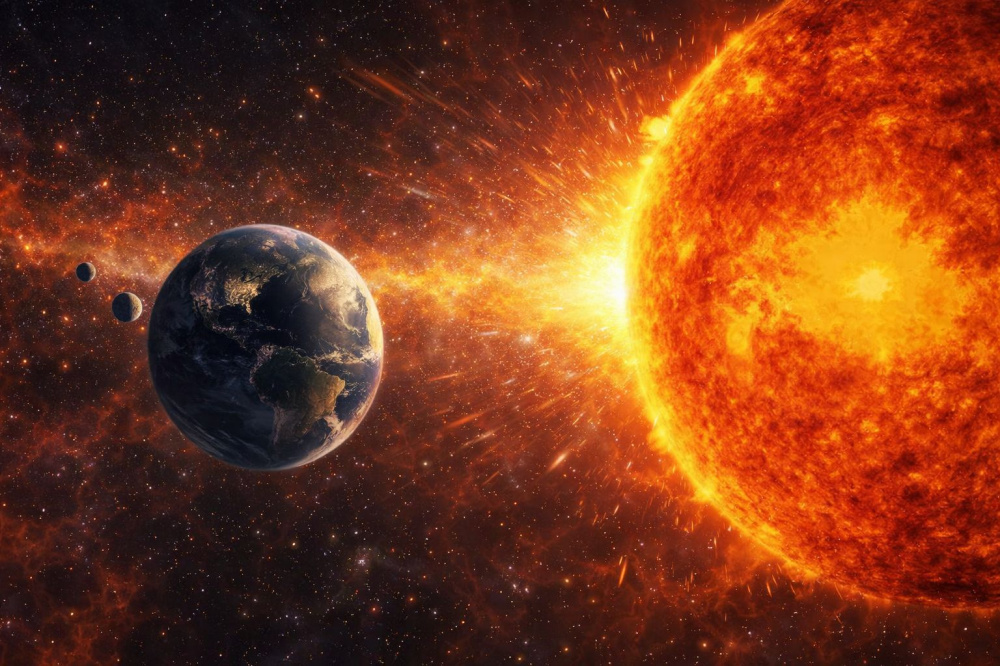
The two main culprits from the sun are solar flares and coronal mass ejections (CMEs). Solar flares are intense bursts of radiation, often releasing energy equivalent to millions of hydrogen bombs in mere minutes. While the electromagnetic radiation from flares reaches Earth in about eight minutes and can cause radio blackouts, it’s the CMEs that pose the more significant threat for magnetic storms. CMEs are gigantic bubbles of plasma and magnetic field, expelled from the sun’s corona at speeds ranging from a few hundred to over a thousand miles per second. These massive clouds of charged particles, when directed towards Earth, are the true harbingers of a geomagnetic storm.
Upon impact with Earth’s magnetic field, a CME’s magnetic field can either align with or oppose our planet's. If the CME's magnetic field is oriented southward, it can effectively merge with Earth’s northward-pointing field, opening a temporary portal through our planet's magnetic shield. This allows a torrent of solar particles and energy to pour into the magnetosphere, igniting the geomagnetic storm. It’s a spectacular cosmic interaction, an unseen collision that sets off a chain reaction across our protective environment.
Earth's magnetic shield
Our planet is encircled by a magnificent, invisible shield – the magnetosphere. Generated by the churning molten iron in Earth’s core, this magnetic field extends far into space, deflecting the constant stream of charged particles known as the solar wind. It’s this shield that largely protects us from the harsh realities of space, preserving our atmosphere and making life on Earth possible. When a powerful CME strikes, it compresses the magnetosphere on the sunward side and stretches it out into a long tail on the night side. The influx of solar particles excites atoms and molecules in Earth's upper atmosphere, particularly at the poles, leading to the breathtaking displays of the aurora borealis and australis.
"Earth's magnetosphere is an extraordinary guardian, a cosmic deflector shield that, while invisible to the eye, constantly battles the sun's tempestuous emissions, ensuring the habitability of our blue marble."
For locations like Virginia Beach, far from the geomagnetic poles, a truly powerful storm is required for aurora visibility, making such an event a rare, almost mythical spectacle on the Atlantic coast. Yet, even without the visual display, the unseen currents and field fluctuations still propagate globally.
Geomagnetic indices and classifications
Scientists use various indices to measure and classify the intensity of geomagnetic storms. The most common is the Kp-index, ranging from 0 (very quiet) to 9 (extremely severe). The NOAA Space Weather Prediction Center also uses a G-scale, from G1 (minor) to G5 (extreme), to categorize geomagnetic storms based on their potential impact. A G1 storm might cause minor power grid fluctuations, while a G5 storm could lead to widespread power outages and significant disruptions to satellite communications. These scales help scientists and infrastructure operators anticipate and mitigate potential problems, allowing for timely warnings and protective measures.
Virginia Beach's unique vulnerability and resilience
While magnetic storms are a global phenomenon, their impact can vary significantly based on local infrastructure, geographical location, and technological dependence. Virginia Beach, with its specific characteristics, presents a unique case study for potential vulnerabilities and the imperative for resilience.
Coastal infrastructure and power grids
Virginia Beach is a densely populated coastal city, featuring extensive residential areas, a vibrant tourist industry, and critical military installations like Naval Air Station Oceana and Joint Expeditionary Base Little Creek-Fort Story. These areas rely on a complex web of interconnected power lines, transformers, and substations. Geomagnetic storms induce geomagnetically induced currents (GICs) in long conductors like power lines. These GICs can saturate transformers, leading to overheating, damage, or even widespread power outages. A major storm could potentially destabilize portions of the regional power grid, disrupting daily life and vital operations.
The sheer length of transmission lines often found in coastal regions, coupled with the conductivity of the underlying geology (especially near saltwater), can make them particularly susceptible to GICs. A significant event could plunge parts of the city into darkness, affecting everything from traffic signals to refrigeration and air conditioning in a typically warm climate. The cascading effects could be substantial, requiring robust contingency plans from local utilities.
Communication networks and GPS reliance
Modern life in Virginia Beach, like most developed areas, is deeply intertwined with communication technologies. Cell phones, internet services, and GPS navigation are ubiquitous. Magnetic storms can disrupt these systems in several ways. The ionosphere, a layer of Earth’s upper atmosphere, is particularly sensitive to solar radiation. During a storm, the ionosphere becomes highly agitated, interfering with radio waves, including those used for GPS signals and high-frequency (HF) radio communications. This can lead to GPS inaccuracies, signal loss, and degraded satellite communication.
"In our hyper-connected world, where GPS guides our daily commutes and satellite signals power our communications, a severe magnetic storm serves as a stark reminder of our technological fragility in the face of cosmic forces."
For a city with a major port, naval bases, and a significant amount of air traffic from Norfolk International Airport, reliable GPS and communication are not just conveniences; they are critical for safety and operational efficiency. Disruptions could impact commercial shipping, military operations, emergency services, and even the coordination of large-scale events that are common in a tourist destination like Virginia Beach.
The allure of aurora borealis in a southern latitude
While usually associated with polar regions, extremely powerful geomagnetic storms can push the auroral oval much further south. On rare occasions, residents of Virginia Beach might glimpse the faint, ethereal glow of the aurora borealis on the northern horizon. This is an extremely rare and fleeting phenomenon for these latitudes, requiring a G4 or G5 level storm during clear, dark skies, far from city lights. The possibility, however remote, adds a touch of cosmic wonder to the discussion of magnetic storms in this coastal city. It serves as a beautiful, albeit subtle, reminder of the invisible forces at play high above the Atlantic.
Historical precedents and local preparedness
History provides compelling evidence of the potential impacts of severe magnetic storms, offering valuable lessons for modern society and prompting a focus on preparedness in communities like Virginia Beach.
Lessons from past solar events
The most famous historical event is the Carrington Event of 1859
, an extreme solar storm that caused widespread aurora displays visible even at tropical latitudes and induced currents so strong they set telegraph lines on fire and shocked operators. While the world's reliance on electricity was minimal then, a similar event today would be catastrophic. More recently, the 1989 Quebec blackout
demonstrated modern vulnerabilities, as a G5 storm caused a nine-hour power outage across much of Quebec, Canada, due to transformer damage. These events serve as crucial benchmarks, reminding us that such cosmic power is not merely theoretical but has tangible, destructive potential.
In 2012, Earth narrowly missed a CME comparable to the Carrington Event, highlighting the unpredictable nature and rapid onset of these powerful solar eruptions. The scientific community and infrastructure operators are acutely aware of these near misses, using them to refine models and improve readiness. For Virginia Beach, these historical lessons underscore the importance of proactive measures rather than reactive responses.
Local emergency response and mitigation strategies
Emergency management agencies in Virginia Beach, often working in conjunction with state and federal entities like Dominion Energy and FEMA, have protocols for various natural disasters. While a solar storm isn't a hurricane or a flood, its potential to disrupt critical infrastructure necessitates inclusion in broader preparedness plans. Mitigation strategies might include:
- Hardening power grid components against GICs, such as installing specialized grounding equipment or surge protectors.
- Developing procedures for utility companies to temporarily disconnect vulnerable equipment during a severe solar storm warning.
- Maintaining backup communication systems, including satellite phones and amateur radio networks, that are less susceptible to ionospheric disruptions.
- Regular drills and coordination exercises between emergency services, military bases, and utility providers to ensure a cohesive response.
The city's extensive experience with weather-related emergencies also translates into a general state of readiness that can be adapted for cosmic events. The focus is on ensuring continuity of essential services and protecting vulnerable populations.
Personal readiness for residents
While large-scale infrastructure protection is vital, individual preparedness also plays a role. Residents of Virginia Beach can adopt simple strategies to bolster their resilience against potential disruptions:
- Maintain an emergency kit
Water, non-perishable food, flashlights, batteries, first-aid supplies.
- Have a battery-powered or hand-crank radio
For receiving emergency broadcasts if power or cellular service is out.
- Keep electronic devices charged
Especially cell phones, ahead of an anticipated storm.
- Have an alternative communication plan
For family members if standard channels fail.
- Be aware of local emergency alerts
Stay informed through official channels.
These actions, familiar from hurricane preparedness, are equally valuable in the unlikely event of a severe magnetic storm affecting the region's utilities and communications. Awareness and preparation are the twin pillars of community resilience.
Interesting facts about magnetic storms
Magnetic storms, though often unseen, are some of the most powerful phenomena in our solar system, offering a wealth of fascinating details:
- Solar wind speed
The solar wind, which causes minor geomagnetic activity, travels at speeds of approximately 1 million miles per hour (1.6 million km/h).
- CME arrival time
While light from a solar flare reaches Earth in about 8 minutes, a coronal mass ejection typically takes 1 to 4 days to travel the 93 million miles (150 million km) from the sun to Earth.
- Energy equivalent
A single large solar flare can release energy equivalent to billions of megatons of TNT, far surpassing the energy of any terrestrial event.
- Aurora altitude
The beautiful auroral displays occur at altitudes ranging from 60 to 400 miles (100 to 600 km) above Earth's surface.
- Navigational impact
Major magnetic storms can cause compass errors of several degrees, a significant issue for older navigation systems or even for migrating animals.
- Animal navigation
Some scientists believe that migratory animals, like birds and whales, use Earth's magnetic field for navigation, making them potentially susceptible to disorientation during severe storms.
- Earth's field strength
Earth's magnetic field is about 100 times weaker than a typical refrigerator magnet at the surface, yet it extends thousands of miles into space.
- Space weather prediction
The NOAA Space Weather Prediction Center (SWPC) is the official source of space weather alerts and warnings for the United States, continuously monitoring the sun and its effects on Earth.
- "Superstorms"
Geomagnetic superstorms, like the Carrington Event, are estimated to occur only once every 100-200 years, but lesser, still disruptive, storms are much more frequent.
- Invisible currents
Even minor storms can induce invisible geomagnetically induced currents (GICs) in long conductors like power lines, pipelines, and even railway tracks, causing slow degradation or damage over time.
The subtle and the spectacular impacts
The effects of magnetic storms range from imperceptible background noise to truly spectacular natural displays, with Virginia Beach experiencing the full spectrum depending on the storm's intensity.
Induced currents and their effects
Beneath the surface of a seemingly calm magnetic storm lies the invisible threat of induced currents. When Earth's magnetic field fluctuates rapidly, it creates electric fields that drive currents through long, conductive structures on the ground. These geomagnetically induced currents (GICs) preferentially flow through transmission lines, oil and gas pipelines, and even undersea communication cables. For power grids serving Virginia Beach, GICs can cause transformers to overheat, potentially leading to widespread blackouts. Pipelines can experience accelerated corrosion, threatening integrity. The long, conductive nature of these infrastructures makes them excellent conduits for these unwanted currents, posing a silent but persistent threat to their operational longevity and safety.
"The unseen dance of induced currents during a magnetic storm reveals the profound interconnectedness of our terrestrial infrastructure with the vast, dynamic forces of space, a constant reminder of our place within a larger cosmic system."
Mitigation efforts are crucial, ranging from installing blocking devices on transformers to designing pipelines with GIC resilience in mind. The constant monitoring of space weather by utility companies is a testament to the seriousness with which these subtle yet potentially devastating impacts are regarded.
Satellite disruptions and navigation errors
The digital age relies heavily on satellites orbiting Earth for everything from GPS navigation to satellite television and global communication. Magnetic storms can wreak havoc on these orbital assets. Energetic particles from solar storms can directly damage satellite electronics, leading to malfunctions or even permanent failure. The increased drag on satellites due to an expanded, heated upper atmosphere can also alter their orbits, requiring corrective maneuvers and consuming precious fuel. For Virginia Beach, a city with significant maritime and air traffic, accurate GPS is paramount. Disruptions to GPS signals can cause navigation errors for ships and aircraft, leading to delays, safety concerns, and economic losses.
Beyond navigation, satellite internet and television services, vital for both residents and tourists, can experience outages or degraded performance. This highlights the fragility of our reliance on space-based technology and the necessity for robust, redundant systems to ensure continuity in the face of solar-induced challenges.
A cosmic light show
While the more disruptive impacts remain largely invisible, the most celebrated and beautiful effect of a powerful magnetic storm is the aurora. Though rare for Virginia Beach, the possibility of witnessing the aurora borealis, the Northern Lights, during an exceptionally strong geomagnetic event adds an element of natural grandeur to the conversation. Imagine the Atlantic coast, under a moonless, clear sky, suddenly painted with subtle greens, pinks, or reds dancing just above the northern horizon. It’s a profound reminder of the sun's power, transforming a potential threat into a breathtaking spectacle. For those few moments, the cosmic ballet becomes visible, connecting the tranquil beaches of Virginia to the tumultuous heart of our star.
Protecting our digital and physical world
In an increasingly interconnected and technologically dependent world, preparing for the challenges posed by magnetic storms is not just prudent but essential. Virginia Beach, like other modern communities, must continually adapt and innovate to safeguard its infrastructure and way of life.
Technological safeguards
The first line of defense against the impacts of magnetic storms lies in technological innovation and infrastructure hardening. For the power grid, this involves implementing design improvements such as transformer redundancy, installing neutral blocking devices to prevent GIC flow, and utilizing smart grid technologies that can rapidly reroute power or isolate affected sections. For satellite operators, developing radiation-hardened electronics and implementing robust orbital maintenance protocols are crucial. Researchers are also exploring advanced warning systems that can predict space weather events with greater accuracy and lead time, allowing for more effective pre-emptive actions.
These safeguards are costly and complex, but they represent a vital investment in the resilience of our essential services. The ongoing collaboration between government agencies, utility companies, and technology firms is key to developing and deploying these protective measures effectively, ensuring that a major solar event does not cripple critical infrastructure.
International collaboration
Space weather is a global phenomenon, and its impacts do not respect national borders. Therefore, international collaboration is paramount. Agencies like NOAA in the US, the European Space Agency (ESA), and national meteorological organizations worldwide share data from various spacecraft and ground-based observatories. This global network of sensors provides a comprehensive view of solar activity and its propagation towards Earth. Through shared models, real-time data exchange, and coordinated research efforts, scientists can better predict the onset, intensity, and duration of magnetic storms, providing earlier and more accurate warnings to at-risk regions, including Virginia Beach. This collective vigilance is crucial for our collective safety.
"The sun's raw power transcends all terrestrial boundaries, reminding us that effective protection against magnetic storms demands a global perspective and unwavering international scientific collaboration."
The role of public awareness
Finally, public awareness plays a critical role in preparedness. Educating residents and local businesses in Virginia Beach about what magnetic storms are, their potential impacts, and simple personal preparedness steps can significantly enhance community resilience. Clear and consistent communication from local authorities, delivered through multiple channels, can help demystify the phenomenon and encourage proactive measures. Understanding the difference between a minor disruption and a severe event, and knowing where to get reliable information, empowers individuals to make informed decisions and reduces panic in the face of an extraordinary cosmic event. Just as residents prepare for hurricanes, a broader understanding of space weather contributes to a more robust and resilient community.