
The desert's cosmic tremors
In the vast, sun-drenched expanse of the Sonoran Desert, where ancient saguaros stand silent sentinels against a backdrop of endless blue skies, one might imagine a world insulated from the dramatic celestial events unfolding millions of miles away. Yet, even in Tucson, a vibrant city cradled by mountains and known for its astronomical prowess, the subtle, unseen forces of the cosmos are always at play. Magnetic storms, formidable surges of energy originating from the sun, represent a profound connection between our star's fiery heart and the delicate technological tapestry of life on Earth. While the spectacular auroral displays often associated with these phenomena are rare visitors to Arizona's skies, the underlying geophysical impacts are a very real, though often invisible, concern for this unique desert metropolis.
The concept of a "magnetic storm" evokes images of distant, almost mythical events, far removed from daily life. However, these powerful solar emanations are not merely theoretical curiosities; they are dynamic interactions that ripple through Earth's magnetosphere, potentially influencing everything from the precision of GPS signals to the stability of our power grids. For Tucson, a city that blends cutting-edge technology with deep respect for its natural environment, understanding these cosmic tremors means acknowledging a vulnerability that transcends geographical boundaries and speaks to the interconnectedness of our planet with the broader solar system.
Unraveling the solar tempest
At the heart of every magnetic storm lies the sun, our life-giving star, which is also a volatile dynamo. Its surface constantly churns with immense energy, occasionally erupting in colossal explosions known as solar flares or expelling vast bubbles of plasma and magnetic field in what are termed coronal mass ejections, or CMEs. These solar behemoths hurl billions of tons of superheated gas and magnetic fields into space at incredible speeds, sometimes directly towards Earth.
When one of these CMEs or a stream of high-speed solar wind encounters Earth, it collides with our planet's protective magnetic field, the magnetosphere. This invisible shield, generated by the molten iron core of our planet, normally deflects most of the harmful solar radiation. However, during a magnetic storm, the solar material can compress and distort the magnetosphere, allowing energy and particles to funnel down along the magnetic field lines towards the polar regions. This sudden influx of energy and charged particles triggers a complex series of events within Earth's magnetic environment, manifesting as a geomagnetic storm.
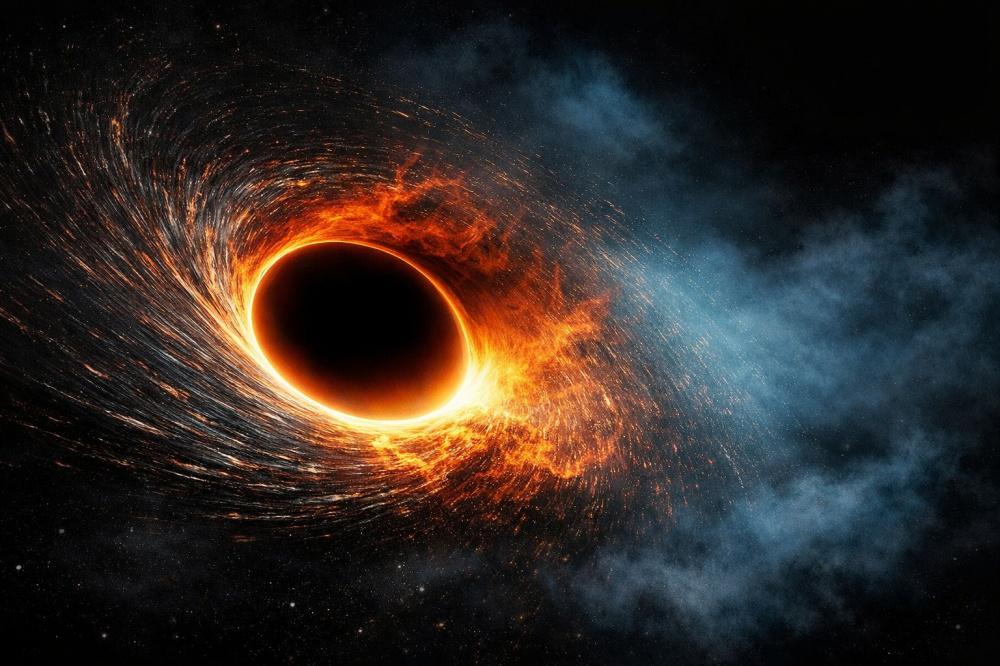
The sun's immense power, a double-edged sword, nourishes life while periodically unleashing forces that remind us of our planet's small place in the cosmic dance.
The severity of these storms is typically measured on a scale from G1 (minor) to G5 (extreme), reflecting the strength of the disturbance to Earth's magnetic field. While G1 storms might cause only minor radio disruptions, a G5 event could lead to widespread power outages and significant satellite interference. The interaction is a magnificent display of fundamental physics, a testament to the dynamic interplay between the sun's raw power and Earth's intricate defenses, shaping our environment in ways we are only beginning to fully comprehend.
Tucson's unique atmospheric window
Tucson, nestled within the picturesque Sonoran Desert, offers a peculiar and often overlooked perspective on magnetic storms. While cities at higher geomagnetic latitudes are more accustomed to visible aurora borealis, Tucson's location, though not prime for such spectacles, positions it uniquely for observing and experiencing other, more subtle impacts of space weather. The city's clear, dark skies, often hailed as an astronomer's paradise, paradoxically make it a keen observer of the very solar phenomena that can disrupt terrestrial technologies.
Tucson is home to several world-renowned astronomical observatories and research institutions, including the Kitt Peak National Observatory and the University of Arizona's Steward Observatory. These facilities, dedicated to peering into the cosmos, are acutely aware of space weather. Solar flares and CMEs, even if they don't cause visible light shows, can interfere with radio astronomy signals, disrupt satellite communications vital for data transmission, and even subtly affect the pointing accuracy of telescopes that rely on GPS for precise positioning. The desert's transparent atmosphere, ideal for optical astronomy, also provides a less obstructed path for the faint radio waves that carry critical information about the state of Earth's ionosphere, which is directly affected by geomagnetic activity.
Beyond the scientific community, Tucson's sprawling infrastructure, like that of any modern city, is increasingly reliant on technologies vulnerable to space weather. The long transmission lines that crisscross the desert landscape bringing power to homes and businesses, the intricate network of communication cables, and the widespread use of GPS in everything from navigation to agriculture, all represent potential points of vulnerability. The very stillness and apparent isolation of the desert belie a deep entanglement with global systems that are, in turn, connected to the sun's distant whims.
Invisible ripples
While the image of vibrant auroras dancing over saguaro cacti remains largely a fantastical notion for Tucson, the more insidious effects of magnetic storms are very real, even if often unseen. These impacts manifest primarily through geomagnetically induced currents (GICs) and ionospheric disturbances.
Geomagnetically induced currents
When Earth's magnetosphere is agitated by a solar storm, rapid fluctuations in the magnetic field occur. These fluctuations induce electric currents in long conductors on Earth's surface, such as power transmission lines, oil and gas pipelines, and even telephone cables. In Tucson, the extensive power grid supplying the city and surrounding areas is a primary concern. GICs can cause transformers to overheat, potentially leading to voltage irregularities, brownouts, or, in severe cases, widespread power outages. While local utilities have measures in place to mitigate these risks, extreme events test the resilience of even the most robust systems.
GPS and communication disruptions
The ionosphere, a layer of Earth's upper atmosphere, is particularly sensitive to solar radiation and geomagnetic activity. During a magnetic storm, the ionosphere becomes highly agitated and turbulent. GPS signals, which travel through the ionosphere, can be delayed, refracted, or even absorbed, leading to inaccuracies or complete signal loss. For a city like Tucson, where GPS is integral to modern life-from autonomous vehicles and precision agriculture to air traffic control at Tucson International Airport-such disruptions could have significant implications. Similarly, high-frequency radio communications, including those used by emergency services, aviation, and ham radio enthusiasts, can be severely degraded or blacked out entirely during intense ionospheric storms.
The quiet hum of civilization, powered by an intricate web of electricity and information, is surprisingly susceptible to the distant roar of a solar flare.
Subtle changes in the sky
While a full-blown aurora is a rarity, very strong geomagnetic storms can push the auroral oval further equatorward. There have been instances where subtle red or green glows, barely visible to the naked eye, have been reported from latitudes surprisingly far south, including parts of Arizona, during exceptionally powerful G4 or G5 storms. These fleeting glimpses serve as a reminder that even the desert sky, usually reserved for starlight and meteors, can occasionally reflect the cosmic ballet of solar-terrestrial interaction, a faint echo of the dramatic events unfolding overhead.
Interesting facts about magnetic storms and Tucson's connection
- Carrington event's reach The infamous Carrington Event of 1859, the most powerful geomagnetic storm in recorded history, caused auroras visible worldwide, even in tropical latitudes like Cuba and Hawaii. Had such an event occurred today, its impact on Tucson's modern, interconnected infrastructure would be catastrophic, far beyond just a pretty light show.
- Observatory awareness Tucson's astronomical observatories, like Kitt Peak, routinely monitor space weather forecasts. While they seek clear skies for observing distant galaxies, they also prepare for solar disruptions that could affect their equipment or communication links, highlighting a unique dual vulnerability and awareness.
- Historical aurora sightings in Arizona Though exceedingly rare, historical records and anecdotal evidence suggest that faint auroras have indeed been sighted from Arizona during particularly extreme geomagnetic storms, offering a tantalizing, albeit infrequent, connection to the polar lights.
- Invisible impacts on wildlife While less studied, some researchers hypothesize that magnetic storms could subtly affect migratory birds and other animals that use Earth's magnetic field for navigation, including species found in the Sonoran Desert.
- Water pipeline protection Even water pipelines can be affected. GICs can accelerate corrosion in underground metallic pipelines, including those critical for water distribution in an arid region like Tucson, necessitating protective measures like cathodic protection systems.
- Space weather forecasting in the Southwest The National Oceanic and Atmospheric Administration (NOAA) Space Weather Prediction Center, though not located in Tucson, provides critical forecasts and alerts that are vital for industries and infrastructure operators throughout the Southwest, including those in Arizona, to prepare for potential impacts.
Preparing for the unseen
The desert's stillness often belies a dynamic underlying reality. For Tucson, preparing for magnetic storms means embracing a proactive stance against an unseen threat. This involves a multi-faceted approach, combining technological resilience, scientific monitoring, and public awareness.
Hardening the grid
Power utility companies serving Tucson and Arizona are continually investing in infrastructure upgrades to minimize the impact of GICs. This includes installing specialized transformers designed to withstand higher GIC levels, implementing operational procedures to reconfigure the grid during a storm, and developing sophisticated monitoring systems to detect anomalies in real-time. The goal is to build a "smart grid" that can self-heal and isolate affected sections, preventing cascading failures across the network.
Advancing scientific understanding
Tucson's scientific community plays a vital role in understanding space weather. Researchers at the University of Arizona and local observatories contribute to global efforts to model solar activity, predict geomagnetic storm severity, and analyze their effects on Earth. This research not only enhances our ability to forecast these events but also helps inform strategies for mitigation and protection. The clear desert skies, ideal for optical astronomy, also allow for ground-based observations of atmospheric phenomena related to space weather, providing valuable local data.
Public awareness and preparedness
While a widespread blackout due to a magnetic storm is a low-probability, high-impact event, increasing public awareness is crucial. Educating residents about the potential effects of space weather, from GPS inaccuracies to power disruptions, empowers individuals and communities to take appropriate preparedness measures. This might include having emergency kits, backup communication methods, and understanding how to access information during prolonged outages, much like preparing for other natural disasters specific to the region, such as extreme heat or flash floods.
The cosmic ballet above the saguaros
The notion of magnetic storms in Tucson adds a fascinating layer to the city's identity. It underscores that even in a place seemingly so grounded in its ancient desert rhythms, the grand narrative of the cosmos is continually unfolding. The same sun that bakes the desert floor and nurtures its unique flora also possesses the power to send ripples through our technological existence. Tucson, with its blend of scientific inquiry, robust infrastructure, and deep connection to the natural world, stands as a microcosm for humanity's ongoing dialogue with the forces of the universe.
The saguaros, tall and stoic, have witnessed millennia of sunrises and sunsets, seemingly oblivious to the magnetic shifts above. Yet, the modern city beneath their gaze hums with an electric pulse, a testament to human ingenuity and vulnerability. Magnetic storms serve as a potent reminder of this delicate balance-a cosmic ballet where the sun, our star, orchestrates an invisible performance, with Earth's magnetic shield providing the stage, and Tucson, a quiet observer in the desert, experiencing its subtle, yet profound, vibrations.