
The invisible currents
In the bustling heart of the Pacific Northwest, where the rain-kissed peaks of the Olympic Mountains stand sentinel and the tech giants cast their innovative shadows, Seattle rarely pauses to consider the cosmic ballet unfolding far above. Yet, like every corner of our planet, the Emerald City is subject to the silent, powerful influence of solar phenomena – what we commonly refer to as magnetic storms. These unseen forces, born from the sun's explosive temperament, ripple through Earth's magnetosphere, creating a dynamic interplay that can touch everything from the delicate balance of our power grids to the ethereal glow of the aurora borealis painting the northern skies. For a city as technologically advanced and geographically unique as Seattle, understanding these geomagnetic disturbances isn't just an academic exercise; it's a vital consideration for resilience, infrastructure, and even appreciating the natural wonders that occasionally grace its horizon.
The intricate dance between our sun and Earth is a constant, energetic exchange. Every eleven years, the sun goes through a cycle of heightened activity, culminating in a solar maximum marked by an increase in sunspots, solar flares, and coronal mass ejections (CMEs). When these powerful bursts of plasma and magnetic fields are directed towards Earth, they collide with our planet's protective magnetic bubble, triggering a geomagnetic storm. Seattle, situated at a latitude of approximately 47.6 degrees north, finds itself in a particularly intriguing zone for these events. It's far enough north to experience more pronounced effects than equatorial regions, yet not so far polar as to be constantly under their direct, intense sway. This position makes the city a compelling case study for observing both the subtle and sometimes dramatic impacts of space weather.
Understanding the solar symphony
The sun's fiery ballet
Our sun, a benevolent star that nourishes life on Earth, is also a tumultuous furnace of plasma, ceaselessly churning and erupting. Its surface is a dynamic landscape of boiling gases, twisted magnetic fields, and regions of intense activity. Solar flares, immense bursts of radiation, originate from these active regions, often associated with sunspots – cooler, darker areas where magnetic fields are particularly strong. While the light and X-rays from these flares reach Earth almost instantaneously, posing a risk to satellites and radio communications, they are just one act in the sun's dramatic performance. The true orchestrators of geomagnetic storms are far grander phenomena: coronal mass ejections.
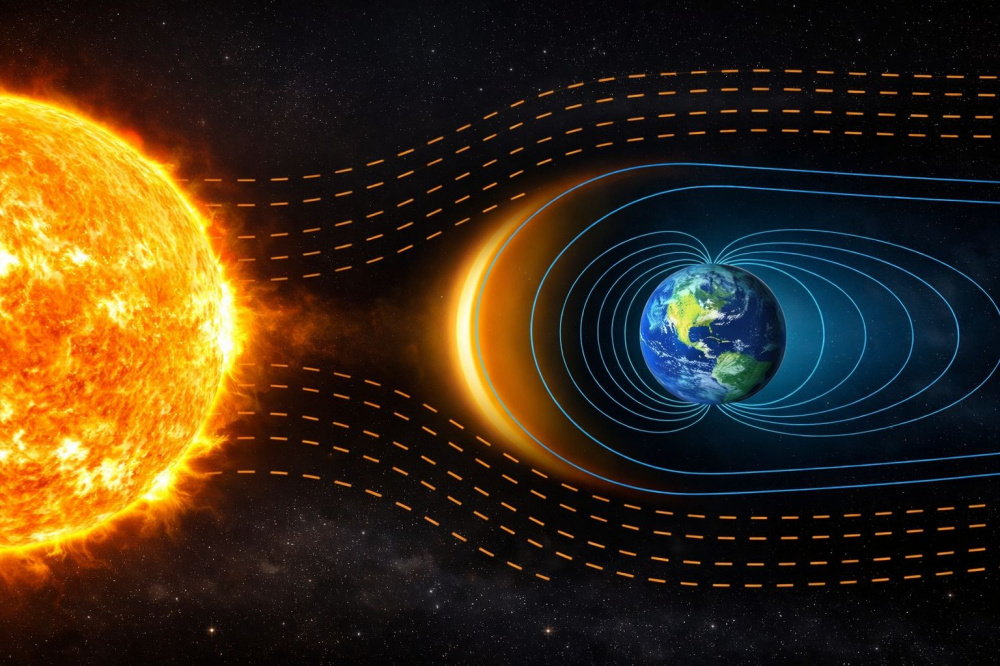
CMEs are colossal eruptions of plasma and magnetic field from the sun's corona, its outermost atmosphere. Imagine a bubble of superheated gas, weighing billions of tons, accelerating away from the sun at speeds ranging from a few hundred to over a thousand kilometers per second. When these magnetic clouds are hurled in Earth's direction, they become the primary drivers of space weather, dictating the intensity and duration of the geomagnetic storms we experience. The sun's unpredictable nature means that predicting the exact timing and strength of these events remains a complex challenge, relying on an array of ground-based and space-based observatories continuously monitoring our star's volatile moods.
Coronal mass ejections and Earth's shield
When a CME barrels towards Earth, it eventually encounters our planet's magnetosphere, an invisible magnetic shield generated by Earth's molten iron core. This protective bubble, shaped like a comet with a long tail extending away from the sun, deflects most of the solar wind and charged particles. However, a powerful CME, especially one with a magnetic field oriented opposite to Earth's, can punch through this shield or merge with its field lines. This interaction is akin to a cosmic short circuit, funneling solar particles down into the upper atmosphere, particularly near the magnetic poles.
The collision of these energized particles with atmospheric gases – oxygen and nitrogen – excites them, causing them to emit light. This is the breathtaking spectacle we know as the aurora borealis, or northern lights. But beyond the visual splendor, this magnetic reconnection drives intense electrical currents within Earth's magnetosphere and ionosphere, inducing ground currents that can have far-reaching practical implications. These geomagnetically induced currents (GICs) are the unseen agents that can stress power grids, disrupt communications, and even affect navigation systems, presenting a unique set of challenges for a modern, interconnected city like Seattle.
Seattle's geomagnetic context
High latitude considerations
Seattle's geographical position, nestled between the 47th and 48th parallels north, places it in a critical zone concerning geomagnetic activity. While not as vulnerable as Fairbanks or Reykjavik, which lie closer to the magnetic pole, Seattle is significantly more susceptible to the effects of magnetic storms than cities closer to the equator. The geomagnetic poles, where Earth's magnetic field lines converge, act like funnels for charged particles from space. During a strong geomagnetic storm, the auroral oval-the ring where the aurora is typically seen-expands equatorward. This expansion means that cities like Seattle, normally on the fringe, can find themselves directly beneath the storm's most active regions.
This higher latitude means that geomagnetically induced currents (GICs) can be more prevalent and intense in the region's long power transmission lines. The electrical resistance of the ground beneath Seattle, influenced by its diverse geology including volcanic basalt and sedimentary basins, also plays a role in how effectively these currents can flow and where they might accumulate. Engineers and grid operators in the Pacific Northwest must account for these unique characteristics when designing and maintaining electrical infrastructure, recognizing that the invisible hand of space weather can have very tangible consequences on the ground.
The pacific northwest anomaly
Beyond its latitude, the Pacific Northwest presents some specific geological and infrastructural characteristics that influence its interaction with magnetic storms. The region's extensive coastline, long-distance power transmission lines threading through mountain passes, and numerous submarine communication cables make it a complex environment. Unlike uniform continental plates, the geology of the Pacific Northwest is a patchwork of terranes, with varying electrical conductivities. This heterogeneity can cause GICs to concentrate in certain areas, potentially increasing stress on specific components of the power grid.
Furthermore, Seattle's dense urban environment, with its reliance on intricate communication networks, satellite navigation for maritime and aviation traffic in Puget Sound, and burgeoning data centers, adds layers of vulnerability. While the majestic Cascade Mountains and the vast expanse of the Pacific Ocean do not directly mitigate or amplify magnetic storms, they define the operational context. For example, remote substations nestled deep within the mountains might be harder to access for repairs if damaged during an event. The Pacific Northwest, therefore, represents a fascinating intersection of natural vulnerability and sophisticated human infrastructure, all under the influence of distant solar dynamism.
Whispers in the wires and skies
Power grids and transformers
The most widely recognized and potentially damaging impact of strong magnetic storms involves electrical power grids. Geomagnetically induced currents (GICs) flow through the Earth's surface and can enter long conductors like power transmission lines, drawn in by the low resistance of ground connections at transformer stations. These quasi-DC currents, superimposed on the normal AC power flow, can cause problems for large transformers, which are critical components of the grid.
When GICs flow through transformer windings, they can push the transformer core into saturation, causing it to draw excessive reactive power, generate harmonics, and overheat. In severe cases, this can lead to transformer damage, protective relays tripping, or even widespread blackouts. Seattle, with its reliance on an interconnected regional grid powered by hydro, nuclear, and thermal sources, is susceptible to such events. Utilities like Seattle City Light and Puget Sound Energy continually monitor space weather alerts and have implemented strategies, including specialized monitoring equipment and operational adjustments, to mitigate these risks.
"The silent hum of a city's power grid is a testament to constant vigilance, a delicate balance easily disrupted by the sun's distant tantrums."
The financial and societal costs of a large-scale power outage in a major metropolitan area like Seattle would be immense, highlighting the importance of understanding and preparing for these low-probability, high-impact space weather events. Lessons learned from historical incidents, such as the 1989 Quebec blackout caused by a severe geomagnetic storm, continue to inform grid resilience efforts globally, including in the Pacific Northwest.
Communication disruptions
Magnetic storms can also throw a wrench into our modern communication systems. Radio signals, particularly those used for high-frequency (HF) communications over long distances, rely on the ionosphere to reflect them back to Earth. During a geomagnetic storm, the ionosphere becomes highly disturbed, absorbing radio waves or altering their propagation paths. This can lead to radio blackouts, degraded signal quality, and difficulties for amateur radio operators, emergency responders, and military communications.
Satellite communications are another area of concern. Satellites in Earth orbit, exposed to increased radiation during storms, can experience malfunctions, temporary outages, or even permanent damage to their electronics. Given Seattle's role as a tech hub with a significant aerospace presence, including companies involved in satellite design and operation, these disruptions are not abstract concerns. While direct interference with fiber optic cables is generally minimal, the ground-based infrastructure supporting satellite uplinks and downlinks, and the power supplying these facilities, can be affected by GICs.
GPS and navigation
Precision navigation systems like the Global Positioning System (GPS) are integral to modern life, from guiding cars and ships to synchronizing financial transactions and critical infrastructure. GPS signals travel through the ionosphere, and their speed can be altered by the fluctuating electron densities caused by magnetic storms. This "scintillation" can lead to inaccuracies in GPS positioning, signal loss, or even complete outages.
For Seattle, a major port city with bustling maritime traffic in Puget Sound and a busy international airport, reliable GPS is paramount. Shipping vessels rely on precise navigation for safe passage, and commercial aircraft depend on GPS for route optimization and landing approaches. While backup systems are in place, prolonged or severe GPS degradation during a storm could introduce significant operational challenges, delays, and potential safety concerns for transportation networks in and around the city.
Aviation and space
Beyond navigation, magnetic storms pose several risks to aviation and space operations. Airlines flying polar routes, which are common for flights between North America and Asia, expose aircraft and passengers to increased radiation levels during geomagnetic events. While modern aircraft are shielded, and flight plans can be rerouted to lower latitudes, monitoring space weather is crucial for passenger safety and crew health. Additionally, communication systems on these flights can be affected, making it harder for pilots to stay in touch with air traffic control.
For the burgeoning space industry in the Seattle area, magnetic storms are a constant consideration. Satellites in low Earth orbit (LEO) experience increased atmospheric drag during storms as the upper atmosphere expands due to heating, potentially shortening their operational lifespan or requiring costly orbital adjustments. Spacecraft electronics, already operating in a harsh environment, become even more vulnerable to radiation-induced errors or damage. The safety of astronauts on the International Space Station, which passes over Seattle regularly, is also a concern, as they are exposed to higher radiation doses during intense solar events.
A celestial spectacle
Chasing the northern lights in washington
While the technical disruptions caused by magnetic storms are often unseen and complex, one of their most stunning and universally appreciated effects is the aurora borealis. During particularly strong geomagnetic storms, the northern lights, usually confined to polar regions, can expand southward, becoming visible from lower latitudes. Seattle, on occasion, finds itself in this privileged position, offering its residents a rare and breathtaking glimpse of this celestial phenomenon.
When conditions align – a powerful CME hitting Earth, clear skies, and minimal light pollution – the skies above Puget Sound can ignite with shimmering greens, pinks, and purples. It's a reminder that even in a highly developed urban environment, we remain intimately connected to the grandeur of the cosmos. Local aurora chasers, amateur astronomers, and photographers keep a vigilant eye on space weather forecasts from organizations like NOAA's Space Weather Prediction Center, ready to venture out to darker locations away from the city lights when an aurora alert is issued.
Best viewing conditions
Catching the aurora from Seattle is a challenging but rewarding endeavor. The most critical factor is a strong geomagnetic storm, typically categorized by a Kp-index of 5 or higher. Beyond that, darkness is paramount. While Seattle itself is a beacon of light pollution, venturing to areas north of the city, such as the Olympic Peninsula, Whidbey Island, or the less populated eastern slopes of the Cascades, significantly increases viewing chances. Locations with an unobstructed view of the northern horizon, away from streetlights and urban glow, are ideal.
"Under a sky ablaze with shifting emerald and amethyst, the city's electric pulse feels a world away, a testament to nature's profound artistry."
Patience is also key, as the aurora can ebb and flow in intensity over several hours. The best times are typically between 10 p.m. and 2 a.m. local time. Even when the aurora appears faint to the naked eye, modern digital cameras with long exposure capabilities can often capture its vibrant colors, revealing what might otherwise be a subtle glow on the horizon. For Seattleites, these rare appearances of the northern lights transform the familiar landscape into a canvas for one of Earth's most spectacular natural light shows, a direct and beautiful consequence of the sun's magnetic tantrums.
Fascinating facts about geomagnetic events
- The carrington event The largest recorded geomagnetic storm, the Carrington Event of 1859, caused auroras visible worldwide, even near the equator, and induced currents that shocked telegraph operators and set telegraph papers on fire. If such a storm happened today, it could devastate modern infrastructure.
- Animal navigation Some animals, including birds, fish, and even cattle, use Earth's magnetic field for navigation. Intense geomagnetic storms can potentially disrupt their internal compasses, leading to disorientation during migration.
- Space weather vs. terrestrial weather Unlike terrestrial weather, which focuses on conditions in Earth's atmosphere, space weather describes conditions in space that can affect Earth and its technological systems, originating primarily from the sun.
- Radiation dose increases During strong storms, radiation levels in the upper atmosphere increase. While typically not a concern for passengers on standard flights, those on polar routes or astronauts in orbit receive higher doses.
- Ground conductivity matters The impact of GICs on power grids is heavily influenced by the electrical conductivity of the ground beneath the transmission lines. Regions with resistive bedrock (like much of Canada) are more susceptible to high GICs than those with conductive sedimentary basins.
- Government monitoring Agencies like NOAA (National Oceanic and Atmospheric Administration) operate the Space Weather Prediction Center (SWPC), providing real-time monitoring and forecasts of solar activity and its potential impacts on Earth.
- Subtle health effects While not definitively proven for humans, some studies have explored correlations between geomagnetic activity and subtle changes in human behavior, mood, or health, though these links remain largely speculative for the general population.
- Satellite vulnerabilities Even without direct damage, increased drag on satellites in low Earth orbit during storms can reduce their lifespan, requiring more fuel for orbital maintenance and increasing operational costs.
- Planetary magnetospheres Earth is not unique in having a magnetosphere. Planets like Jupiter and Saturn also possess powerful magnetic fields, which interact with the solar wind to create their own spectacular auroras, far grander than Earth's.
- Every 11 years The sun follows an approximately 11-year cycle of activity, from solar minimum (few sunspots, less activity) to solar maximum (many sunspots, more flares and CMEs). We are currently heading towards the next solar maximum, expected in the mid-2020s.
Safeguarding the emerald city
NOAA's space weather prediction center
At the forefront of protecting Earth from the sun's unpredictable temperament is NOAA's Space Weather Prediction Center (SWPC) in Boulder, Colorado. This crucial facility acts as the nation's official source for space weather alerts and warnings. SWPC continuously monitors the sun using data from a network of ground-based observatories and satellites, such as NASA's Solar Dynamics Observatory (SDO) and the joint NOAA/NASA Deep Space Climate Observatory (DSCOVR), which provides vital real-time solar wind data from a vantage point between the Earth and the sun. Their forecasts of solar flares, CMEs, and geomagnetic storms provide critical lead time for industries and agencies to prepare.
For Seattle-based industries, from utility companies to air traffic control and satellite operators, SWPC's alerts are indispensable. A "G4" (Severe) or "G5" (Extreme) geomagnetic storm warning allows operators to implement mitigation strategies, such as reducing voltage on power lines, rerouting aircraft, or temporarily powering down non-essential satellite systems. This proactive approach, enabled by cutting-edge space weather science, significantly reduces the potential for widespread disruption and damage, transforming what could be catastrophic events into manageable challenges.
Grid resilience initiatives
Recognizing the vulnerability of modern power grids to geomagnetic storms, utilities serving the Seattle area, alongside regional and national organizations, have invested heavily in resilience initiatives. These efforts include installing specialized monitoring equipment in substations to detect geomagnetically induced currents (GICs) in real-time. This allows operators to identify stressed transformers and take corrective actions, such as isolating certain parts of the grid or shifting load, before damage occurs.
Furthermore, new transformer designs are being developed that are more resistant to GIC saturation. Spare transformer inventories are maintained regionally, although these are extremely large, expensive, and difficult to transport, making their rapid deployment a logistical challenge. Training exercises and detailed emergency response plans are also routinely conducted, ensuring that personnel are prepared to act swiftly and effectively during a severe space weather event. The goal is not merely to react to a storm but to build a robust, self-healing grid that can withstand and quickly recover from such cosmic assaults, maintaining the flow of power to Seattle's homes and businesses.
"Resilience isn't just about bouncing back; it's about anticipating the unseen, fortifying the essential, and adapting to the cosmos' grand design."
Public awareness and readiness
While the technical aspects of magnetic storm preparedness largely fall to specialized industries, fostering public awareness is also a critical component of overall readiness. Educating the public about space weather, its potential impacts, and how to respond to related emergencies (such as power outages) empowers communities to be more resilient. For Seattle residents, this might involve understanding the difference between a normal power outage and one potentially linked to a geomagnetic storm, having emergency kits prepared, and knowing how to access information during a disruption.
Public outreach programs, often coordinated by local emergency management agencies in conjunction with scientific institutions, play a vital role. These initiatives help demystify space weather, explain the beauty of phenomena like the aurora, and provide practical advice for preparedness. In a region known for its appreciation of nature and its embrace of technology, understanding the dynamic relationship between our sun and our city fosters a deeper connection to the broader universe and reinforces the importance of collective readiness.
Beyond the technical
The subtle shifts
While the dramatic effects of magnetic storms can be seen in auroral displays or felt through technological disruptions, there's also a more subtle, almost imperceptible way these cosmic events interact with our lives. In Seattle, where the rhythm of daily life is often dictated by the ebb and flow of Puget Sound tides and the seasonal shifts of rain and sun, a geomagnetic storm can feel like an entirely different, ethereal pulse. Most residents will never consciously feel the magnetic field bending or the unseen currents flowing beneath their feet. Yet, for some sensitive individuals, anecdotal evidence suggests a possible link between heightened geomagnetic activity and changes in mood, sleep patterns, or general well-being. While scientific consensus on direct human health impacts remains elusive, the idea that our bodies, too, might subtly resonate with the Earth's magnetic field during a storm sparks a poetic curiosity.
The urban landscape itself, usually so defined by steel, glass, and concrete, becomes a silent participant in this cosmic interaction. The very wires carrying Seattle's digital life, the satellites guiding its maritime traffic, and the power lines illuminating its nights are all subtly influenced. This quiet vulnerability, hidden beneath the surface of everyday functionality, underscores a profound connection to forces far beyond our immediate control, reminding us that even in our most technologically advanced enclaves, we remain creatures of the cosmos.
A cosmic reminder
Ultimately, magnetic storms in Seattle serve as a potent cosmic reminder. They pull back the curtain on the invisible forces that constantly shape our planet and our lives. They highlight the incredible engineering feats required to protect our modern society from the raw power of our nearest star. From the vibrant green glow that occasionally dances above the Cascades to the meticulous planning that keeps the city's power flowing, these events demonstrate a delicate balance between awe-inspiring natural phenomena and human ingenuity.
For a city that prides itself on innovation and its deep connection to the natural world, understanding magnetic storms adds another layer to its identity. It's a recognition that while we reach for the stars with our technology, the stars themselves – our sun – are constantly reaching back, shaping our environment in ways both seen and unseen. Seattle stands as a vibrant example of a modern metropolis living under a dynamic sky, ever-conscious of the intricate and powerful relationship between Earth and the celestial tapestry around it.