
Introduction to an unseen force over the golden gate
San Francisco, a city synonymous with innovation, cultural diversity, and breathtaking vistas, often finds itself at the forefront of global conversations-be it technological breakthroughs, social movements, or seismic resilience. Yet, beneath the veneer of its vibrant daily rhythm and impressive infrastructure lies a less-discussed, but equally profound, vulnerability: the ethereal yet potent phenomenon of magnetic storms. These colossal energetic eruptions from our sun, invisible to the naked eye, journey across the vast expanse of space to interact with Earth's protective magnetic field, capable of disrupting the very digital arteries that define modern existence, especially in a metropolis as interconnected as San Francisco.
While the city diligently prepares for the tangible tremors of earthquakes and the specter of rising sea levels, the cosmic ballet unfolding millions of miles away represents a different kind of challenge. It’s a challenge to our technological reliance, an invisible cosmic punch that can knock out power grids, scramble satellite communications, and distort navigation systems. For a city that epitomizes the digital age, understanding and preparing for magnetic storms is not merely an academic exercise but a critical imperative for maintaining its sophisticated technological ecosystem and the safety of its millions of inhabitants.
This exploration delves into the intricate science behind these solar phenomena, their specific implications for the unique landscape and infrastructure of San Francisco, and the proactive measures being developed to mitigate their potential disruptive force. From the intricate web of overhead power lines traversing the Bay Area to the high-tech industries nestled in Silicon Valley, the reverberations of a severe magnetic storm could ripple through every facet of San Franciscan life, challenging its renowned resilience in unprecedented ways. It is a story of celestial mechanics meeting urban vulnerability, a narrative where the sun's distant fury casts a very real shadow over the iconic Golden Gate Bridge.
The mechanics of space weather and geomagnetic storms
Understanding the sun's influence
At the heart of every magnetic storm is our sun, a dynamic star constantly shedding particles and energy into space. While usually a benevolent life-giver, the sun also has periods of intense activity. These periods manifest as sunspots-cooler, darker regions on the sun's surface where magnetic fields are particularly strong and tangled. It is from these regions that the most powerful solar events originate, primarily solar flares and coronal mass ejections (CMEs). A solar flare is an intense burst of radiation, traveling at the speed of light, while a CME is a colossal eruption of magnetized plasma, moving at millions of miles per hour, ejected from the sun's outer atmosphere, the corona.
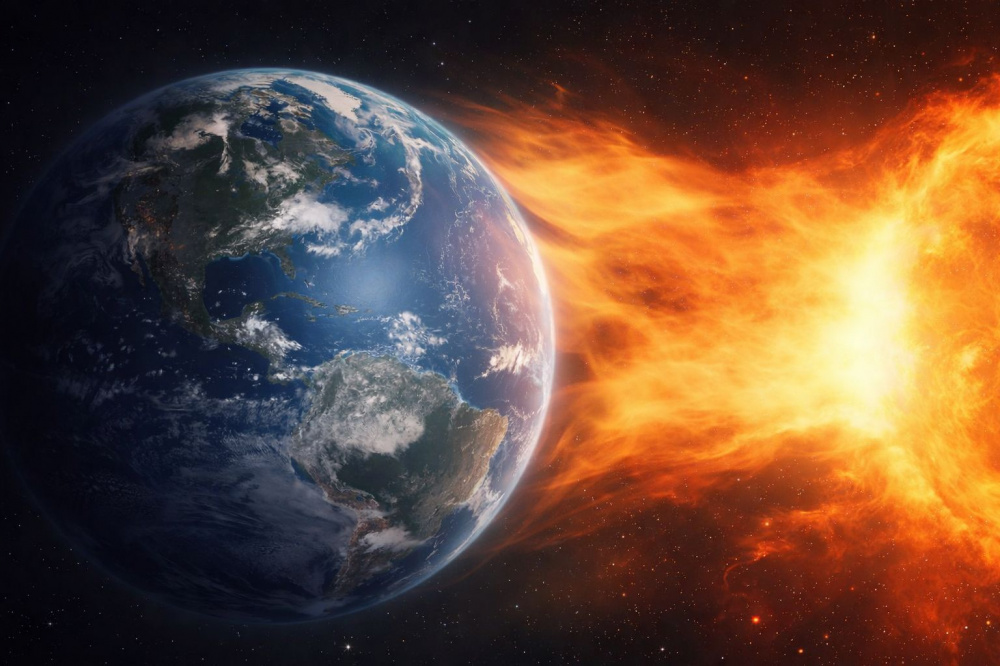
When these CMEs are directed towards Earth, they can reach our planet within one to three days. Upon impact, the super-heated, magnetized plasma interacts with Earth's magnetosphere-a protective bubble generated by our planet's molten iron core that shields us from the harsh realities of space. This interaction is akin to a cosmic collision. The incoming solar plasma compresses the magnetosphere on the sunward side and stretches it into a long tail on the night side. Magnetic field lines reconnect and snap, releasing immense amounts of energy. This process channels energetic particles along the magnetic field lines towards Earth's poles, exciting atmospheric gases and creating the spectacular auroras.
However, beyond the stunning light show, these disturbances induce electrical currents in the upper atmosphere and the ground itself. These Geomagnetically Induced Currents (GICs) are the primary mechanism through which magnetic storms pose a threat to human technology. The stronger the solar event, the more pronounced the disturbance, leading to classification levels ranging from G1 (minor) to G5 (extreme) on the NOAA Space Weather Scales. San Francisco, while far from the poles, is still subject to the global effects of these phenomena, especially given its advanced infrastructure.
Historical perspective on geomagnetic activity
The awareness of magnetic storms and their potential impact is not new. The most famous example, the Carrington Event of 1859, occurred when a massive solar flare and CME hit Earth. This event caused auroras visible worldwide, even in tropical latitudes, and famously disrupted telegraph systems, shocking operators and even setting telegraph papers ablaze. While the technological landscape of 1859 was rudimentary compared to today, the Carrington Event serves as a stark reminder of the sun's power.
More recently, in March 1989, a moderate G4 geomagnetic storm caused a nine-hour blackout across Quebec, Canada, leaving six million people without power. This was due to GICs overloading transformers in the Hydro-Québec power grid. Similar but less severe incidents have occurred globally, highlighting the vulnerability of modern electrical infrastructure. For San Francisco, a city with a highly interconnected and sophisticated energy network, a storm of even lesser magnitude than Carrington or Quebec could have profound and widespread consequences, disrupting a city built on the principles of constant connectivity and seamless operation.
Understanding these historical precedents is crucial. They provide a framework for anticipating the challenges and developing robust mitigation strategies for a future where a similar, or even more powerful, solar event could occur. The question is not if another major solar storm will strike, but when, and how prepared cities like San Francisco will be.
San Francisco's unique vulnerabilities to geomagnetic storms
Power grid and infrastructure at risk
San Francisco's power grid is a complex tapestry of generation, transmission, and distribution. Long transmission lines, especially those stretching across the state to bring power to the Bay Area, act as giant antennas for GICs. When a magnetic storm induces these currents, they flow through the power lines and into transformers. Transformers are designed to operate at specific frequencies; GICs, being quasi-DC currents, can saturate the transformer cores, leading to overheating, operational instability, and ultimately, catastrophic failure. Such failures could trigger widespread blackouts, affecting homes, businesses, and essential services.
The density of critical infrastructure within the Bay Area compounds this risk. Data centers, communication hubs, and financial institutions all rely on a stable power supply. A prolonged outage could not only halt daily life but also inflict immense economic damage, given San Francisco's role as a global economic engine. Repairing damaged transformers is not a quick fix; it can take weeks or even months, depending on the severity and the availability of replacement parts, which are often custom-built and have long lead times. The interconnectedness of the Western power grid also means that a localized failure in San Francisco could cascade, affecting neighboring regions.
Beyond the primary power grid, other vital systems are also susceptible. Underground pipelines for water and gas, while less immediately prone to catastrophic failure from GICs, can experience accelerated corrosion due to these induced currents, leading to long-term integrity issues. Rail systems, especially those relying on electrified tracks and signaling, could face disruptions, grinding the Bay Area's extensive public transit networks, including BART and Muni, to a halt. The intricate dance of power and communication that underpins urban life is surprisingly fragile when confronted with an invisible, cosmic surge.
"In a city defined by its digital pulse, a severe magnetic storm represents not just a blackout, but a sudden silence, a stark reminder of our technological dependence on the sun's quiescent grace."
Communication and navigation systems
The Bay Area, as a nexus of technological innovation, is heavily reliant on satellite-based communication and navigation. Magnetic storms can severely disrupt these systems. The highly energized particles from a storm can interfere with radio signals traveling through the ionosphere-the upper layer of Earth's atmosphere. This interference can lead to signal degradation, loss of lock, or complete outages for GPS (Global Positioning System) receivers.
For San Francisco, this has far-reaching implications. Modern navigation in maritime shipping, aviation (San Francisco International Airport is a major global hub), and increasingly, autonomous vehicles, relies heavily on precise GPS data. Inaccurate or unavailable GPS signals could lead to significant operational challenges, delays, and even safety hazards. Emergency services, often coordinating efforts using satellite communications and GPS mapping, would also face considerable hurdles during a severe storm. The precision required for urban logistics, from ride-sharing apps to delivery services, would be severely compromised, disrupting the daily flow of commerce and convenience.
Furthermore, high-frequency (HF) radio communications, used for long-distance air and sea travel, can be completely absorbed or scattered by a disturbed ionosphere, effectively creating "radio blackouts." This could isolate ships at sea or aircraft mid-flight, forcing them to rely on less efficient or outdated communication methods. The internet itself, while largely reliant on fiber optics which are immune to GICs, depends on the underlying power infrastructure and satellite uplinks for global connectivity and redundancy. A widespread power outage would effectively cut off large sections of the internet, isolating San Francisco from the rest of the world.
Economic and societal impacts
The economic ramifications of a major magnetic storm hitting San Francisco could be staggering. The tech industry, with its massive data centers and global operations, is particularly vulnerable. Downtime translates directly into billions of dollars in losses. Financial markets, already operating on razor-thin margins and instantaneous transactions, could experience severe disruptions, potentially triggering market instability. Small businesses, heavily reliant on electronic transactions and internet connectivity, would also suffer significant losses.
Beyond the immediate financial impact, there are profound societal consequences. Prolonged blackouts would affect heating, cooling, refrigeration, and water supply (if pumps rely on electricity). Traffic lights would cease functioning, leading to gridlock. ATMs and credit card systems would be offline, reverting transactions to cash-only, if available. Emergency services-hospitals, police, fire departments-would face unprecedented challenges in coordinating responses and providing aid without their usual technological tools. The sense of order and security in a highly developed urban environment could quickly erode, leading to social unrest and panic.
The psychological toll should not be underestimated either. In a world accustomed to instant information and constant connectivity, a sudden and widespread loss of these amenities can lead to anxiety, frustration, and a feeling of helplessness. The resilience of San Franciscans, often tested by earthquakes, would be challenged by a silent, invisible threat that disables the very systems designed to manage other crises.
Interesting facts about magnetic storms and san francisco
- Rare Auroral Displays
While San Francisco is at a relatively low geomagnetic latitude for frequent aurora sightings, extreme G5-level magnetic storms have the potential to push the auroral oval far enough south for faint displays to be visible from Northern California, including the Bay Area, given dark skies and a clear horizon. Such events are exceedingly rare but a tantalizing possibility. - Speed of Light vs. Solar Wind
The initial warning of a solar flare (light and X-rays) reaches Earth in just eight minutes, but the more damaging coronal mass ejection (CME) takes one to three days to arrive. This precious window provides some time for preparation. - Economic Cost Estimates
Studies have estimated that a Carrington-level event today could cause economic damages ranging from hundreds of billions to trillions of dollars globally, with recovery times stretching from months to years. For a tech-dependent city like San Francisco, the upper end of these estimates is highly plausible. - Underground Infrastructure Risk
Beyond power lines, magnetic storms can also induce currents in long metallic conductors like oil and gas pipelines, potentially accelerating corrosion and increasing the risk of leaks over time, adding another layer of unseen vulnerability beneath the city. - The San Andreas Fault's Silence
Interestingly, despite San Francisco's proximity to the San Andreas Fault and its history of seismic activity, there is no scientifically accepted evidence linking magnetic storms to triggering earthquakes. These are distinct geological and solar-terrestrial phenomena. - PG&E's Preparedness
Pacific Gas and Electric (PG&E), the primary utility provider for San Francisco, maintains robust monitoring systems and emergency protocols to manage grid stability, including measures to mitigate the impact of GICs and respond to potential transformer failures. - Electromagnetic Shielding for Data Centers
Many modern data centers in San Francisco and Silicon Valley incorporate advanced electromagnetic shielding and redundant power systems (like UPS and generators) to protect sensitive equipment, though a widespread grid collapse would still pose a severe challenge.
Mitigation and preparedness in the bay area
Government and utility initiatives
Recognizing the increasing vulnerability of modern society to space weather, significant efforts are underway at various levels to mitigate the impact of magnetic storms. At the national level, the NOAA Space Weather Prediction Center (SWPC) is the official source for space weather forecasts and alerts. They continuously monitor the sun and space environment, providing critical advance warnings to utility companies, airlines, and other stakeholders, including those in San Francisco.
For utility providers like PG&E, preparedness involves a multi-pronged approach. This includes hardening key infrastructure components, such as installing GIC-blocking devices on transformers, which are designed to prevent damaging quasi-DC currents from entering the equipment. Regular assessments of grid vulnerability and the development of operational procedures to temporarily reduce grid load during predicted storm events are also crucial. Training personnel to respond effectively to space weather events, akin to earthquake preparedness drills, ensures a coordinated and swift reaction when a warning is issued. The goal is not just to survive the storm but to minimize downtime and ensure rapid recovery.
Additionally, regulatory bodies are increasingly incorporating space weather resilience into infrastructure planning and maintenance standards. This pushes utility companies to invest in preventative measures and maintain strategic stockpiles of critical spare parts, such as high-voltage transformers, which can take years to manufacture and deliver. International cooperation is also vital, as space weather is a global phenomenon, and shared data and research can enhance warning capabilities and mitigation strategies worldwide.
Technological resilience and innovation
San Francisco's tech sector, paradoxically, is both highly vulnerable and uniquely positioned to develop solutions for space weather challenges. Innovations in satellite technology, for instance, are leading to more resilient designs that can better withstand radiation and charged particle environments. Redundant communication pathways, utilizing both satellite and terrestrial fiber optic networks, provide a buffer against single points of failure. The development of more accurate and rapid space weather forecasting models, powered by advanced AI and machine learning, is also a critical area of research, allowing for more precise warnings and targeted mitigation efforts.
The emphasis on microgrids and distributed energy resources, such as solar panels with battery storage, within San Francisco and the wider Bay Area, offers a localized resilience strategy. During a widespread grid outage, these localized power sources could potentially keep essential services-like hospitals or emergency shelters-operational, providing crucial support until the main grid is restored. The move towards a more decentralized energy architecture, while driven by sustainability goals, inherently offers greater protection against large-scale, externally induced disruptions.
Furthermore, cybersecurity measures are intrinsically linked to space weather preparedness. A geomagnetic storm could not only disrupt physical infrastructure but also create an environment conducive to cyberattacks as systems become unstable or are taken offline for protection. Robust cybersecurity protocols, coupled with physical resilience, form a comprehensive defense strategy against both the direct and indirect impacts of solar fury. The melding of traditional engineering with cutting-edge digital defenses represents San Francisco's proactive stance against the invisible threats from space.
Individual and community preparedness
While large-scale infrastructure hardening is essential, individual and community preparedness also plays a vital role in mitigating the impact of magnetic storms. The principles are similar to those for earthquake preparedness: have an emergency kit, develop a communication plan, and understand potential disruptions to daily life.
An emergency kit should include non-perishable food, water, a hand-crank or battery-powered radio (for official alerts, as cell service might be down), flashlights, extra batteries, and any necessary medications. A communication plan should identify out-of-state contacts or alternative meeting points if local communications are disrupted. Understanding that electronic transactions might be impossible means having some cash on hand. For those with critical medical devices, having backup power or understanding how to operate them manually is paramount.
Community resilience can be fostered through neighborhood preparedness groups, where residents can share resources and support each other during an extended outage. Educating the public about the nature of magnetic storms-demystifying the phenomenon and explaining its potential impacts-is crucial. This knowledge empowers individuals to take proactive steps rather than succumbing to panic. San Francisco’s rich history of civic engagement and preparedness for various natural disasters provides a strong foundation for building community resilience against this particular celestial threat. The city's inhabitants are accustomed to a proactive approach to safety, and extending this to space weather is a logical next step.