
Unseen forces and the city of brotherly love
Philadelphia, a city steeped in revolutionary history and a beacon of modern innovation, bustles with an energy that seems entirely terrestrial. Its iconic skyline, intricate transit systems, and dense population are all products of human ingenuity. Yet, high above this urban tapestry, an invisible ballet of cosmic forces constantly unfolds, with the potential to profoundly influence life on Earth. These are magnetic storms, powerful disturbances in our planet’s magnetic field, sparked by volatile activity on the sun.
While often perceived as distant phenomena, magnetic storms possess the remarkable capability to reach across 93 million miles of space and impact the very infrastructure that underpins a metropolis like Philadelphia. From the glowing streetlights of South Philly to the sophisticated data centers of University City, every facet of modern life connected to electrical grids and communication networks stands susceptible to these solar emanations. This article delves into the intricate relationship between Philadelphia and these cosmic weather events, exploring their origins, potential impacts, and the quiet vigilance required to mitigate their effects.
Understanding magnetic storms
At the heart of every magnetic storm lies the sun, our life-giving star, which paradoxically can also be a source of significant disruption. The primary culprits are colossal eruptions from the sun's outer atmosphere known as Coronal Mass Ejections (CMEs) and intense bursts of radiation called solar flares. These events unleash billions of tons of superheated plasma and magnetic fields into space at incredible velocities, sometimes reaching millions of miles per hour.
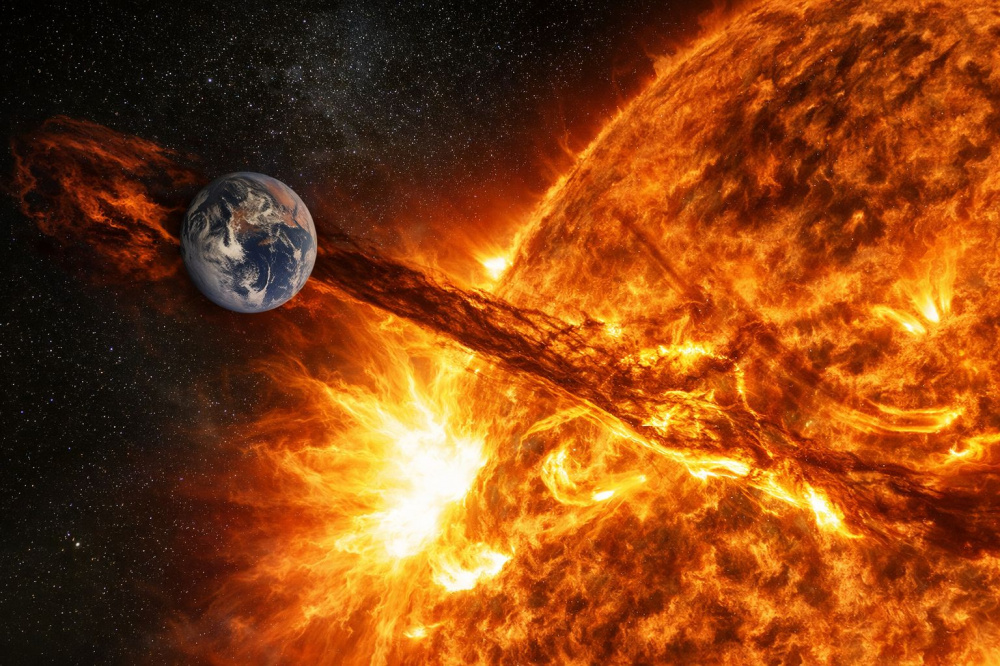
When directed towards Earth, this solar material clashes with our planet's protective magnetosphere. The Earth's magnetic field, typically a shield, can be compressed, distorted, and reconfigured by the incoming solar wind and magnetic fields. This interaction generates powerful electrical currents in the upper atmosphere, which in turn induce further currents within the Earth itself. These induced currents, known as geomagnetically induced currents (GICs), are the primary mechanism through which magnetic storms wreak havoc on ground-based technology.
A scale of intensity
Magnetic storms are classified using a G-scale from G1 (minor) to G5 (extreme). While G1 and G2 storms are relatively common and usually cause minimal disruption, G3, G4, and especially G5 events can trigger widespread technological failures and present significant challenges for cities like Philadelphia. Understanding this scale is crucial for assessing the potential impact and necessary preparedness measures.
The invisible threat to philadelphia's infrastructure
Philadelphia, with its dense urban environment and extensive infrastructure, presents a particularly vulnerable target for the effects of strong magnetic storms. The sheer concentration of interconnected systems means that a single point of failure can cascade rapidly, creating widespread disruption.
Power grid vulnerability
The most significant and widely recognized threat comes to the electrical power grid. Philadelphia relies on a complex network of power lines, substations, and transformers, managed by entities like PECO and overseen by regional transmission organizations like PJM Interconnection. During a strong magnetic storm, GICs can flow through these conductive networks, causing:
- Overheating of transformers
- Voltage fluctuations and sags
- Protective relays to trip, leading to widespread power outages
A major G5 storm could potentially damage critical high-voltage transformers, which are expensive, large, and time-consuming to replace. The subsequent blackouts could plunge large parts of the city into darkness, affecting everything from traffic lights to hospitals and water treatment plants.
The silent surge of geomagnetic currents poses an existential threat to the delicate balance of our electrified world, turning the sky's unseen tempest into an earthly blackout.
Communication disruptions
Beyond the power grid, magnetic storms can severely impair communication systems. Satellites, crucial for GPS navigation, weather forecasting, and satellite television, can experience increased drag, orbital errors, and even temporary outages due to atmospheric heating and increased radiation. For a city like Philadelphia, this translates to:
- Disruption to GPS-dependent systems in transportation (ride-sharing, deliveries, aviation)
- Errors in precision timing signals used by financial institutions on Wall Street West
- Interference with high-frequency radio communications, impacting emergency services and aviation
Pipelines and railways
Less obvious but equally concerning is the potential impact on metallic pipelines and railway systems. GICs can flow through these long conductors, accelerating corrosion rates. While not an immediate threat, prolonged exposure to induced currents during recurrent storms can weaken critical infrastructure over time, leading to leaks in gas or water pipelines, and compromising railway signal integrity.
Aviation concerns
Aircraft flying into or out of Philadelphia International Airport (PHL) at high altitudes are exposed to increased radiation levels during a magnetic storm. Furthermore, compasses can be affected, and satellite navigation systems become less reliable. While pilots are trained to handle such events, severe storms necessitate re-routing or even grounding flights, causing significant travel delays and economic impact.
Beyond the grid natural phenomena
While the immediate concerns revolve around technological infrastructure, magnetic storms can also manifest in breathtaking natural phenomena and subtle biological effects.
Aurora borealis over philly
One of the most visually stunning effects of a strong geomagnetic storm is the aurora borealis, or northern lights. While Philadelphia’s latitude typically places it too far south for regular aurora sightings, an intense G4 or G5 storm can push the aurora oval much further south. Imagine the sight: a rare, ethereal glow painting the night sky above the Benjamin Franklin Bridge, a cosmic ballet unfolding above the urban sprawl. Such an event would be a fleeting, wondrous spectacle, momentarily uniting the city under a celestial marvel.
Animal navigation
Some research suggests that magnetic storms can disrupt the natural navigation systems of animals, particularly migratory birds, whales, and certain fish species that rely on Earth's magnetic field for orientation. While direct, localized impacts on Philadelphia's wildlife are hard to quantify, it's a testament to the broad reach of these cosmic influences.
Potential health considerations
Although largely anecdotal and still under scientific debate, some individuals report experiencing headaches, migraines, and sleep disturbances during periods of intense geomagnetic activity. The exact mechanisms, if any, remain elusive, but it's a topic of ongoing research, suggesting that even our biology might be subtly attuned to the rhythms of space weather.
Interesting facts about magnetic storms
- The carrington event of 1859 was the most powerful geomagnetic storm in recorded history. It caused telegraph systems worldwide to fail, sparking fires and allowing operators to send messages without power, using only the induced currents. If such an event happened today, it could cause global blackouts lasting weeks or months and trillions of dollars in damage
- Auroras are more common at higher latitudes because the Earth's magnetic field lines converge at the poles, allowing charged particles to penetrate deeper into the atmosphere there
- While solar flares release energy incredibly quickly (minutes), Coronal Mass Ejections (CMEs) travel slower, reaching Earth typically within 1-3 days, providing some lead time for predictions and preparedness
- Scientists at NOAA's Space Weather Prediction Center (SWPC) continuously monitor the sun for activity, issuing watches and warnings much like terrestrial weather forecasts, but for space
- The average frequency of extreme (G5) geomagnetic storms is about once every 50-100 years, but significant (G3-G4) events occur more often, every few years
- Early electrical pioneers in Philadelphia and elsewhere might have unknowingly experienced minor GICs in their nascent telegraph lines, attributing them to other electrical phenomena
Historical perspective and modern preparedness
While no specific "Magnetic Storm of Philadelphia" event is etched into local lore, the city has undoubtedly experienced the unseen effects of countless solar outbursts throughout its history. In the age of telegraphs, a strong storm might have caused localized disruptions, a mere inconvenience in a world less reliant on electricity. Today, however, the stakes are dramatically higher.
Modern Philadelphia, like any major metropolitan area, is acutely aware of its vulnerabilities. Utility companies, such as PECO, and grid operators, like PJM Interconnection, invest in resilient infrastructure and have protocols in place to monitor space weather forecasts and take preventative measures. These can include temporarily adjusting grid configurations, reducing transformer loads, or even selectively shutting down vulnerable equipment during imminent severe storm alerts.
The legacy of ingenuity that built Philadelphia now demands an equally innovative approach to safeguarding it from forces beyond our atmosphere.
Ongoing research and mitigation
Scientists and engineers continually research new ways to make power grids more resilient to GICs, including the development of advanced grounding techniques, specialized capacitors, and protective devices for transformers. Furthermore, improved space weather forecasting models are crucial, providing more accurate and timely warnings to allow for better preparedness.
Public awareness and resilience
While direct public action during a magnetic storm is limited, general preparedness for extended power outages-such as having emergency kits, communication plans, and non-electric heat sources-can significantly enhance a city's resilience. Philadelphia, a city that has weathered countless challenges, stands as a testament to human adaptability, a quality that will be increasingly vital in facing the unpredictable grandeur of our cosmos.