
Miami, a city synonymous with sun-drenched beaches, vibrant nightlife, and a dynamic urban pulse, rarely conjures images of cosmic phenomena. Yet, beneath its dazzling veneer and constant hum of activity, an unseen force from beyond our planet quietly shapes the technological landscape and potential vulnerabilities of this coastal metropolis. Magnetic storms, born from the fiery heart of our sun, are not just distant astronomical events; they are profound geomagnetic disturbances that can ripple through Earth’s magnetosphere, touching everything from our power grids to the very fabric of modern communication.
The notion of a magnetic storm impacting Miami might seem abstract, a plot point from a science fiction novel. However, as our society becomes increasingly reliant on intricate technological systems, the once-esoteric field of space weather transforms into a critical concern for infrastructure resilience. Miami, with its sprawling urban area, complex transportation networks, and vital role in global trade and tourism, presents a unique case study for understanding how these celestial tempests could manifest their influence in a distinctly twenty-first-century setting.
The sun’s fiery breath and earthly repercussions
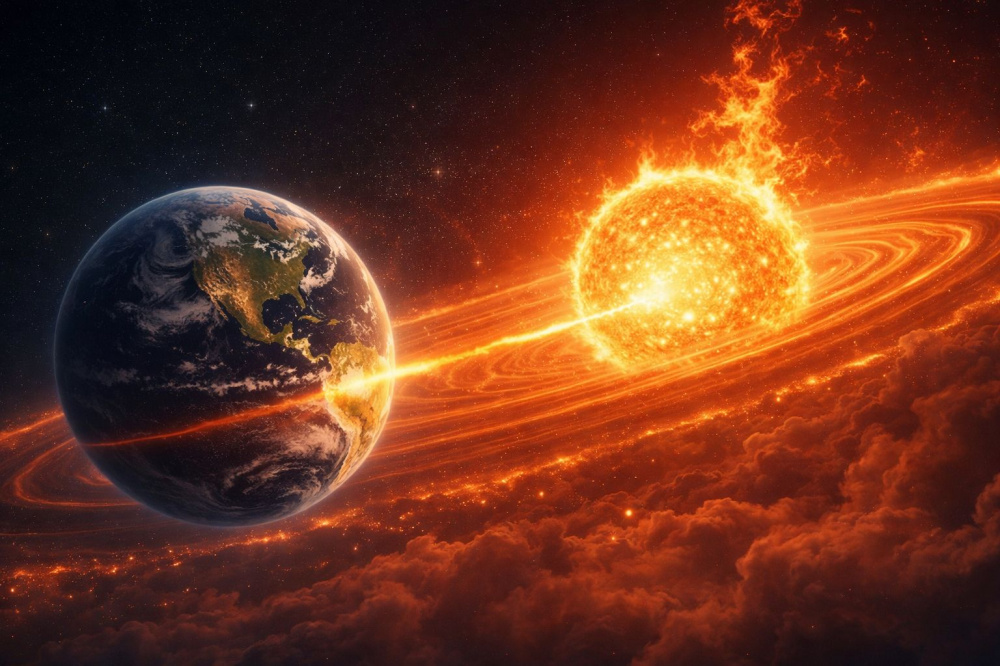
Magnetic storms are essentially grand-scale disturbances in Earth’s magnetosphere, triggered by energetic outbursts from the sun. Our star, a seemingly placid golden orb, is in fact a dynamic, tempestuous furnace, constantly spewing charged particles and magnetic fields into space. When these solar emissions, primarily in the form of coronal mass ejections (CMEs) and high-speed solar winds, collide with Earth's protective magnetic bubble, a cosmic shockwave ensues.
A coronal mass ejection is a colossal expulsion of plasma and magnetic field from the sun's corona. Imagine a billion-ton blob of superheated gas, accelerated to millions of miles per hour, hurtling towards Earth. If this ejected material happens to be directed our way, it can compress the magnetosphere, generate intense electric currents, and cause rapid fluctuations in Earth's magnetic field. This is the essence of a geomagnetic storm.
Solar flares versus CMEs
It is important to differentiate between solar flares and CMEs, though they often occur together. Solar flares are sudden bursts of radiation across the electromagnetic spectrum, traveling at the speed of light. They can cause immediate radio blackouts on Earth's sunlit side, affecting high-frequency communications and GPS signals within minutes of their eruption. CMEs, on the other hand, are slower, taking anywhere from one to five days to reach Earth, but they carry the bulk of the plasma and magnetic energy responsible for major geomagnetic storms. While a flare is a flash of light, a CME is the subsequent tidal wave of matter.
The sun, an ancient and steadfast companion, periodically reminds us of its formidable power, weaving a cosmic tapestry of energy that extends billions of miles, even to the vibrant shores of Miami.
When these charged particles from a CME interact with Earth's magnetic field, they inject energy into the magnetosphere, leading to dazzling aurora displays at high latitudes. While Miami will not witness the ethereal dance of the Northern Lights due to its equatorial proximity, the underlying geomagnetic disturbances are far from benign. These invisible tendrils of cosmic energy penetrate deep into our planet's technological infrastructure, posing distinct challenges for cities like Miami, which thrive on uninterrupted connectivity and power.
Miami’s digital tapestry and power grid vulnerability
Miami is a twenty-first-century city, intricately woven with digital threads. Its economy, transportation, and daily life are utterly dependent on a continuous flow of electricity and a resilient communications infrastructure. This technological reliance, while empowering, simultaneously exposes the city to the potential disruptions wrought by powerful magnetic storms.
Impact on the power grid
One of the most significant threats from a severe magnetic storm is to the electrical power grid. Geomagnetically induced currents (GICs) are created when fluctuating magnetic fields induce electric currents in long conductors, such as power transmission lines. These GICs can flow through transformer windings, causing them to overheat and, in extreme cases, melt or explode. A large-scale transformer failure could lead to widespread and prolonged power outages.
For Miami, a city deeply reliant on air conditioning to combat its tropical heat, a major power outage would be catastrophic. Beyond immediate discomfort, it would cripple hospitals, disrupt water purification systems, halt financial transactions, and bring transportation to a standstill. The interconnected nature of the grid means that even if Miami itself isn't directly hit, failures elsewhere in the national grid could cascade and affect the city.
Disruption to navigation and communication
GPS (Global Positioning System) is ubiquitous in modern life, guiding everything from car navigation to airline precision landings and maritime shipping. Magnetic storms, by agitating the ionosphere (a layer of Earth's upper atmosphere containing ionized particles), can disrupt GPS signals. The ionosphere acts like a cosmic lens, and during a storm, its irregularities can cause GPS signals to be delayed, degraded, or even lost entirely. For a city that is a major port and an international aviation hub, such disruptions could have severe consequences.
Imagine cargo ships navigating the crowded channels of PortMiami relying on precise GPS coordinates, only to find their systems compromised. Or an air traffic controller at Miami International Airport grappling with compromised navigational data for incoming flights. These scenarios underscore the profound dependency on accurate satellite-based positioning. Beyond GPS, satellite communications themselves, crucial for everything from television broadcasts to emergency services, can be impacted by solar radiation and atmospheric disturbances during a geomagnetic event.
Interesting facts about magnetic storms and their reach
- The Carrington Event of 1859
The most powerful known geomagnetic storm in recorded history, it caused telegraph systems to fail, shock operators, and even ignited telegraph papers. Auroras were seen as far south as the Caribbean. Had such an event occurred today, it would likely devastate modern infrastructure globally.
- Not just auroras
While auroras are the most visually stunning manifestation of magnetic storms, the energy causing them can also induce currents in pipelines, leading to corrosion and potential ruptures, though less likely in Miami's specific infrastructure profile.
- Earth's magnetic field is weakening
Studies suggest Earth’s magnetic field has weakened by about 15% over the last 200 years, and there's a large, growing region of reduced field strength over South America and the South Atlantic Ocean, known as the South Atlantic Anomaly (SAA). Miami is geographically close enough for some of the effects of this weakened field to be relevant for satellites passing over the region, making them more vulnerable to radiation.
- Solar cycle
The sun goes through an approximately 11-year cycle of activity, with periods of high activity (solar maximum) and low activity (solar minimum). Major magnetic storms are more frequent during solar maximum, making preparedness a cyclical concern.
- The speed of light versus solar wind
Solar flares, emitting X-rays and UV radiation, impact Earth at the speed of light (8 minutes from sun to Earth). Coronal mass ejections, carrying charged particles, travel much slower, taking typically 1-3 days to reach Earth, providing some warning time for major events.
Beyond technology
While the focus is often on technology, the expansive reach of magnetic storms can touch other aspects of life, some more direct than others, and others more speculative but still within the realm of scientific inquiry.
Wildlife and ecological patterns
Many migratory animals, including birds, sea turtles, and whales, are known to use Earth's magnetic field for navigation. While the full impact of severe geomagnetic storms on these creatures is still being researched, strong field fluctuations could potentially disorient them. Given Miami's position as a critical migratory bird corridor and home to diverse marine life, this is an area of ongoing scientific interest, albeit less immediately catastrophic than infrastructure failure. A sea turtle hatchling, instinctively drawn to the ocean by subtle magnetic cues, could face an invisible hurdle during a pronounced geomagnetic disturbance.
For Miami, where tourism and natural beauty are intertwined, even subtle ecological shifts could eventually have an impact. The Everglades, a unique ecosystem bordering the city, hosts an array of wildlife that relies on the delicate balance of natural forces. Although the direct correlation between magnetic storms and specific wildlife behavior remains a niche area of study, the interconnectedness of Earth's systems suggests that no influence is entirely isolated.
Human health and psychological well-being
While there is no scientific consensus linking magnetic storms directly to severe human health issues, some studies have explored potential subtle correlations. These include anecdotal reports or preliminary research suggesting possible impacts on sleep patterns, mood, cardiovascular events, or migraines in sensitive individuals. The exact mechanisms, if any, are not well understood and are generally considered secondary to direct technological impacts. However, in a city as bustling and stress-prone as Miami, any factor, however minor, that might influence public health and well-being deserves consideration within a holistic preparedness framework.
Miami, a city built on vibrant energy and human ingenuity, stands at the fascinating intersection where the terrestrial meets the celestial, reminding us that even distant cosmic events can echo in our daily lives.
Mitigation and preparedness in a vulnerable world
The awareness of magnetic storm threats has grown significantly, leading to international efforts in space weather monitoring and preparedness. For a vital hub like Miami, integrating these strategies into local resilience plans is crucial.
The role of space weather forecasting
Organizations like the National Oceanic and Atmospheric Administration's (NOAA) Space Weather Prediction Center (SWPC) continuously monitor the sun and predict space weather events. Satellites like SOHO, SDO, and ACE provide early warnings of solar flares and CMEs, giving authorities on Earth precious hours or days to prepare. This forecasting capability is the first line of defense, allowing power grid operators to take preventative measures, such as temporarily reducing voltage or reconfiguring circuits to minimize GIC exposure.
For Miami's critical infrastructure, this means having protocols in place to receive and act upon these warnings. For example, utilities could implement pre-emptive load shedding in specific areas, or ground control for aviation could revise flight paths or communicate potential GPS degradation to pilots. The key is to transform raw scientific data into actionable intelligence for local stakeholders.
Resilience of infrastructure
Building resilience into Miami's infrastructure involves both technological upgrades and operational adjustments. For the power grid, this includes investing in more robust transformers designed to withstand GICs, or developing 'black start' capabilities to rapidly restore power after a widespread outage. For communication networks, diversification-using multiple pathways and technologies (fiber optics, satellite, terrestrial radio)-can help ensure redundancy when one system is compromised.
Furthermore, local emergency management agencies in Miami need to incorporate space weather scenarios into their disaster preparedness drills. This would involve training first responders, establishing alternative communication channels, and educating the public on potential impacts. A well-informed populace is better equipped to cope with disruptions, reducing panic and allowing for more orderly responses. The city’s coastal location also means it is accustomed to hurricane preparedness, a framework that could be adapted for other large-scale natural disruptions.
Global collaboration and local action
Addressing the threat of magnetic storms requires global collaboration, as space weather is a transnational phenomenon. International agencies share data and research, working together to enhance forecasting models and develop mitigation strategies. However, the ultimate impact and response are localized. For Miami, this means translating global scientific understanding into specific, tangible actions that protect its residents, economy, and critical assets.
The challenge for Miami, like many modern cities, is to balance its relentless pursuit of progress and technological integration with a keen awareness of its vulnerabilities to forces both terrestrial and cosmic. Magnetic storms, while invisible and often overlooked, represent a potent reminder that even in our most advanced urban centers, we remain connected to the grand, dynamic ballet of the solar system.