
Whispers from the sun Magnetic storms and the bluff city
Memphis, Tennessee, a city steeped in musical heritage and cradled by the mighty Mississippi, often conjures images of blues, barbecue, and bustling riverfront activity. Yet, beneath the veneer of its vibrant culture and resilient spirit lies an often-unseen vulnerability to forces far beyond the terrestrial realm. The dynamic interplay between our planet and the sun, an ethereal ballet of cosmic energies, can manifest as what we commonly refer to as magnetic storms. While such phenomena might seem like distant scientific curiosities, their potential to ripple through the technological fabric of modern society, including a city like Memphis, is a subject of increasing importance and scientific scrutiny.
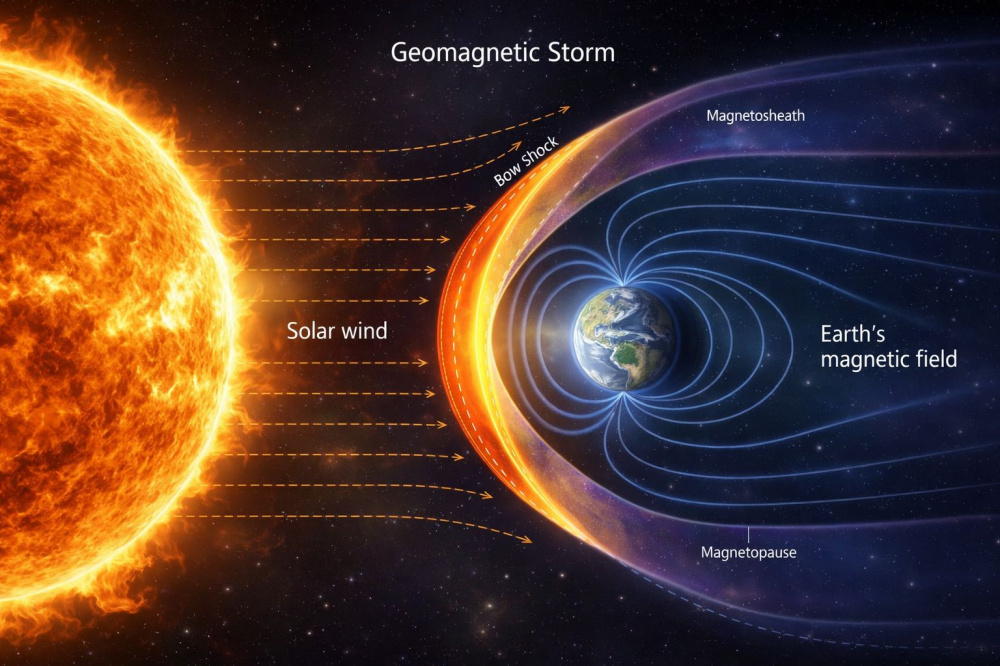
Far from the tranquil hum of daily life in the Mid-South, the sun's tumultuous surface constantly ejects plasma and magnetic fields into space. When these solar emissions, known as coronal mass ejections (CMEs) or high-speed solar wind streams, collide with Earth's protective magnetic field, they can trigger geomagnetic storms. These disturbances have the capacity to induce electric currents in long conductors, interfere with satellite communications, disrupt GPS signals, and even pose risks to critical infrastructure. For Memphis, a major transportation hub with a significant reliance on modern technology, understanding and preparing for such cosmic events is not just a scientific exercise, but a practical necessity for safeguarding its future.
Understanding geomagnetic storms
The sun's fiery dance
At the heart of every magnetic storm is the sun, our star, a colossal fusion reactor perpetually in motion. Its surface, a roiling ocean of superheated plasma, is a stage for dramatic events like solar flares and coronal mass ejections. Solar flares are intense bursts of radiation, traveling at the speed of light, that can reach Earth in mere minutes, causing radio blackouts. More concerning, however, are CMEs, colossal bubbles of plasma and magnetic field that erupt from the sun's corona. These CMEs, carrying billions of tons of matter, hurtle through space at incredible speeds, often taking one to three days to reach Earth.
The sun, in its cosmic grandeur, orchestrates a silent ballet whose movements, though unseen, profoundly influence our terrestrial existence.
When a CME is directed towards Earth, its impact can be profound. The sun’s magnetic field lines, embedded within the plasma, interact with Earth's own magnetosphere. This interaction can cause our planet's magnetic field to compress, expand, and oscillate, generating geomagnetically induced currents (GICs) in the process. The sheer scale of these events, originating millions of miles away, underscores the interconnectedness of our solar system and the fragility of our technologically dependent world.
Earth's invisible armor
Our planet is shielded by an invisible, yet immensely powerful, magnetic field, generated by the convection of molten iron in its outer core. This magnetosphere acts as a vital defense, deflecting most of the harmful charged particles and radiation emanating from the sun. Without it, life as we know it would likely not exist on the surface. When a solar storm hits, the magnetosphere absorbs and channels much of the energy, often resulting in the breathtaking displays of aurora borealis and australis near the poles.
However, even this robust shield has its limits. Extremely powerful solar events can overwhelm parts of the magnetosphere, allowing charged particles to penetrate deeper into Earth's atmosphere. This penetration is what drives the geomagnetically induced currents that can wreak havoc on long-distance infrastructure. Scientists continually monitor the sun's activity using satellites like the Solar and Heliospheric Observatory (SOHO) and the Advanced Composition Explorer (ACE), providing crucial early warnings of potential space weather events.
Memphis and the cosmic ripples
A city's quiet vulnerability
Memphis, with its extensive network of infrastructure, from vast electrical grids to sophisticated communication systems, stands as a microcosm of modern societal dependence on technology. While the city is accustomed to battling the forces of nature in the form of floods or severe thunderstorms, the threat of magnetic storms represents a different kind of challenge, one that operates on a global scale but has very real local consequences. The potential impact on Memphis isn't about direct physical damage from radiation but rather the indirect disruption of systems that underpin daily life.
In the heart of the Mississippi Delta, the pulse of Memphis beats in rhythm with technology, making it unexpectedly susceptible to the sun's distant whims.
The Mid-South region, while not directly on the path of typical aurora displays, is still highly susceptible to the effects of GICs due to its latitude and the long power lines that traverse the landscape. Moreover, Memphis is a critical logistics hub, home to FedEx's global superhub and numerous other transportation companies. Any disruption to GPS, satellite communications, or power could have cascading effects, not just locally but across national and international supply chains.
Impact on the power grid
One of the most significant threats posed by magnetic storms to Memphis, and indeed to any developed area, is the potential disruption to the electrical power grid. The long, conductive power lines that crisscross Tennessee and connect to regional grids act like giant antennas for geomagnetically induced currents. When a powerful CME strikes, these GICs can flow through transformers, pushing them beyond their operational limits. This can lead to:
- Voltage instability and fluctuations
- Overheating of transformers, potentially causing damage or failure
- Protective relays tripping, leading to localized or widespread blackouts
- Cascading failures across interconnected grids
The Memphis Light, Gas and Water Division (MLGW) operates a complex system serving hundreds of thousands of customers. A major geomagnetic storm could test the resilience of this infrastructure to its limits, potentially plunging large sections of the city into darkness. The economic and social fallout from an extended power outage, especially in a city that relies heavily on digital commerce and electrified services, would be substantial.
GPS and navigation disruption
In the era of precision logistics and personal navigation, GPS (Global Positioning System) has become indispensable. From delivery trucks navigating city streets to commercial aircraft landing at Memphis International Airport, GPS is the silent orchestrator of modern movement. Magnetic storms, however, can disrupt the signals from GPS satellites. As charged particles from a solar storm interact with Earth's ionosphere, they can distort, delay, or even block the satellite signals.
For Memphis, a global logistics gateway, this presents a significant challenge. Imagine FedEx operations, dependent on precise timing and location data, suddenly experiencing degraded accuracy or complete outages. Local emergency services, construction projects, and even everyday citizens relying on smartphone navigation could face difficulties. The accuracy degradation, even for short periods, could lead to costly delays, navigational errors, and increased safety risks in critical operations.
Communication systems
Beyond GPS, a wide array of communication systems are vulnerable to space weather. High-frequency (HF) radio communications, often used by aviation, maritime vessels, and amateur radio operators, can experience blackouts due to increased absorption in the ionosphere during solar flares and magnetic storms. Satellite communications, vital for long-distance internet, television broadcasts, and corporate data transfer, can also be affected.
The invisible hand of a geomagnetic storm can silence the very airwaves that connect Memphis to the world, reminding us of our delicate technological tether.
While most modern internet infrastructure relies on fiber optics, which are immune to GICs, the satellite links that serve remote areas or provide backup services could be impacted. Such disruptions, though perhaps not catastrophic, could certainly impede business operations, hinder emergency response coordination, and even affect daily online activities for residents of Memphis.
Interesting facts about magnetic storms
- The Carrington Event of 1859 was the most powerful geomagnetic storm in recorded history, causing auroras visible near the equator and sparking telegraph systems across North America and Europe, shocking operators and setting papers on fire.
- A 1989 solar storm caused a nine-hour blackout in Quebec, Canada, due to GICs overloading the Hydro-Québec power grid. The same storm also caused auroras to be seen as far south as Texas.
- The sun's magnetic activity follows an approximately 11-year cycle, with periods of increased activity (solar maximum) and decreased activity (solar minimum). We are currently heading towards a solar maximum, increasing the likelihood of significant space weather events.
- Earth's magnetic field is constantly shifting. The magnetic north pole, for instance, has been drifting towards Siberia at an accelerating pace in recent decades, which necessitates frequent updates to navigation systems.
- Satellites in orbit are directly exposed to solar radiation during magnetic storms, which can damage sensitive electronics and even lead to temporary or permanent failures, impacting services on Earth.
Infrastructure vulnerabilities and preparedness
Pipelines and railways
It's not just the power grid that's susceptible. Long pipelines, common in the energy-rich Mid-South, and railway lines can also act as conductors for GICs. These currents can accelerate corrosion in pipelines, potentially leading to leaks over time, or interfere with signaling systems on railways. While not an immediate disaster, cumulative damage can pose long-term risks to essential infrastructure and environmental safety around Memphis.
The comprehensive network of pipelines carrying natural gas and other commodities through the Memphis area, alongside its vital rail links that connect the nation, are silently vulnerable. The integrity of these systems, crucial for the region's economy and energy supply, could be subtly undermined by recurring geomagnetic activity, necessitating advanced monitoring and mitigation strategies beyond typical operational protocols.
Aviation and logistics
Memphis International Airport is a cornerstone of the global logistics network, particularly for cargo. Aircraft rely heavily on satellite navigation, communication, and onboard electronics. During severe magnetic storms, increased radiation at aviation altitudes can pose a minor risk to passengers and crew, but more significantly, the disruption of GPS and radio communications can impact flight planning, air traffic control, and safe landings. Delays and rerouting due to space weather could ripple through the tight schedules of cargo and passenger airlines.
The complex dance of a modern airport, a symphony of precise movements, can be thrown into disarray by the unseen forces unleashed by a distant star.
The sheer volume of air traffic passing through Memphis, combined with its role as a critical node in national and international supply chains, means that even minor disruptions can have amplified consequences. Preparedness in the aviation sector involves robust backup systems, alternative navigation methods, and real-time space weather alerts to ensure the continuity and safety of operations.
Preparing for the unpredictable
Given the potential for widespread disruption, preparedness for magnetic storms in Memphis involves multiple layers, from utility companies to individual citizens. Utility providers like MLGW are increasingly investing in hardening their infrastructure, including installing equipment to block GICs, upgrading transformers, and developing robust contingency plans for widespread outages. Government agencies, both federal and state, are also developing strategies for national resilience to space weather.
For individuals and businesses in Memphis, preparedness mirrors strategies for other natural disasters. This includes having emergency kits with non-perishable food, water, flashlights, and battery-powered radios. For businesses, developing robust backup systems for data, establishing alternative communication channels, and training staff on emergency protocols are essential steps to mitigate potential losses from space weather events. Awareness, coupled with proactive measures, forms the bedrock of resilience.
The rare spectacle of aurora
While the primary concern for Memphis regarding magnetic storms is infrastructural disruption, there is a rare, captivating flip side: the potential for aurora visibility. Under extreme geomagnetic conditions, the northern lights, usually confined to polar regions, can sometimes be seen at much lower latitudes. While not a common occurrence for Memphis, a truly powerful storm, akin to the Carrington Event, could theoretically paint the Tennessee sky with ethereal greens and reds. This serves as a stark, beautiful reminder of the powerful, unseen forces at play between our sun and our planet.