
In the vibrant tapestry of Los Angeles, a city synonymous with innovation, entertainment, and endless sunshine, lies an often-unseen vulnerability. Beneath the glimmer of Hollywood lights and the hum of freeway traffic, the very systems that underpin modern life are susceptible to disturbances originating billions of miles away. These aren't earthquakes or wildfires, but rather the cosmic tremors of magnetic storms, celestial tempests that can ripple through our planet's protective magnetic field with profound earthly consequences.
Los Angeles, a sprawling megalopolis perched on the edge of the Pacific, is a microcosm of global technological reliance. Its intricate power grids, sophisticated communication networks, and GPS-dependent industries make it a particularly sensitive node in the face of space weather events. Understanding how these solar eruptions translate into tangible threats for a city like LA is crucial, moving beyond mere scientific curiosity to practical preparedness.
The celestial ballet and its earthly reverberations
Understanding magnetic storms
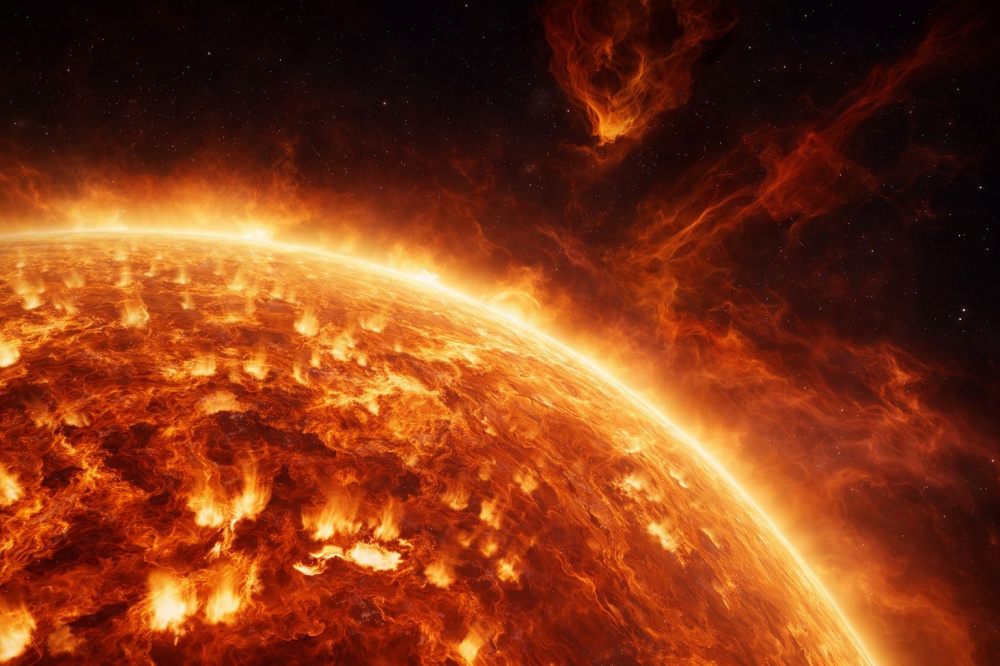
Magnetic storms, also known as geomagnetic storms, are major disturbances of Earth's magnetosphere caused by energetic bursts of radiation and charged particles from the Sun. The primary culprits are coronal mass ejections (CMEs) and solar flares. A solar flare is an intense burst of radiation, while a CME is a colossal eruption of plasma and magnetic field from the Sun's corona, hurled into space at immense speeds. When a CME or high-speed solar wind stream intersects with Earth's magnetic field, it can compress and agitate it, leading to a geomagnetic storm.
The Sun, a benevolent giver of light and warmth, occasionally reminds us of its immense power, sending out cosmic ripples that can test the very fabric of our technological world.
These phenomena aren't just light shows for scientists; they are powerful waves of energy that can induce electric currents on Earth, disrupt radio communications, and even trigger auroras, though witnessing an aurora in Los Angeles is an exceptionally rare event.
Los Angeles geographical context
While high-latitude regions are typically more prone to the dramatic visual effects of auroras and certain direct impacts of magnetic storms, Los Angeles, situated at a mid-latitude, is far from immune. Its geographical position still places it within the reach of geomagnetically induced currents (GICs) that can affect long conductors like power lines and pipelines. What makes LA particularly vulnerable isn't just its latitude, but its sheer density of critical infrastructure and its deep reliance on interconnected technological systems. From a sprawling port that processes vast amounts of cargo to its extensive urban transportation network and digital entertainment industries, the city's operational continuity hinges on stable power and communication.
Potential impacts on Los Angeles infrastructure
Power grid vulnerability
Perhaps the most significant threat of a severe magnetic storm to Los Angeles is its potential impact on the power grid. As Earth's magnetic field fluctuates during a storm, it creates electric currents within the ground, known as GICs. These currents can flow into long conductors like power transmission lines, causing transformers to overheat, trip circuit breakers, or even permanently fail. For a city like Los Angeles, with its extensive network of high-voltage transmission lines connecting it to distant power generation facilities, the risk is substantial.
A cascade of localized failures could quickly escalate into widespread blackouts, plunging millions into darkness and crippling vital services across the Los Angeles metropolitan area.
Such an event would not only be a massive inconvenience but a severe economic and public safety crisis. Critical facilities, from hospitals to emergency services and water treatment plants, rely on a stable power supply, making grid resilience a paramount concern.
Communication and navigation systems
Los Angeles is a global hub for air travel, maritime shipping, and an increasingly sophisticated logistics sector, all heavily dependent on precise communication and navigation. Magnetic storms can severely disrupt these systems. High-frequency (HF) radio communications, often used by aviation and emergency services for long-distance contact, can be completely blacked out. More critically, the Global Positioning System (GPS), which underpins everything from ride-sharing apps to precision agriculture, aviation navigation, and even financial transactions, can experience significant accuracy degradation or complete outages. The ionosphere, a layer of Earth's atmosphere, becomes turbulent during a storm, scattering GPS signals and making precise positioning difficult or impossible.
Other technological considerations
Beyond power and communications, magnetic storms can have other insidious effects. Long pipelines, essential for transporting water, oil, and gas across California, are also susceptible to GICs, which can accelerate corrosion rates. Subsea communication cables, while buried, can also be affected at their terminal ends. Moreover, the vast array of satellites orbiting Earth, crucial for everything from weather forecasting to television broadcasting and internet connectivity, are vulnerable to increased radiation, potentially leading to operational glitches or permanent damage. In a city as interconnected as Los Angeles, a disruption in any of these areas would send ripples through daily life and economic activity.
Interesting facts about magnetic storms and Los Angeles
- The Carrington Event (1859) The most famous and severe magnetic storm on record, the Carrington Event, caused telegraph systems to fail and even sparked fires. If an event of similar magnitude occurred today, its impact on Los Angeles and the global technological infrastructure would be catastrophic, far exceeding any previous natural disaster in economic cost and societal disruption.
- Rare Auroras in LA While rare, extremely powerful magnetic storms have the potential to make auroras visible from latitudes as low as Los Angeles. Such an event would be an incredible sight for residents, but it would also signal an unprecedented level of geomagnetic activity with likely severe consequences.
- Economic Impact Estimates A severe space weather event could cost the global economy trillions of dollars, with recovery taking years. Los Angeles, as a major economic center, would bear a significant portion of this burden due to its critical infrastructure and high population density.
- The Inverse Square Law The Sun's energy diminishes with the square of the distance from its source, yet enough remains to dramatically affect Earth's magnetosphere, highlighting the sheer power of solar eruptions.
- Predicting the Unpredictable While scientists can detect CMEs leaving the Sun, predicting their exact trajectory and impact strength on Earth's magnetic field remains a complex challenge, offering varying lead times for preparedness.
Preparing for the unseen storm
Monitoring and early warning systems
Forewarned is forearmed. The first line of defense against magnetic storms affecting Los Angeles is robust space weather monitoring. Organizations like the National Oceanic and Atmospheric Administration's (NOAA) Space Weather Prediction Center (SWPC) continuously observe the Sun and model potential geomagnetic disturbances. These centers provide crucial alerts and warnings to utility companies, airlines, and government agencies, offering a window of opportunity, however brief, for mitigation actions.
Advanced warning systems act as our cosmic sentinels, providing critical minutes or hours that can make the difference between a manageable disruption and a widespread catastrophe.
In Los Angeles, local authorities and utility providers like the Los Angeles Department of Water and Power (LADWP) are increasingly integrating these space weather forecasts into their operational planning and emergency preparedness protocols.
Resilience and mitigation strategies
Building resilience into Los Angeles's infrastructure is key to minimizing the impact of magnetic storms. For the power grid, this involves measures such as installing blocking devices to prevent GICs from entering transformers, upgrading older transformers with more resilient designs, and developing sophisticated load management strategies to reduce stress during a storm. For communications, this includes investing in redundant systems and exploring alternative communication methods that are less susceptible to ionospheric disturbances. Aviation and maritime industries are also refining contingency plans for GPS outages.
The human element and public awareness
Beyond the grid personal impacts
While the focus often lies on critical infrastructure, the human element in Los Angeles cannot be overlooked. A major magnetic storm could disrupt daily life in countless ways. Imagine traffic lights malfunctioning, cell phone networks failing, bank ATMs becoming inoperable, and the internet grinding to a halt. In a city as reliant on digital connectivity and instantaneous information as LA, such disruptions would impact everything from work and commerce to social interactions and personal safety. The sheer psychological toll of sudden, widespread technological failure would be significant, underscoring the need for personal preparedness alongside systemic resilience.
Fostering informed communities
Public awareness and education are vital components of preparedness for magnetic storms. While these events are less tangible than an earthquake, their potential consequences are equally profound. Informing Los Angeles residents about the nature of space weather, its potential impacts, and simple steps they can take-such as having emergency kits, offline maps, and backup communication plans-can significantly reduce panic and improve community response. Government initiatives and public service campaigns play a crucial role in demystifying these cosmic threats and empowering individuals to be part of the solution, fostering a more resilient and informed Los Angeles.