
- Magnetic storms and their essence
- The unique perspective of Long Beach
- Potential impacts on Long Beach
- Human experience and local preparedness
- Interesting facts about magnetic storms
- Monitoring and prediction
- Mitigation strategies for urban centers like Long Beach
- The subtle dance of solar forces and terrestrial life
Long Beach, California, a vibrant tapestry of sun-drenched beaches, bustling port activity, and an ever-evolving urban landscape, often conjures images of endless summer and coastal serenity. Yet, beneath the calm facade of its Pacific horizon lies a less-considered vulnerability-a susceptibility to forces originating millions of miles away, deep within the heart of our star. Magnetic storms, though rarely discussed in local news alongside traffic and surf reports, represent a profound cosmic ballet with the potential to ripple through the technological sinews of this dynamic city, quietly challenging the resilience of its modern infrastructure.
Magnetic storms and their essence
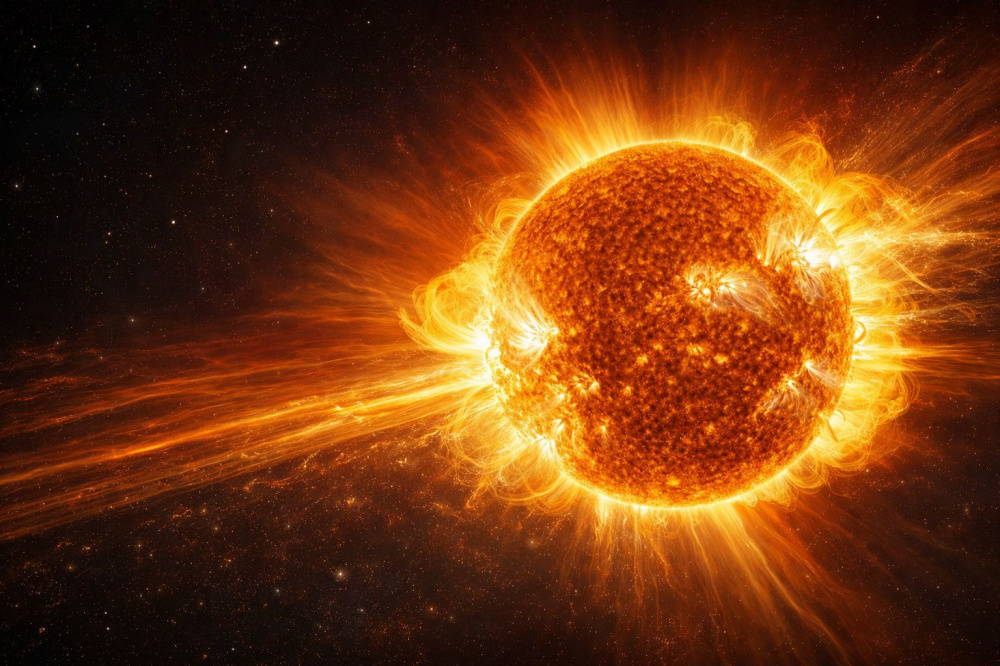
At its core, a magnetic storm, or geomagnetic storm, is a significant disturbance of Earth's magnetosphere, the protective bubble of magnetic fields surrounding our planet. These cosmic temper tantrums are primarily ignited by powerful eruptions on the Sun's surface, specifically solar flares and coronal mass ejections (CMEs). A solar flare is an intense burst of radiation, while a CME is an immense cloud of magnetized plasma ejected into space. When these CMEs hurtle towards Earth, they carry with them a surge of charged particles and magnetic fields that can collide with our planet's own magnetic shield.
Understanding geomagnetic activity
The impact of a CME on Earth’s magnetosphere is akin to a cosmic sledgehammer striking a protective bell. This collision compresses the magnetosphere on the sunward side and stretches it out into a long tail on the night side. The kinetic energy from these solar particles is transferred, accelerating electrons and protons into the magnetosphere's inner regions, creating electric currents that flow through the ionosphere-the upper layer of Earth's atmosphere. These currents induce fluctuations in Earth's magnetic field, leading to the phenomena we recognize as geomagnetic storms.
Scientists gauge the intensity of these storms using various indices, with the Kp-index being one of the most widely cited. Ranging from 0 to 9, it quantifies the disturbance level of Earth's magnetic field. A Kp-index of 5 or higher indicates a geomagnetic storm, escalating in severity with each subsequent point. While minor storms might pass unnoticed by most, severe events can unleash cascading effects across vast geographical regions, including bustling urban centers like Long Beach.
The unique perspective of Long Beach
Long Beach’s geographical coordinates, nestled on the coast of Southern California at approximately 33.7 degrees north latitude, place it in a fascinating position regarding geomagnetic phenomena. Unlike cities at higher latitudes that routinely witness the ethereal dance of the aurora borealis, Long Beach experiences such sky-bound spectacles with extreme rarity, usually only during the most potent and widespread geomagnetic storms. However, the lack of visible auroras does not equate to immunity from the other, more subtle yet potentially disruptive, effects.
Coastal urban vulnerabilities
This sprawling coastal city, with its intricate network of power lines, submarine cables, sophisticated navigation systems vital for its massive port, and an incredibly dense population reliant on uninterrupted communication, presents a unique set of vulnerabilities. The conductive earth of coastal regions can sometimes amplify geomagnetically induced currents (GICs), making even moderate storms a concern for critical infrastructure operators. The very essence of modern urban life, intricately woven with technology, becomes a delicate instrument played upon by solar winds.
The city's expansive port, one of the busiest in the world, relies heavily on GPS for precise navigation of colossal container ships and efficient logistics. A disruption, even temporary, could create a bottleneck of unimaginable scale, halting the flow of goods and impacting global supply chains.
"In a world increasingly reliant on precision timing and instantaneous communication, even a fleeting cosmic disturbance can cast long shadows over our most robust technological achievements."
Potential impacts on Long Beach's infrastructure
The unseen currents of a magnetic storm can wreak havoc in surprisingly diverse ways, reaching far beyond the romanticized glow of an aurora. For Long Beach, these potential impacts touch upon virtually every facet of its technological fabric.
Power grid integrity
Perhaps the most well-documented threat from severe geomagnetic storms is to electrical power grids. When Earth's magnetic field fluctuates rapidly, it induces geomagnetically induced currents (GICs) in long conductors like power transmission lines. These GICs can saturate transformers, causing them to overheat, trip circuit breakers, or even fail permanently. A widespread transformer failure could lead to extensive power outages, plunging entire districts of Long Beach into darkness. This isn't merely an inconvenience; it can cripple essential services, from hospitals to water treatment plants, and disrupt the economic pulse of the city.
Communication systems disruptions
Modern communication relies heavily on satellite technology, radio frequencies, and fiber optics. Magnetic storms can ionize the upper atmosphere, causing signal degradation or complete blackouts for high-frequency (HF) radio communications, crucial for aviation and maritime safety. Satellite signals, including those used by GPS, can be scattered or delayed as they pass through a disturbed ionosphere, leading to inaccuracies or complete loss of service. For a city like Long Beach, with its critical port operations and proximity to major air traffic corridors, precise and reliable communication and navigation are non-negotiable.
Aviation and maritime operations
Aircraft flying at high altitudes are more susceptible to increased radiation levels during a severe storm, posing risks to both passengers and crew. Furthermore, navigation systems on both aircraft and ships, which depend on GPS and other satellite-based services, can experience significant errors. Imagine a colossal container ship navigating the intricate channels of Long Beach Harbor relying on a compromised GPS signal-the potential for accidents and logistical nightmares is stark.
Pipelines and metallic structures
Even seemingly impervious structures like oil and gas pipelines, extending for hundreds of miles, are vulnerable. GICs can flow through these metallic conduits, accelerating corrosion and potentially compromising their structural integrity. While not an immediate dramatic effect like a power outage, this long-term degradation poses significant safety and environmental risks over time.
Human experience and local preparedness
While the direct physical threat to humans from magnetic storms is minimal, the societal implications of infrastructure disruption are vast. For the residents of Long Beach, a severe storm might manifest as an unexplained power outage, a glitch in their GPS during a morning commute, or a temporary slowdown in internet service. The experience, while not as visually dramatic as an aurora display, would be deeply felt in a city so intertwined with technology.
Rare aurora sightings
It's a rare treat, but not entirely impossible for residents of Long Beach to witness the aurora borealis. During extremely powerful G5 (extreme) storms, the aurora oval expands significantly, occasionally dipping far enough south to kiss the Californian sky with faint, fleeting greens or reds. Such an event would be a truly spectacular, once-in-a-lifetime occurrence, a stark reminder of the invisible forces at play. However, these visible effects are merely a captivating symptom of a much broader, more potent phenomenon.
Local emergency services and public awareness
Local emergency management agencies in areas like Long Beach continually assess a wide range of potential hazards. While earthquakes and tsunamis might dominate the regional preparedness discourse, space weather events are increasingly recognized as a "high-impact, low-frequency" risk. Public awareness campaigns could play a vital role in educating residents about the potential for such disruptions and simple preparedness measures, like having emergency kits and backup communication plans.
Interesting facts about magnetic storms
- The Carrington Event of 1859
This was the most intense geomagnetic storm in recorded history. It caused widespread telegraph system failures, shocking operators and even setting some telegraph papers on fire. If an event of this magnitude were to strike today, the global economic and technological disruption would be catastrophic, far exceeding any previous natural disaster.
- Auroras on other planets
Earth isn't the only planet with auroras. Jupiter, Saturn, Uranus, and Neptune all exhibit spectacular polar lights, often more vibrant and extensive than Earth's due to their powerful magnetic fields and faster rotation.
- The sounds of the aurora
While often described as silent, some people claim to hear faint crackling or hissing sounds accompanying strong auroral displays. Scientists are still researching the mechanisms behind these elusive "auroral sounds," which are thought to be generated much closer to the ground than the light itself.
- Ancient observations
References to auroral displays can be found in ancient texts and folklore across various cultures, often interpreted as divine signs, spirits, or battles in the heavens, long before their scientific origins were understood.
- Solar cycle
Magnetic storms aren't random; their frequency is tied to the Sun's approximately 11-year solar cycle, which sees periods of high solar activity (solar maximum) and low activity (solar minimum). We are currently heading towards a more active phase, increasing the likelihood of significant space weather events.
Monitoring and prediction
Given the potentially far-reaching consequences, constant vigilance over space weather is paramount. Organizations like the National Oceanic and Atmospheric Administration's (NOAA) Space Weather Prediction Center (SWPC) act as Earth's cosmic watchdogs, continuously monitoring the Sun and the space environment between our star and our planet.
The role of SWPC
The SWPC utilizes a vast array of ground-based observatories and space-based satellites-such as the ACE (Advanced Composition Explorer) and DSCOVR (Deep Space Climate Observatory) satellites, positioned at the Lagrange Point 1 (L1) between the Earth and the Sun-to detect solar flares, CMEs, and the subsequent changes in the solar wind. This forward placement provides a crucial 15-to-60-minute warning period before a solar disturbance reaches Earth, offering a vital window for preparedness.
Upon detecting an approaching geomagnetic storm, the SWPC issues alerts and warnings to critical infrastructure operators, including power grid companies, airlines, and satellite operators. This early notification allows them to take pre-emptive measures, such as adjusting power loads, rerouting flights, or temporarily shutting down sensitive equipment.
"The quiet hum of our modern world belies the constant, dynamic interaction between Earth and Sun. Our ability to predict and prepare for solar events is a testament to humanity's ongoing quest to understand and adapt to the cosmos."
Mitigation strategies for urban centers like Long Beach
Protecting a sprawling metropolis like Long Beach from the unpredictable wrath of a magnetic storm requires a multi-faceted approach, combining engineering resilience with operational foresight.
Grid hardening and resilience
For the power grid, mitigation strategies include installing technologies that can withstand or shunt GICs, such as series capacitors or neutral blocking devices on transformers. Utility companies can also implement operational procedures during a storm alert, such as temporarily reducing voltage levels or bringing backup generators online. Developing smart grids with advanced sensors and automated responses can also enhance resilience, allowing for quicker identification and isolation of affected segments.
Backup systems and protocols
Ensuring robust backup communication systems that are less susceptible to space weather, such as fiber optic networks or ground-based radio relays, is crucial. For industries reliant on GPS, exploring alternative navigation technologies, like inertial navigation systems, can provide critical redundancy. Moreover, clear emergency protocols need to be in place for local authorities, outlining steps for communication, resource allocation, and public guidance in the event of widespread service disruptions.
International collaboration
Space weather is a global phenomenon, and effective mitigation requires international collaboration in monitoring, research, and policy development. Sharing data and best practices across borders strengthens the collective defense against these cosmic threats.
The subtle dance of solar forces and terrestrial life
Long Beach, with its iconic lighthouse standing guard over the Pacific, metaphorically mirrors Earth's own magnetosphere, a beacon against the vastness of space. While the city's inhabitants might never witness the full spectacle of an aurora borealis directly overhead, the unseen ballet between our Sun and our planet continues ceaselessly. Magnetic storms serve as a potent reminder of our deep interconnectedness with the cosmos, a celestial force that can, with silent grandeur, test the very foundations of our advanced civilization. In a world accustomed to controlling its immediate environment, these solar emissaries remind us of nature's ultimate power, urging us to build not just stronger, but smarter, more resilient communities capable of weathering even the most distant of storms. The sun-drenched facade of Long Beach might appear impervious, but its modern heart beats to a rhythm set millions of miles away, a rhythm that demands our attention and respect.