
In the heart of the Mojave Desert, where neon lights blaze an eternal challenge to the night sky, Las Vegas stands as a glittering testament to human ingenuity and extravagance. A city born of ambition, powered by an intricate symphony of silicon and light, it pulsates with an energy almost palpable. Yet, far beyond the dazzling marquee signs and the rhythmic clatter of slot machines, an invisible force silently courses through the cosmos, capable of casting a shadow even over the brightest city on Earth: magnetic storms.
Often perceived as a concern for polar researchers or satellite operators, the phenomenon of space weather, particularly geomagnetic storms, holds a surprising relevance for a metropolis like Las Vegas. Its hyper-reliance on advanced technology, from the synchronized light shows on the Strip to the complex financial transactions in its casinos, positions it uniquely at the intersection of cosmic events and terrestrial vulnerability. Understanding these celestial disruptions is not merely an academic exercise; it's a critical component of safeguarding the very essence of what makes Las Vegas sparkle.
The celestial dance above the desert city
To comprehend the potential impact of magnetic storms on Las Vegas, one must first grasp their origin. These spectacular, yet potentially disruptive, events are born from the fiery heart of our sun. Our star is a dynamic, volatile entity, constantly spewing a stream of charged particles known as the solar wind. Occasionally, this calm flow is dramatically interrupted by powerful solar eruptions: solar flares and coronal mass ejections (CMEs). Solar flares are intense bursts of radiation, traveling at the speed of light, while CMEs are colossal bubbles of plasma and magnetic field, ejected into space.
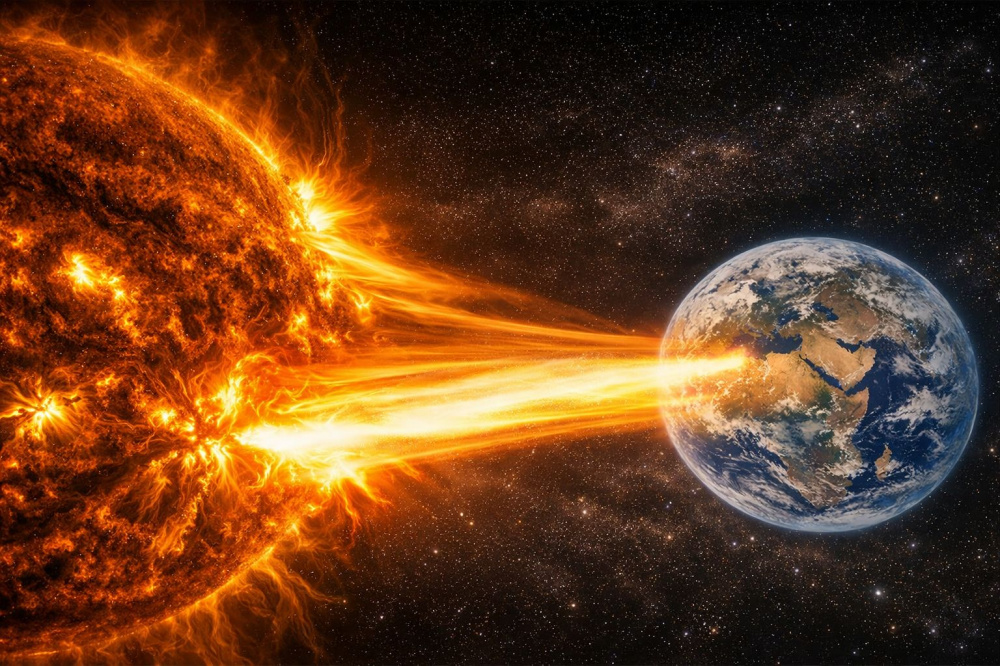
When a CME, packed with billions of tons of magnetized plasma, hurtles towards Earth and slams into our planet's magnetosphere, a cosmic collision occurs. The Earth's magnetic field, our planetary shield, initially deflects these particles. However, the sheer energy and magnetic field carried by the CME can overwhelm this defense, causing the magnetosphere to compress and reverberate. This disturbance is what we perceive as a geomagnetic or magnetic storm. The energy from these interactions can be funneled towards the poles, creating the mesmerizing auroras, but also generating powerful electrical currents in the upper atmosphere and, more ominously, in the ground beneath our feet.
What ignites a geomagnetic storm
The intensity of these storms is typically classified on a G-scale from G1 (minor) to G5 (extreme). A G1 storm might cause minor fluctuations in power grids and slightly affect satellite operations, leading to beautiful aurora displays visible at higher latitudes. A G5 storm, however, is a different beast entirely. Such an event could induce widespread power outages, severe disruption to satellite communications, and navigational systems, and potentially impact critical infrastructure globally. The sun's 11-year cycle of activity means that certain periods are more prone to these powerful eruptions, keeping space weather forecasters on constant alert.
The science of predicting these solar tantrums is constantly evolving, blending satellite observations, complex modeling, and historical data. However, the exact timing and severity of Earth-bound CMEs remain a challenge, adding an element of cosmic suspense to our increasingly interconnected world. For a city like Las Vegas, which operates on precision and uninterrupted power, this unpredictability introduces a unique layer of vulnerability.
Las Vegas a unique nexus of vulnerability
Las Vegas is not just a city; it's an elaborate, meticulously engineered ecosystem built upon a foundation of continuous power, precise timing, and seamless communication. Unlike rural areas where a power outage might mean a temporary inconvenience, a disruption in Las Vegas can cascade into a myriad of profound problems, affecting everything from entertainment to public safety. The sheer density of advanced technology, coupled with its status as a global tourist destination, amplifies its exposure to space weather events.
Consider the Strip, a dazzling canyon of light and sound. Each towering resort, every digital billboard, every synchronized fountain show, and every gaming machine relies on an uninterrupted flow of electricity and a stable network. Away from the spectacle, the city’s essential services-airports, hospitals, transportation networks, and financial institutions-are equally dependent on robust technological infrastructure. A magnetic storm doesn't discriminate; its effects ripple through any system susceptible to electromagnetism.
The intricate web of technology
The core of Las Vegas's operation is its electrical grid. Magnetic storms induce geomagnetically induced currents (GICs) in long conductors, like power lines. These GICs flow into transformers, potentially saturating them and causing them to overheat or fail. A cascade of transformer failures could lead to widespread blackouts. In a city where temperatures can soar, prolonged power loss would not only halt economic activity but also pose significant public health risks due to the loss of air conditioning and refrigeration. The glittering facade would quickly give way to discomfort and potential chaos.
Beyond power, GPS systems are the invisible backbone of modern logistics and navigation. Taxis, ride-share services, delivery trucks, and even emergency vehicles rely heavily on GPS for accurate positioning and timing. Strong magnetic storms can interfere with the radio signals from GPS satellites, causing errors in positioning or even complete signal loss. For a city that welcomes millions of visitors annually, whose movements are largely orchestrated by digital mapping, such disruption could create immediate and widespread navigational confusion.
The vibrant pulse of Las Vegas, so dependent on its dazzling technology, faces an unexpected vulnerability from the sun's most powerful outbursts.
The shimmering cascade of potential disruptions
The potential ramifications of a severe magnetic storm extend far beyond mere inconvenience in Las Vegas. They threaten to unravel the intricate fabric of its operational success, impacting multiple critical sectors simultaneously. The city's unique characteristics-its desert environment, its 24/7 economy, and its global appeal-transform general vulnerabilities into amplified threats.
Power grid instability
The most immediate and potentially devastating impact would be on the electrical power grid. Las Vegas consumes an enormous amount of electricity, especially during peak tourist seasons and the searing summer months when air conditioning units run continuously. A significant GIC event could overload transformers, leading to localized or even widespread blackouts. Imagine the Strip plunged into darkness, the casinos' internal systems failing, and critical infrastructure like McCarran International Airport losing power. Beyond the economic losses, such an event could have public safety implications, affecting everything from traffic signals to emergency services.
Navigation and timing systems GPS
Modern society is remarkably dependent on GPS for precise positioning, navigation, and timing (PNT). In Las Vegas, this extends to coordinating airport traffic, guiding emergency responders, enabling ride-sharing apps, and even synchronizing cellular networks. A strong magnetic storm can cause ionospheric disturbances that severely degrade GPS signals, leading to positioning errors or complete outages. This could cripple transportation logistics, delay flights, and hinder critical communications, creating a logistical nightmare for visitors and residents alike.
Communication networks
Cellular networks, internet services, and satellite communications are also susceptible. Magnetic storms can disrupt the ionosphere, which affects radio wave propagation. This could lead to dropped calls, slow internet speeds, or even complete communication blackouts. In a city where millions rely on their mobile devices for everything from booking shows to financial transactions, a widespread communication failure would be crippling. Emergency services, too, rely on robust communication channels, and their disruption could have severe consequences.
Financial transactions and gambling infrastructure
Las Vegas is a global financial hub for entertainment. Casinos run on highly sophisticated computer systems that manage everything from slot machine payouts to credit card transactions. ATMs, point-of-sale systems, and online gambling platforms all require constant, reliable connectivity and power. A magnetic storm could interrupt these systems, halting transactions, stranding visitors without access to funds, and bringing the city's primary economic engine to a grinding halt. The financial losses could be staggering, and the trust in the city's technological reliability severely undermined.
Aesthetic disruption and tourism
The very allure of Las Vegas lies in its spectacle. The dazzling light shows, the digital displays, and the immersive entertainment experiences are powered by technology. A magnetic storm could dim or extinguish these features, robbing the city of its unique charm. The psychological impact on tourists, combined with the practical difficulties of navigating a disrupted city, could lead to a significant downturn in tourism, affecting countless businesses and jobs dependent on the industry.
Interesting facts about magnetic storms and their impact
The phenomenon of magnetic storms, while increasingly relevant to our high-tech world, has a rich history and some truly fascinating characteristics:
- The Carrington Event 1859
The most famous geomagnetic storm on record. It was so powerful that telegraph systems around the world failed, sparking fires in some telegraph offices, and auroras were seen as far south as the Caribbean. Imagine that today. - Aurora visibility
While typically seen at high latitudes, strong G3-G5 storms can push the aurora borealis and australis much closer to the equator. During the Carrington Event, auroras were visible from Cuba and Mexico. - Migratory animals
Some scientists hypothesize that magnetic storms can disorient migratory animals, like birds and whales, who use the Earth's magnetic field for navigation. - Astronaut protection
Astronauts in low Earth orbit (like on the ISS) are somewhat protected by the Earth's magnetosphere, but prolonged exposure during a severe storm still poses radiation risks. Astronauts on lunar or Martian missions would be far more vulnerable. - "Space weather" term
The concept of "space weather" gained prominence after the launch of artificial satellites, as scientists began to fully understand how solar activity impacts technology in orbit and on Earth. - Modern "near-misses"
In 2012, Earth narrowly avoided being hit by a solar superstorm comparable to the Carrington Event. Had it occurred a week earlier, it would have impacted Earth, potentially causing widespread devastation to our modern electrical and technological infrastructure. - Satellite vulnerabilities
Beyond power grids, satellites themselves are vulnerable to increased radiation during magnetic storms, which can cause temporary glitches (single-event upsets) or permanent damage to electronics. - Ionospheric heating
Strong storms can heat the Earth's upper atmosphere, causing it to expand. This increased atmospheric drag can affect low-orbiting satellites, causing them to lose altitude faster than expected.
These facts underscore the pervasive nature of space weather, reminding us that even the most advanced human creations remain subject to the grand, unpredictable forces of the cosmos.
Safeguarding the city of lights
Given the significant vulnerabilities, preparedness for magnetic storms in Las Vegas is not merely prudent; it is essential. Mitigation strategies involve a multi-faceted approach, combining infrastructural hardening, advanced monitoring, and robust emergency planning. The goal is to minimize disruption and ensure a swift recovery should a major solar event occur.
Enhancing grid resilience
For the power grid, hardening measures include installing geomagnetically induced current (GIC) blocking devices, upgrading vulnerable transformers, and implementing smart grid technologies that can rapidly reroute power and isolate affected segments. Regular assessments of grid infrastructure, particularly critical substations, help identify weak points. Utilities also work to diversify their energy sources and ensure backup power generation capabilities for essential services. Collaboration between utility companies, federal agencies like NOAA and NASA, and local government is crucial for effective grid protection.
Protecting communication and navigation
For GPS and communication systems, strategies involve developing resilient timing technologies that can operate independently of satellite signals (e.g., atomic clocks at critical facilities), diversifying communication pathways, and using spread spectrum techniques that are more resistant to interference. Emergency communication plans often include reliance on older, less susceptible technologies like high-frequency radio or hardened fiber optic networks that are less prone to electromagnetic interference. Continuous monitoring of space weather conditions allows for proactive measures, such as temporarily shutting down sensitive equipment or shifting operations, if forecasters predict a severe storm.
Emergency preparedness and public awareness
Crucially, emergency services in Las Vegas need comprehensive plans specifically tailored for space weather events. This includes protocols for managing widespread power outages, GPS blackouts, and communication failures. Public awareness campaigns can educate residents and tourists on how to prepare for such an event, including having emergency kits, backup power for critical medical devices, and offline maps. Hotels and casinos can integrate space weather scenarios into their disaster preparedness drills, ensuring staff are trained to manage guests in a prolonged blackout or communication disruption.
International collaboration and continuous research
The sun's influence knows no borders, making international collaboration vital. Scientists and space weather agencies worldwide share data and research to improve forecasting models and deepen our understanding of these phenomena. Ongoing research into new materials, shielding technologies, and predictive algorithms continues to push the boundaries of our ability to live safely in an era of increasing technological reliance and persistent cosmic threats. For a city as dazzling and technologically advanced as Las Vegas, embracing these preventative measures isn't just about survival; it's about preserving its luminous legacy against the backdrop of the universe's powerful, silent forces.