
The science behind geomagnetic storms
Deep within the Sun's fiery heart, an invisible ballet of forces orchestrates phenomena that can ripple across the vast expanse of space, eventually touching the quiet skies above Kansas City. These cosmic events, known as magnetic storms or geomagnetic storms, are not born of terrestrial weather patterns but are instead direct descendants of the Sun's turbulent temperament. Far from the gentle breezes and thunderstorms typically associated with weather forecasts, these storms represent a powerful, electromagnetic tempest originating millions of miles away.
Solar flares and coronal mass ejections
The genesis of a geomagnetic storm often begins with two primary solar events: solar flares and coronal mass ejections (CMEs). A solar flare is an intense burst of radiation emanating from the Sun's surface, releasing energy equivalent to millions of hydrogen bombs in mere minutes. While the electromagnetic radiation from flares travels at the speed of light and can reach Earth in approximately eight minutes, affecting radio communications, it is the more massive and slower-moving coronal mass ejections that truly drive significant magnetic storms.
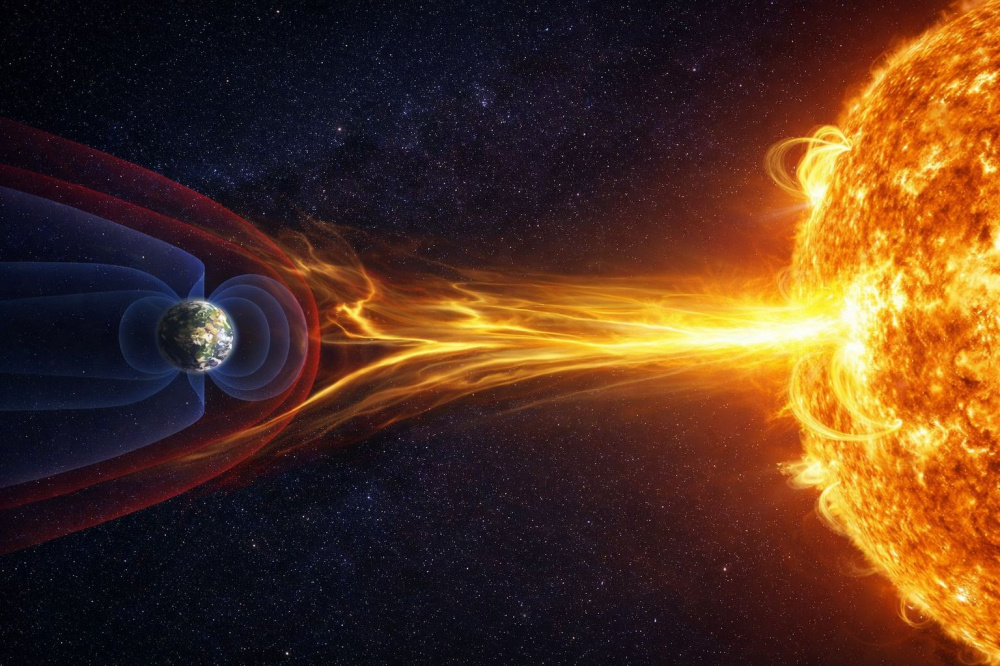
CMEs are gargantuan eruptions of plasma and magnetic field from the Sun's corona, the outermost layer of its atmosphere. These colossal bubbles of energized particles can accelerate to speeds ranging from a few hundred to over a thousand miles per second. If a CME is directed towards Earth, it can take anywhere from one to five days for this cloud of superheated gas and embedded magnetic fields to traverse the interplanetary medium and collide with our planet's protective magnetosphere.
Interaction with Earth's magnetosphere
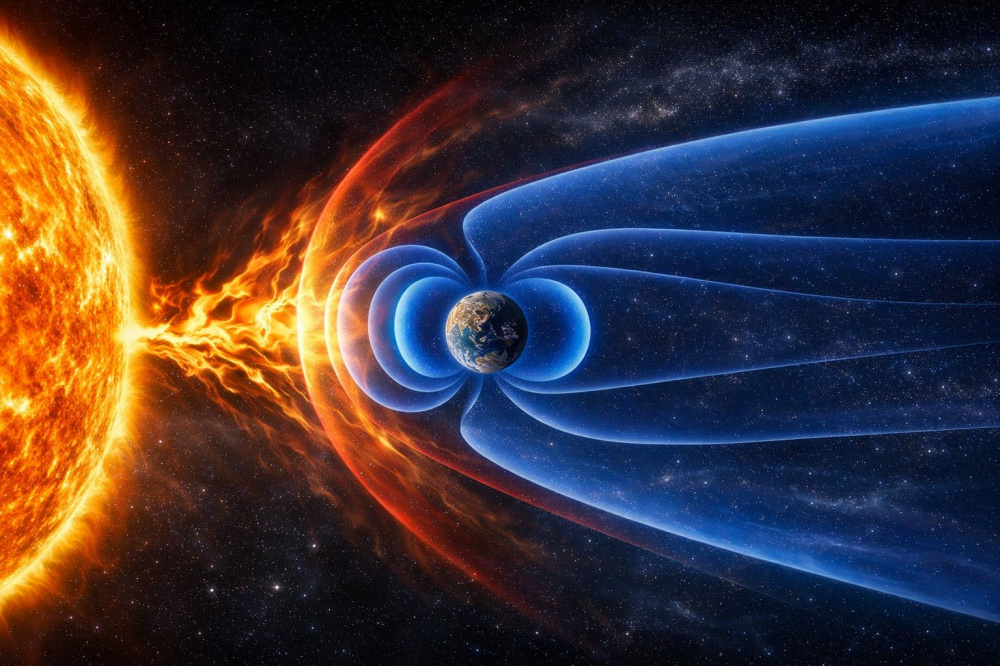
Upon reaching Earth, the arriving CME plasma, carrying its own powerful magnetic field, slams into the planet's magnetosphere-a vast, invisible bubble of magnetic force that shields us from the constant stream of charged particles known as the solar wind. This collision is not a gentle nudge; it is a profound interaction that can cause the magnetosphere to compress, reconfigure, and sometimes even briefly breach.
When the magnetic field of the CME aligns favorably (meaning, in opposition) with Earth's magnetic field, a process called magnetic reconnection can occur. This effectively creates a pathway for solar wind energy and charged particles to dump directly into Earth's upper atmosphere, particularly at the polar regions. This sudden influx of energy and particles excites atmospheric gases, causing them to glow-a phenomenon we marvel at as the aurora borealis and aurora australis. However, the true impact extends far beyond luminous skies, manifesting as substantial perturbations to Earth's magnetic field globally, including over the Midwest.
"The unseen forces from our sun are a constant presence, yet their dramatic influence often remains beyond our daily consciousness until a major event reminds us of Earth's delicate dance within the solar system."
K-index and G-scale explained
To quantify the intensity of geomagnetic storms, scientists use several scales. The most common is the K-index, a quasi-logarithmic scale ranging from 0 to 9 that measures the maximum fluctuation of the horizontal components of Earth's magnetic field over a three-hour period. A K-index of 5 or greater generally indicates a geomagnetic storm. Building upon this, the NOAA Space Weather Prediction Center (SWPC) developed the G-scale, a more user-friendly scale from G1 (minor) to G5 (extreme), which directly correlates to the Kp-index (a planetary average K-index).
- G1 (Minor) Storms
Kp=5, often resulting in weak power grid fluctuations, minor impact on satellite operations, and aurora visible at high latitudes.
- G2 (Moderate) Storms
Kp=6, potential for voltage alarms, increased drag on low-Earth orbit satellites, and aurora visible at mid-latitudes (occasionally reaching parts of the northern US).
- G3 (Strong) Storms
Kp=7, can require voltage corrections, disrupt GPS navigation, and bring aurora into view at lower mid-latitudes, possibly even Kansas City under ideal conditions.
- G4 (Severe) Storms
Kp=8, widespread voltage control problems, serious satellite navigation issues, and extensive aurora displays.
- G5 (Extreme) Storms
Kp=9, potential for widespread power system collapse, severe radio and satellite communication outages, and aurora visible across much of the globe.
Understanding these scales helps scientists and utility operators in Kansas City and beyond prepare for and mitigate the potential consequences of solar tantrums, transforming abstract solar physics into tangible, actionable insights for terrestrial infrastructure.
A quiet giant awakening
Kansas City, a vibrant hub nestled in the heart of the American Midwest, might seem an unlikely protagonist in the drama of geomagnetic storms. Far from the auroral zones of the Arctic, our latitude typically spares us the most dramatic visual displays of solar activity. Yet, beneath the calm veneer of daily life, the city and its surrounding region are silently, though profoundly, connected to these powerful cosmic forces. The perception that magnetic storms are solely a spectacle for northern observers belies their widespread, albeit often unseen, influence on critical infrastructure and even the subtle rhythms of the environment here in Missouri.
Location and geomagnetic latitude
While Kansas City’s geographic latitude (around 39° N) places it well south of the prime auroral oval, its geomagnetic latitude tells a slightly different story. Geomagnetic latitude refers to a coordinate system aligned with Earth's magnetic poles, which are offset from the geographic poles. This distinction is crucial because charged particles from the sun are guided by Earth's magnetic field lines. During intense geomagnetic storms, the auroral oval-the region where auroras are most commonly seen-expands significantly towards the equator, bringing the potential for aurora sightings much further south than usual.
For Kansas City, this means that while a casual glimpse of the aurora is rare, powerful G3 or higher storms can push the shimmering lights tantalizingly close, sometimes even into view on a truly exceptional night. More importantly, regardless of visual spectacle, the magnetic perturbations themselves affect the entire globe, meaning that the city's power grid, communication networks, and GPS systems are just as susceptible to induced currents and signal interference as locations much further north.
Historical observations of auroras in the Midwest
Though infrequent, the annals of history and local anecdotal evidence recount instances of the aurora gracing Midwestern skies. Accounts from the 19th and early 20th centuries, when light pollution was far less prevalent, describe nights when the northern horizon pulsed with faint glows or even columns of light. The famous Carrington Event of 1859, a G5-level storm, reportedly caused auroras visible as far south as the Caribbean. While no specific, widely publicized Kansas City accounts from that era are readily available, it is plausible that residents witnessed an extraordinary display. More recently, during the Halloween Storms of 2003 and other significant events, observers in areas of Missouri with dark skies reported seeing faint red or green glows low on the horizon, a testament to the potential for even the heartland to witness this celestial dance.
These rare sightings serve as a powerful reminder that Kansas City is not immune to the beauty-or the potential disruption-of space weather.
Perception vs. reality
The greatest challenge with geomagnetic storms in a region like Kansas City is the disparity between perception and reality. Most residents associate magnetic storms with the beautiful aurora, believing that if they don't see the lights, they are unaffected. This is a dangerous misconception. The truly impactful effects are often invisible, silently working their way through the intricate web of modern technology that underpins daily life.
While the skies above might remain dark, the ground beneath pulses with geomagnetically induced currents (GICs). These currents are generated when Earth's magnetic field fluctuates rapidly, inducing electric fields in the ground and in long conductors like power lines, pipelines, and communication cables. These GICs can cause significant problems without any visual indication in the sky, making their silent threat particularly insidious for a bustling metropolis dependent on a seamless flow of electricity and data.
Impact on modern life in the heartland
In a city as dynamic and technologically advanced as Kansas City, the invisible hand of a geomagnetic storm can reach into nearly every facet of modern life, often without residents even realizing the cosmic origins of their sudden inconveniences. From the hum of the power grid to the precision of GPS-guided agriculture, the heartland's reliance on interconnected systems makes it surprisingly vulnerable to solar outbursts.
Power grid vulnerabilities (Evergy, local infrastructure)
The electric power grid is arguably the most susceptible piece of infrastructure to severe geomagnetic storms. Kansas City is served primarily by Evergy, which manages a vast network of transmission lines, transformers, and substations crucial for delivering power to millions of homes and businesses across Kansas and Missouri. When GICs flow through these long conductors, they can induce powerful currents in transformer windings, leading to saturation. This saturation can cause transformers to overheat, potentially damaging or even destroying them. A widespread failure of multiple large transformers could lead to cascading blackouts, plunging vast areas of the city into darkness.
Imagine the consequences for Kansas City: traffic lights failing, hospitals relying on backup generators, communication networks struggling, and essential services grinding to a halt. While Evergy and other utility providers constantly work to harden their systems against various threats, including space weather, a G5-level event presents an unprecedented challenge, requiring significant resources and advanced planning to mitigate.
"A severe space weather event has the potential to cause widespread and long-lasting disruptions to critical infrastructure, impacting society at a fundamental level."
Communication systems and satellite interference (GPS, radio)
Our reliance on satellite-based communication and navigation systems makes them a critical vulnerability during geomagnetic storms. GPS (Global Positioning System) signals, essential for everything from precision farming in rural Missouri to ride-sharing apps and delivery services in urban Kansas City, can be severely degraded or even lost. The charged particles from a storm can disrupt the ionosphere, an upper layer of Earth's atmosphere through which satellite signals must pass. This disruption causes signal scintillation (rapid fluctuations) and errors, leading to inaccurate positioning or complete signal loss.
Beyond GPS, high-frequency (HF) radio communications, used by aviation, emergency services, and amateur radio operators, are also highly susceptible. The ionosphere acts as a natural mirror for HF signals, allowing them to bounce around the globe. During a storm, the ionosphere becomes turbulent and absorptive, causing widespread blackouts for HF radio users. Even satellite TV and internet services can experience glitches or temporary outages as their signals struggle to penetrate the disturbed upper atmosphere, impacting countless Kansas City households and businesses.
Navigation accuracy for aviation and agriculture (local relevance)
The implications of compromised GPS accuracy are particularly acute for Kansas City International Airport (MCI) and the surrounding agricultural regions. Aircraft rely heavily on GPS for precise navigation, especially during approach and landing. While backup systems exist, significant GPS degradation adds complexity and potential delays to air travel, impacting commercial flights and general aviation alike.
In the vast farmlands surrounding Kansas City, precision agriculture has revolutionized farming. GPS-guided tractors plant seeds with centimeter accuracy, apply fertilizers precisely, and harvest crops efficiently. A disruption to GPS accuracy, even for a short period, could lead to significant financial losses for farmers, impacting planting schedules, yield, and overall productivity. For a region deeply rooted in agriculture, this is not a theoretical concern but a direct economic threat.
Subtle effects on wildlife
While less understood and certainly less impactful on human daily life, geomagnetic storms are also believed to have subtle effects on wildlife. Many animals, including migratory birds, sea turtles, and even certain insects, utilize Earth's magnetic field for navigation. Disruptions to this field during a storm could potentially disorient these creatures, leading to off-course migrations or difficulties finding their way. While the direct consequences for Kansas City's urban wildlife might be minimal, it highlights the far-reaching and often invisible influence of these cosmic events on our planet's intricate ecosystems.
Interesting facts about magnetic storms and their local relevance
Beyond the technical explanations and potential disruptions, geomagnetic storms hold a trove of fascinating insights, some of which unexpectedly touch upon the daily rhythms and historical fabric of Kansas City.
- Kansas City's electrical grid, like many others, is designed with protective measures, but the scale of a G5 storm would test these to their absolute limits, potentially leading to months-long repair efforts, not just hours.
- While often associated with power outages, a lesser-known impact in KC could be on the extensive network of pipelines for natural gas and oil that crisscross the region. GICs can also flow through these long conductors, causing accelerated corrosion in metal pipes, leading to leaks over time if not properly monitored.
- The legendary "Carrington Event" of 1859, the most powerful geomagnetic storm on record, caused auroras visible in latitudes as low as Cuba and Hawaii. Had it occurred today, it's estimated it could inflict trillions of dollars in damage globally and plunge regions like Kansas City into darkness for extended periods.
- During severe storms, the ionosphere can expand and heat up. This increased drag on low-Earth orbit satellites (including weather satellites crucial for Kansas City's forecasts) can cause them to fall out of orbit prematurely, incurring significant operational costs and data loss.
- Did you know that compasses, even in Kansas City, can show slight deviations during a strong geomagnetic storm? While not enough to get you lost in the urban grid, it's a testament to the global reach of these magnetic field perturbations.
- The "Halloween Storms" of 2003, a significant G4 storm, caused some minor power disruptions and extensive aviation communication issues across the U.S., including potential impacts on flights into and out of MCI. It demonstrated the vulnerability of modern infrastructure even in regions far from the poles.
- Amateur radio operators in Kansas City are often among the first to notice the impact of space weather, as their long-distance HF communications fade or improve dramatically depending on the ionospheric conditions during a storm. They are an unsung early warning network.
Preparing for the unseen surge
Given the potential for significant disruption, preparing for geomagnetic storms is not a task for future generations but an ongoing endeavor that involves multiple stakeholders in Kansas City and beyond. It requires a blend of robust infrastructure hardening, sophisticated forecasting, and an informed populace ready to respond.
Infrastructure hardening (grid operators)
Utility companies like Evergy are at the forefront of protecting critical infrastructure. Their efforts involve several key strategies:
- Installing blocking devices
These devices, often called GIC-blocking capacitors, are designed to prevent or mitigate the flow of geomagnetically induced currents into sensitive transformer windings.
- Enhancing monitoring
Deploying advanced sensors and real-time monitoring systems to detect GICs and magnetic field fluctuations, allowing operators to take proactive measures.
- Operational procedures
Developing and rehearsing protocols for grid operators during a space weather event, which might include temporary voltage reductions or taking certain transformers offline to prevent damage.
- Stockpiling spare parts
Maintaining an inventory of critical, long-lead-time components like large power transformers, which can take months or even years to manufacture and deliver, is crucial for rapid recovery.
These measures represent significant investments, but they are deemed essential to safeguard the continuous flow of electricity to Kansas City's homes, businesses, and essential services.
Space weather forecasting and alerts
Just as terrestrial weather forecasts guide our daily decisions, space weather forecasts provide critical lead time for utilities and other industries. The NOAA Space Weather Prediction Center (SWPC) in Boulder, Colorado, is the official source of space weather alerts and warnings for the U.S. They continuously monitor the Sun using a network of satellites and ground-based observatories.
Forecasts provide information on solar flare activity, CME trajectories, and predicted geomagnetic storm intensities (G-scale). While lead times can vary from minutes for solar flares to several days for CMEs, this advance warning is invaluable. It allows grid operators to implement their mitigation strategies, airlines to adjust flight paths, and satellite operators to reconfigure their systems to minimize impact. For the residents of Kansas City, these forecasts can also be a heads-up for potential aurora sightings, albeit rare.
"Resilience is built not just through robust engineering, but through constant vigilance and proactive adaptation to evolving threats, including those from space."
Public awareness and preparedness
While the technical heavy lifting rests with infrastructure operators, public awareness plays a vital role in community resilience. For most Kansas City residents, preparedness for a major geomagnetic storm mirrors general emergency preparedness:
- Emergency kit
Maintain a kit with water, non-perishable food, flashlights, batteries, a hand-crank radio, and essential medications.
- Communication plan
Have a family communication plan, as cell service and internet might be disrupted.
- Cash
Keep some cash on hand, as electronic transactions might be affected.
- Fuel
Keep vehicle fuel tanks at least half full.
Understanding that an outage could be widespread and prolonged, rather than a localized, short-term event, helps individuals make more informed decisions and reduces panic. Educating the public about the true nature of space weather, beyond just pretty lights, empowers communities to be more resilient.
The elusive aurora
For many, the idea of witnessing the aurora borealis dancing across the Kansas City sky feels like a fantastical dream, relegated to postcards from Alaska or Scandinavia. Yet, under extraordinary circumstances, this ethereal phenomenon can indeed stretch its shimmering tendrils far south, offering a breathtaking, albeit rare, spectacle to those patient and lucky enough to observe it.
Conditions required for aurora visibility at lower latitudes
The primary factor determining aurora visibility at lower latitudes like Kansas City is the intensity of the geomagnetic storm. A Kp-index of 7 or higher (G3 Strong or greater on the G-scale) is generally required for even a chance of seeing the aurora from central Missouri. Even then, several other conditions must align perfectly:
- Dark skies
Light pollution from Kansas City's urban sprawl is a significant deterrent. To have any hope, observers must travel far from city lights, seeking out truly dark rural areas, ideally looking north over an unobstructed horizon.
- Clear weather
Cloud cover, a common feature of Midwestern weather, will obscure any potential display.
- Timing
The aurora is most active during the hours around local midnight (10 PM to 2 AM), corresponding to the darkest part of the night.
- Duration of storm
A sustained period of high geomagnetic activity increases the chances of visibility.
Even with all these factors in play, the aurora observed at lower latitudes is typically less vibrant and often appears as a diffuse, reddish glow low on the northern horizon, rather than the dynamic, multicolored curtains seen further north. Yet, for a region where such a sight is almost mythical, even a faint glow is an unforgettable experience.
Historical accounts or rare sightings in Missouri
As mentioned earlier, historical records from the 19th and early 20th centuries, when Missouri's skies were much darker, contain scattered reports of auroral displays during exceptionally strong storms. More recently, during the most powerful storms of the past few decades (such as the Halloween Storms of 2003 or the St. Patrick's Day storm of 2015), enthusiasts in remote, dark-sky locations within Missouri and neighboring states have reported seeing faint glows. These sightings, often captured with long-exposure photography, confirm that the aurora, though a shy visitor, does occasionally grace our Midwestern skies.
Best practices for potential aurora spotting (low light pollution)
For Kansas City residents hoping to catch a glimpse of this rare spectacle, planning is essential:
- Stay informed
Monitor space weather forecasts from NOAA SWPC (www.swpc.noaa.gov). Look for G3 or higher storm warnings.
- Head north and west
Drive as far away from Kansas City's light pollution as possible, ideally to areas with minimal skyglow. Rural areas north of Weston or northwest towards St. Joseph might offer slightly better conditions.
- Find an open horizon
Seek out locations with an unobstructed view to the north. Elevated points, if available, can be beneficial.
- Dress warmly
Nights conducive to aurora viewing are often clear and cold.
- Patience
Auroras can be fickle. Be prepared to wait, and let your eyes adjust to the darkness for at least 20-30 minutes.
- Photography
Cameras with long-exposure capabilities can often capture colors and details that are invisible to the naked eye at lower latitudes.
While the odds are long, the potential reward of witnessing such a celestial marvel over the heartland makes the preparation worthwhile for intrepid sky-watchers.
Monitoring the sun's temper
For those in Kansas City intrigued by the unseen forces of space weather, or simply wishing to be informed, a wealth of resources exists to monitor the Sun's activity and its potential impact on Earth. These tools range from official government agencies to local community groups, empowering everyone from casual observers to critical infrastructure managers with timely information.
NOAA Space Weather Prediction Center
The primary and most authoritative source for space weather information in the United States is the NOAA Space Weather Prediction Center (SWPC). Located in Boulder, Colorado, SWPC is the nation's official source of space weather alerts, warnings, and forecasts. Their website (www.swpc.noaa.gov) is a treasure trove of data, offering:
- Real-time space weather data
Current solar wind conditions, geomagnetic activity (Kp-index, G-scale), and solar flare reports.
- Forecasts
Short-term and long-term outlooks for solar activity and geomagnetic storms, with detailed explanations.
- Alerts and warnings
Official notifications of significant space weather events.
- Educational materials
Comprehensive explanations of space weather phenomena and their impacts.
For any Kansas City resident or entity concerned about space weather, bookmarking and regularly checking the SWPC website is the most crucial step for staying informed.
Local astronomy clubs or science centers
Kansas City boasts a vibrant community of amateur astronomers and science enthusiasts. Organizations like the Astronomical Society of Kansas City (ASKC) often have members who are keenly interested in space weather and can provide local insights or even organize viewing events during rare auroral opportunities. Science centers, such as Science City at Union Station, occasionally host exhibits or educational programs related to space weather, helping to demystify these complex phenomena for the general public.
Connecting with these local groups can offer a more personal and community-focused approach to understanding and appreciating the dynamic nature of our solar system, often sharing tips for optimal viewing or interpreting technical data in a localized context.
Apps and online tools
In addition to official websites, numerous mobile applications and online tools have emerged to make space weather monitoring accessible to everyone. These often pull data directly from SWPC and present it in user-friendly formats:
- Aurora forecasting apps
Many apps specialize in aurora predictions, offering real-time Kp-index readings, probability maps, and push notifications for potential sightings. While primarily for higher latitudes, they can alert Kansas City residents to extreme events.
- Space weather dashboards
Websites and apps that aggregate various space weather parameters, including solar wind speed, magnetic field orientation, and particle density, providing a comprehensive overview.
- Citizen science projects
Some platforms allow users to report aurora sightings, helping to build a broader understanding of aurora visibility across different latitudes.
By leveraging these diverse resources, Kansas City residents and critical infrastructure operators can remain informed and prepared, transforming the unseen forces of magnetic storms from a distant threat into a manageable, understood aspect of our interconnected world.