
The cosmic dance above Colorado Springs
Perched majestically at the base of the Rocky Mountains, Colorado Springs is a city renowned for its breathtaking natural beauty, its crisp, clear skies, and its significant role in national defense and aerospace. What many residents might not often ponder, however, is the invisible ballet unfolding millions of miles away, a celestial drama orchestrated by our own sun, which periodically sends out pulses of energy capable of reaching Earth and stirring up what are known as magnetic storms. These events, while largely unseen, hold the potential to ripple through the technological fabric of modern life, even in a seemingly serene mountain locale.
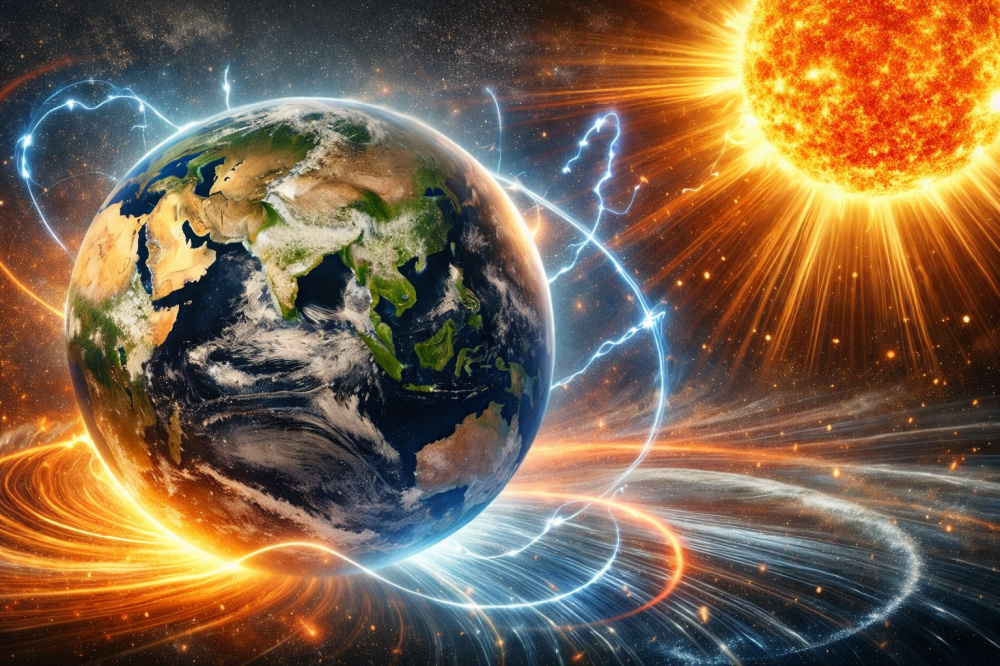
Magnetic storms, also referred to as geomagnetic storms, are global disturbances of the Earth's magnetic field. They are fundamentally driven by the sun's volatile activity, specifically by powerful eruptions like solar flares and coronal mass ejections (CMEs). When these phenomena unleash massive bursts of plasma and magnetic fields into space, they travel across the solar system, sometimes directly impacting Earth. The interaction of this solar material with our planet's magnetosphere can trigger a cascade of effects, ranging from the awe-inspiring auroral displays to more concerning disruptions in technology.
What are magnetic storms
At its core, a magnetic storm is a temporary disturbance of the Earth's magnetosphere caused by a solar wind shockwave and cloud of magnetic field which interacts with the Earth's magnetic field. This interaction causes a significant transfer of energy from the solar wind into the magnetosphere. Think of the Earth's magnetic field as a protective shield, constantly deflecting harmful solar radiation and particles. During a geomagnetic storm, this shield is buffeted and temporarily compressed, allowing some of the solar plasma to penetrate deeper into the atmosphere, particularly near the magnetic poles.
The intensity of these storms is typically measured by various indices, with the Kp-index being a common one. A higher Kp-index signifies a stronger storm. While most magnetic storms are minor and pass unnoticed by the general public, powerful events have historically demonstrated their capacity to cause widespread technological havoc. Understanding their mechanics and potential implications is particularly pertinent for regions like Colorado Springs, given its unique confluence of geography, infrastructure, and sky-gazing opportunities.
Colorado Springs a unique vantage point
Geomagnetic latitude and local phenomena
Colorado Springs does not sit within the traditional 'auroral oval,' the region typically encompassing the poles where auroras are most frequently observed. However, its geomagnetic latitude makes it susceptible to auroral displays during exceptionally strong magnetic storms. While a casual aurora borealis sighting is rare, a powerful G5-class storm, like the one experienced globally in October 2003 or the legendary Carrington Event of 1859, could extend the auroral oval far enough south for Colorado residents to witness this ethereal sky spectacle. The high altitude and often clear skies of Colorado Springs would offer an excellent, albeit rare, vantage point for such an event.
Beyond the visual spectacle, the geomagnetic latitude plays a role in how geomagnetically induced currents (GICs) manifest. While GICs are strongest near the poles, the Earth's conductivity structure, coupled with regional power grid configurations, means that mid-latitude areas like Colorado Springs are far from immune. The Rockies' geology, with varying conductivity layers, can sometimes focus GICs in unexpected ways, potentially stressing local infrastructure.
Infrastructure vulnerability in the Rockies
Colorado Springs is more than just a scenic city; it is a critical hub for national security and space operations. Home to the United States Air Force Academy, Peterson Space Force Base, Cheyenne Mountain Space Force Station, and a significant presence of defense contractors, the region is intrinsically linked to technologies that are acutely sensitive to space weather events. Satellites, communication networks, and sophisticated sensing equipment are all integral to the operations conducted here, making the city a focal point for understanding and mitigating space weather risks.
The extensive power grid that supports this vital infrastructure is also a concern. Transformers, particularly those connecting long transmission lines, are vulnerable to GICs. These quasi-DC currents can cause transformers to operate inefficiently, generate excessive heat, and potentially fail, leading to localized or widespread power outages. Such an event in a region so crucial to national defense would have far-reaching implications, underscoring the importance of robust preparedness strategies.
How magnetic storms impact the region
Power grid resilience and challenges
The electricity infrastructure serving Colorado Springs and the surrounding areas is designed to be robust, yet it faces unique challenges from geomagnetic storms. Long transmission lines, especially those running over large geographical areas with varying ground conductivity, act like giant antennas for GICs. When a magnetic storm induces these currents, they can flow into the power grid, finding their way to substation transformers. The primary concern is not an immediate catastrophic failure but rather a gradual degradation or overheating of these critical components.
Local utility providers, in conjunction with regional and national grids, monitor space weather forecasts from agencies like NOAA's Space Weather Prediction Center (SWPC) in Boulder, Colorado. This proximity to the national space weather forecasting hub gives local entities a distinct advantage in receiving timely warnings. However, the sheer unpredictability and potential intensity of extreme events mean that continuous vigilance and infrastructure hardening are ongoing efforts.
"The invisible hand of the sun reaches across space, touching our planet's magnetic shield and sending ripples through the very wires that power our lives."
GPS and communication disruptions
Modern society, and particularly the operations in Colorado Springs, relies heavily on satellite-based technologies, especially GPS. From military navigation and precision timing to everyday consumer applications and air traffic control at Colorado Springs Airport, GPS signals are ubiquitous. During a magnetic storm, the Earth's ionosphere, a layer of the upper atmosphere through which GPS signals must pass, becomes highly disturbed. This disturbance can cause GPS signals to be refracted, absorbed, or even lose lock, leading to accuracy degradation or complete outages.
Beyond GPS, other forms of communication, including high-frequency (HF) radio used by aviation, military, and emergency services, can experience significant disruptions. The enhanced ionization in the ionosphere can cause HF radio waves to be absorbed rather than reflected, leading to radio blackouts. For a city like Colorado Springs, with its dense concentration of communication-dependent operations, these disruptions are not mere inconveniences but potential impediments to critical functions.
Impact on space-based assets and NORAD
Perhaps nowhere are the implications of magnetic storms more keenly felt than in the realm of space-based assets, a domain intrinsically linked to Colorado Springs. Satellites orbiting Earth, including those vital for intelligence, weather forecasting, and communication, are vulnerable in several ways. Increased radiation from solar events can damage satellite electronics, leading to malfunctions or premature failure. Additionally, the heating of the upper atmosphere during geomagnetic storms causes it to expand, increasing drag on low-Earth orbit satellites, which can alter their trajectories and even cause them to re-enter the atmosphere prematurely.
"For NORAD and Space Command, space weather isn't a curiosity; it's an operational reality that demands constant vigilance and sophisticated mitigation strategies."
For organizations like NORAD (North American Aerospace Defense Command) and U.S. Space Command, both headquartered in Colorado Springs, these impacts are of paramount importance. Their missions involve tracking objects in space, detecting missile launches, and providing aerospace warning and control. Disruptions to satellite communications, radar systems, and the accuracy of orbital predictions due to atmospheric drag can directly affect their ability to maintain situational awareness and execute their critical defense functions. Therefore, space weather forecasting and preparedness are integral to their daily operations.
Historical context and notable events
Echoes of past solar flares
While the modern technological landscape makes us acutely aware of magnetic storms, these phenomena are not new. The most famous and extreme event in recorded history is the Carrington Event of 1859. This super-storm, caused by a massive solar flare and CME, generated auroras visible as far south as the Caribbean and reportedly set telegraph offices on fire due to induced currents in the lines. If an event of this magnitude were to occur today, with our vastly more complex and interconnected technological infrastructure, the consequences could be catastrophic, leading to widespread power outages, satellite failures, and communication blackouts that could last for weeks or even months.
Lesser, yet still significant, events have occurred more recently. The March 1989 geomagnetic storm famously caused a nine-hour power outage across Quebec, Canada. The Halloween Storms of 2003, while not causing as widespread power grid issues, heavily impacted satellite operations and communications. Each historical event serves as a stark reminder and a valuable lesson in the ongoing challenge of protecting our technological society from the sun's unpredictable fury. For Colorado Springs, with its specific infrastructure vulnerabilities, these historical precedents are not just academic curiosities but crucial case studies.
Local preparations and lessons learned
In response to the growing awareness of space weather risks, agencies and private entities in Colorado Springs and across the nation have been working to enhance preparedness. Utilities invest in hardening their grid components, such as installing monitoring equipment for GICs and developing protocols for operational responses during geomagnetic events. Defense installations integrate space weather forecasts into their operational planning, ensuring redundancy in communication systems and developing alternative procedures for scenarios where satellite-based assets are compromised.
The proximity of the Space Weather Prediction Center in Boulder is a significant advantage, providing real-time data and forecasts crucial for proactive measures. Training exercises often incorporate space weather scenarios to test the resilience of systems and the readiness of personnel. While no system can be entirely impervious to an extreme Carrington-level event, continuous learning and adaptation from past events and scientific advancements are key to mitigating potential damages in the future for a critical hub like Colorado Springs.
Interesting facts about magnetic storms and Colorado Springs
- The sun's energy release during a major solar flare can be equivalent to millions of hydrogen bombs exploding simultaneously.
- coronal mass ejections (CMEs) can travel from the sun to Earth in as little as 15-18 hours, though typical transit times are 2-4 days.
- The Earth's magnetic field acts like a gigantic invisible shield, stretching thousands of miles into space and protecting us from the constant stream of solar particles.
- While rare, auroras have been sighted in Colorado Springs during exceptionally strong geomagnetic storms, painting the northern sky with green and red hues, a testament to the immense power of the sun.
- The ionosphere, a layer of Earth's atmosphere between 60 and 1,000 kilometers altitude, is profoundly affected by magnetic storms, causing disruptions to radio communications and GPS signals.
- The term "Carrington Event" comes from British astronomer Richard Carrington, who was the first to observe and sketch a solar flare that initiated the intense geomagnetic storm of 1859.
- Ground-induced currents (GICs) are not a steady flow but fluctuate with the changing Earth's magnetic field, making their impact on power grids dynamic and challenging to manage.
- Colorado Springs is part of the 'Space Foundation,' a global non-profit advocate for the space ecosystem, further cementing its connection to space weather and its implications.
Observing the auroral glow
Prospects for aurora borealis in Colorado
For many, the most captivating manifestation of a magnetic storm is the aurora borealis, or northern lights. While Colorado Springs is far from the prime auroral zones in Alaska or Canada, the possibility of witnessing these celestial curtains is not entirely out of reach during the most intense geomagnetic storms. These events, typically rated G4 or G5 on the NOAA Space Weather Scale, can push the auroral oval significantly southward, bringing it within viewing range of Colorado's northern horizon.
Clear, dark skies, away from city light pollution, are paramount for any chance of spotting the aurora. For residents of Colorado Springs, driving north of the city, away from the glow of urban areas, and seeking out high-altitude vantage points would improve visibility during a predicted strong storm. Patience is also key, as auroral displays can be fickle, appearing and fading over minutes or hours. While infrequent, the rare opportunity to see the aurora dance above the Rockies is a profound reminder of our planet's connection to the sun.
Astrophotography and skygazing opportunities
The relatively clear and often high-altitude skies around Colorado Springs offer excellent opportunities for astrophotography and general stargazing, irrespective of auroral activity. However, during a powerful magnetic storm that brings the aurora into view, the region transforms into an even more exciting canvas for photographers. Capturing the vibrant greens, pinks, and purples against the silhouette of the mountains or iconic landmarks like Pikes Peak would be a truly unique and memorable experience.
Local astronomy clubs and skygazing enthusiasts often monitor space weather forecasts, sharing predictions and best viewing locations when a strong storm is anticipated. These events become a shared communal experience, drawing people outdoors to witness one of nature's most spectacular light shows. The blend of advanced technological understanding and ancient cosmic awe makes magnetic storms a fascinating subject for both scientists and casual observers in Colorado Springs.
Mitigation and preparedness
Government agencies and private sector collaboration
Addressing the risks posed by magnetic storms requires a concerted effort from both government agencies and the private sector. The National Oceanic and Atmospheric Administration (NOAA), through its Space Weather Prediction Center (SWPC) in Boulder, is the nation's official source for space weather alerts and forecasts. These vital predictions allow utilities, airlines, satellite operators, and defense organizations in Colorado Springs and beyond to take proactive measures.
Locally, utility companies work with federal guidelines to assess grid vulnerabilities and implement protective measures. This might include enhancing monitoring capabilities for GICs, installing specialized grounding equipment, or developing operational procedures for reducing load or re-routing power during an impending storm. The defense sector, particularly those entities in Colorado Springs, continuously refine protocols for protecting sensitive electronic equipment and ensuring the redundancy of critical communications and navigation systems, often collaborating with private contractors specializing in resilient technology solutions.
"Preparedness is not about preventing the storm; it's about building a stronger ship to weather its passage."
Individual preparedness tips
While large-scale infrastructure protection is primarily the domain of government and industry, individual preparedness also plays a role. A strong magnetic storm capable of causing widespread power outages or communication disruptions would affect daily life. Residents of Colorado Springs, like those elsewhere, can take basic steps to prepare for such an event:
- Have an emergency kit ready with flashlights, batteries, a hand-crank radio, and a first-aid kit.
- Ensure you have a supply of non-perishable food and water for at least three days.
- Keep your car's fuel tank at least half full, as gas pumps may not operate during a power outage.
- Have alternative communication methods planned, as cell service and landlines could be affected.
- Stay informed by monitoring local news channels for updates, especially if conventional communication methods are disrupted.
By understanding the potential impacts and taking sensible precautions, the community of Colorado Springs can enhance its overall resilience, facing the cosmic forces with a blend of scientific understanding and practical readiness.