
The sun's celestial outbursts
What drives geomagnetic disturbances
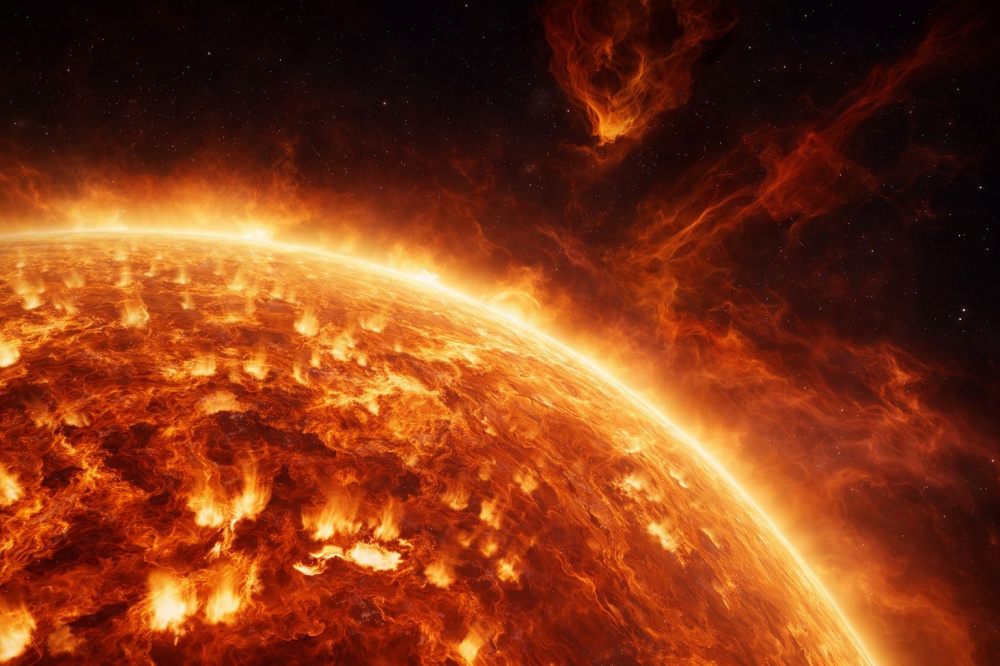
From the distant heart of our sun, an unseen ballet of colossal energy unfolds, capable of reaching across 93 million miles to influence the very fabric of life on Earth. These cosmic ripples, known as magnetic storms or geomagnetic storms, are born from the sun's volatile surface. The primary culprits are solar flares, intense bursts of radiation, and more significantly, coronal mass ejections (CMEs), which are vast expulsions of plasma and magnetic field from the sun's corona.
When these charged particles hurtle towards Earth, they interact with our planet's magnetosphere, the protective bubble generated by Earth's magnetic field. This collision can compress and distort the magnetosphere, leading to rapid fluctuations in Earth's magnetic field. These fluctuations are the essence of a geomagnetic storm, categorized by indices like the Kp-index, which measures the disturbance level on a scale from 0 to 9.
Earth's protective shield
Our planet is not defenseless against this solar onslaught. Earth's magnetosphere acts as a vital, invisible shield, deflecting most of the sun's harmful radiation and charged particles. However, during powerful CMEs, the sheer volume and velocity of solar material can overwhelm this defense. As the solar wind slams into the magnetosphere, energy is transferred, leading to spectacular auroral displays and, more critically, inducing electric currents within the Earth itself.
These geomagnetically induced currents (GICs) are the silent protagonists of potential disruption, capable of flowing through long conductors like power lines, pipelines, and communication cables, even in a bustling city like Chicago. It's a testament to the interconnectedness of cosmic phenomena and our terrestrial existence.
Chicago's urban fabric and cosmic ripples
The pulsating power grid
Chicago, a sprawling metropolis famed for its architectural grandeur and as a critical transportation and economic hub, relies heavily on a complex and extensive power grid. This grid, interwoven with long transmission lines stretching across the vast Midwest, becomes particularly susceptible to the silent, invisible currents born from magnetic storms.
The unseen hand of solar fury can reach across ninety-three million miles to gently, or not so gently, tug at the fabric of our terrestrial existence.
During a significant geomagnetic storm, GICs can surge through these lines, stressing transformers and potentially causing widespread power outages. Imagine the vast network of Chicago's power lines, humming with controlled energy, suddenly encountering an invisible surge from a solar eruption. Substations and transformers, the heart of the grid, are vulnerable to overheating and even permanent damage, threatening to plunge large sections of the city into darkness, disrupting everything from traffic lights to hospital operations.
Navigational precision at risk
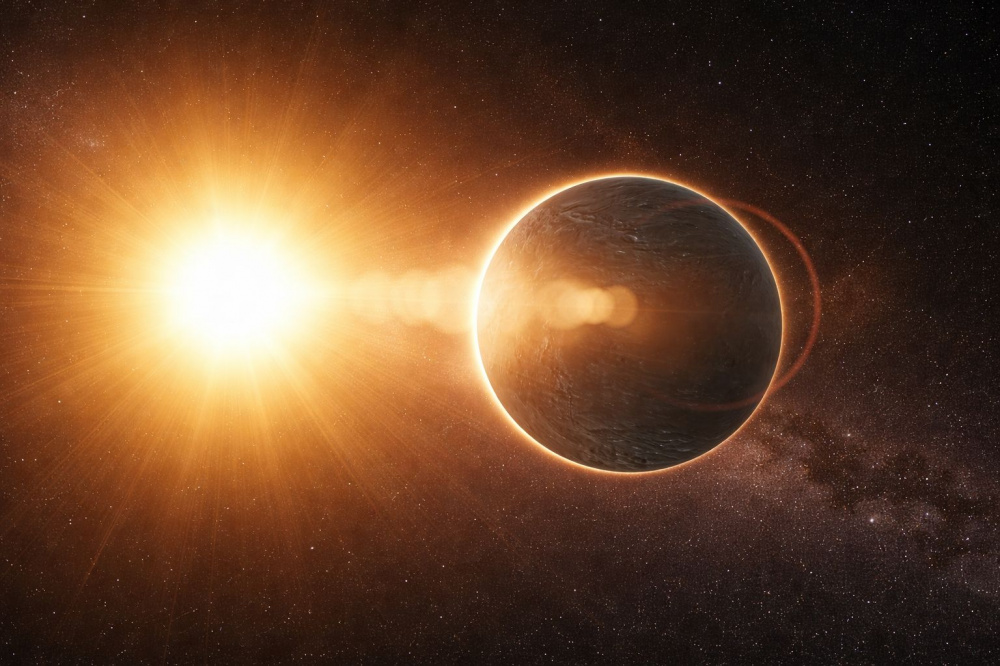
In a city that prides itself on efficiency and connectivity, accurate navigation is paramount. Chicago's O'Hare International Airport, one of the busiest in the world, along with its extensive rail network and vital shipping lanes on Lake Michigan, all depend heavily on precise GPS signals. Magnetic storms can disrupt these signals, leading to GPS inaccuracies or complete blackouts.
Such disruptions could cause significant delays or even safety concerns for air traffic control, freight logistics, and public transportation. Furthermore, the agricultural heartland surrounding Chicago, heavily reliant on GPS for precision farming, could face substantial operational challenges, impacting the supply chain that feeds the city.
Communication arteries
Modern Chicago is a symphony of constant communication, from fiber optics crisscrossing underground to satellite signals beaming down from above. Magnetic storms pose a direct threat to these lifelines. Satellites in Earth's orbit, crucial for everything from weather forecasting to television broadcasts and internet connectivity, can experience increased atmospheric drag, radiation damage, or even temporary malfunctions due to solar particles.
Ground-based radio communications, including those used by emergency services, first responders, and aviation, can also suffer from blackouts and interference, making coordination difficult during a crisis. The flow of information, the lifeblood of a 21st-century city, could be severely hampered, isolating parts of the metropolis and hindering response efforts.
Echoes of the past, preparations for the future
Remembering the Carrington event
While Chicago has never experienced the full wrath of a truly catastrophic magnetic storm in the modern era, history offers a stark reminder of what's possible. The Carrington Event of 1859, the most powerful geomagnetic storm on record, caused telegraph systems worldwide to spark, catch fire, and even operate without power supplies. Had such an event occurred today, its impact on Chicago's hyper-reliant technological infrastructure would be unimaginable.
The silent, invisible currents born from distant solar flares could, in a modern recurrence, bring a vibrant metropolis to its knees, not with a bang, but with a gradual dimming of its technological light.
Imagining a 21st-century Carrington Event in Chicago conjures images of widespread grid collapse, communication blackouts, and GPS failures, throwing the city into an unprecedented period of disruption. This historical precedent serves as a potent motivator for understanding and preparing for future solar events, however rare truly extreme ones may be.
Proactive measures in the metropolis
Recognizing the potential vulnerabilities, Chicago and its surrounding utility providers are not sitting idly by. Efforts are underway to harden the power grid against GICs, including installing specialized protective devices and upgrading transformer technology. Collaborative initiatives with federal agencies like the National Oceanic and Atmospheric Administration (NOAA) Space Weather Prediction Center ensure that early warnings of solar events are disseminated swiftly.
Furthermore, local emergency management agencies incorporate space weather scenarios into their disaster preparedness plans, working to establish redundant communication systems and ensuring that critical infrastructure operators are equipped to respond to such unique threats. Chicago's resilience planning embraces not just terrestrial hazards but also those originating from the very star that sustains us.
Intriguing facts about magnetic storms
- Solar flares can travel at the speed of light, reaching Earth in just over 8 minutes. CMEs, while slower, can still travel at speeds ranging from 100 to 2,000 kilometers per second (over 4 million miles per hour).
- The energy released by a powerful solar flare can be equivalent to millions of 100-megaton hydrogen bombs detonating simultaneously.
- During an extreme geomagnetic storm, the aurora borealis, typically confined to polar regions, can be visible as far south as Florida or even Cuba. Imagine such a spectacle over the Chicago skyline.
- Some studies suggest that animals, particularly migratory birds and marine life like whales and dolphins, rely on Earth's magnetic field for navigation, and magnetic storms could potentially disorient them.
- The largest geomagnetic storm ever observed was the Carrington Event in 1859, which was so powerful it caused telegraph systems to spark and even allowed operators to send messages with batteries disconnected.
- Modern satellites are vulnerable to magnetic storms, which can cause increased atmospheric drag (pulling them lower), radiation damage to electronics, and even temporary disruptions to their systems due to charging.
- Beyond power grids, magnetic storms can also corrode pipelines by accelerating electrochemical processes, posing a threat to oil and gas infrastructure.
Beyond the machine
Subtle physiological responses
While the most direct and well-understood impacts of magnetic storms are on technology and infrastructure, there's an intriguing, albeit less conclusive, area of research exploring their potential effects on human physiology. Some studies have suggested correlations between geomagnetic activity and subtle changes in human health, such as increased incidence of migraines, disruptions to sleep patterns, or even reported fluctuations in mood.
These theories, often debated within the scientific community, propose that sensitive individuals might react to the electromagnetic shifts, perhaps through their influence on the nervous system or hormonal balance. While the direct physiological effects on humans remain a subject of ongoing scientific inquiry, the psychological impact of a disrupted world, and the anxiety that could accompany widespread outages or communication failures in a city like Chicago, is undeniable.
When the aurora dances over the Loop
Amidst the potential disruptions, magnetic storms also offer a phenomenon of breathtaking beauty: the aurora borealis. While rare due to Chicago's southerly latitude and significant light pollution, a truly powerful geomagnetic storm could paint the skies over the city with the ethereal glow of the Northern Lights. Imagine the iconic skyline, the Sears Tower (now Willis Tower) piercing the heavens, framed by shimmering curtains of green, pink, and purple light.
Such an event would be a spectacular reminder of our planet's connection to the wider cosmos, a moment where the invisible forces of the sun manifest in a visible, awe-inspiring display, momentarily silencing the urban clamor and drawing gazes upwards. It's a poignant paradox: the same celestial power capable of disrupting our modern lives can also deliver a vision of unparalleled natural majesty.
Building a more resilient Chicago
Collective foresight
The intricate dance between the sun's temperament and Chicago's technological heartbeat necessitates a collective approach to resilience. Government agencies at federal, state, and local levels collaborate with utility companies, academic researchers, and private sector innovators to enhance preparedness. This includes not only physical hardening of infrastructure but also the development of sophisticated predictive models and robust communication protocols to disseminate warnings and coordinate responses during an event.
Investing in smart grid technologies, developing diversified energy sources, and continuously updating emergency response plans are all crucial components of Chicago's strategy to safeguard its vital services and its millions of inhabitants from the silent, unseen hand of space weather.
Individual awareness and adaptation
Beyond institutional efforts, individual awareness and preparedness play a vital role in fostering resilience. Understanding the basics of space weather, knowing where to find reliable information from sources like NOAA, and having a personal emergency plan are essential steps. This includes preparing for potential power outages, ensuring access to backup communication methods, and having essential supplies on hand.
For the residents of Chicago, a city that thrives on its dynamic energy and unwavering spirit, embracing an understanding of magnetic storms is another facet of civic responsibility. It's about being prepared for an event that, while originating millions of miles away, has the potential to touch every corner of their vibrant metropolis, ensuring that the Windy City can weather any storm, celestial or otherwise.