
An invisible solar tempest
In the vast expanse of our solar system, the sun, a life-giving star, occasionally flexes its immense power in ways that resonate far beyond its fiery surface. These spectacular solar events, often perceived as distant cosmic occurrences, can unleash cascades of energy that eventually collide with Earth, manifesting as what we commonly call magnetic storms or geomagnetic storms. While often associated with spectacular auroras visible at high latitudes, the reach of these solar tempests extends globally, touching even vibrant metropolises like Charlotte, North Carolina. Far from the Arctic Circle, this bustling banking and technology hub might seem impervious to such celestial phenomena. Yet, the interconnected veins of its modern infrastructure, its reliance on precise digital timing, and its dense population render it surprisingly susceptible to the unseen forces of a powerful solar eruption.
The thought of a magnetic storm disrupting life in the Queen City might strike many as an abstract, almost fantastical notion. Charlotte, with its shimmering skyscrapers, its intricate network of highways, and its sophisticated digital economy, appears to be a bastion of human ingenuity, insulated from the whims of space weather. However, this very sophistication, this profound dependence on electricity, satellite communications, and synchronized data streams, creates a unique vulnerability. This article delves into the science behind magnetic storms, their specific implications for a city like Charlotte, and the critical importance of understanding and preparing for these silent cosmic threats that could echo through every facet of urban life.
The sun's temper tantrums
At the heart of every magnetic storm is our sun, a dynamic celestial body constantly undergoing intense activity. These activities range from solar flares, sudden bursts of radiation, to coronal mass ejections (CMEs), which are colossal expulsions of plasma and magnetic field from the sun's corona. When a CME is directed towards Earth, it becomes a potential precursor to a geomagnetic storm.
From sun to earth
Once ejected from the sun, a CME travels through space as a massive cloud of charged particles, often reaching Earth in one to four days. As this solar plasma cloud encounters Earth's magnetosphere – the protective magnetic bubble surrounding our planet – it can cause significant disturbances. The magnetosphere, normally a shield deflecting the constant solar wind, can be compressed, distorted, and even partially breached by the powerful magnetic fields embedded within the CME. This interaction injects energy into Earth's magnetic field, causing rapid fluctuations and generating geomagnetic currents.
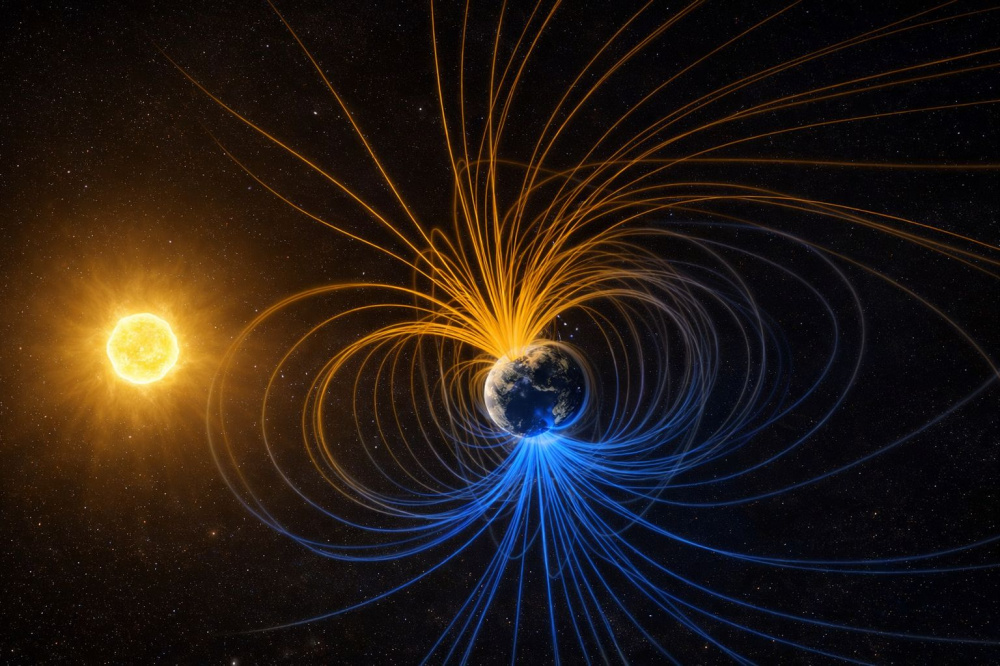
The severity of a geomagnetic storm is typically measured by indices such as the Kp-index, ranging from 0 (very quiet) to 9 (extreme). A higher Kp-index signifies a more intense storm, capable of more widespread and severe impacts. While minor storms (Kp 4-5) might only cause slight disruptions or beautiful auroras, extreme events (Kp 7-9) hold the potential for significant societal upheaval, even in regions far from the magnetic poles.
Charlotte's unique vulnerability
Why focus on Charlotte, a city nestled in the southeastern United States, when discussing geomagnetic storms? The answer lies in its distinct characteristics: a rapidly growing metropolitan area, a significant financial hub, a critical transportation nexus, and a region increasingly reliant on interconnected technological systems. Unlike cities closer to the geomagnetic poles, Charlotte is not a prime location for aurora borealis sightings, yet its low latitude does not grant it immunity from the more insidious effects of space weather.
A nexus of finance and infrastructure
Charlotte is renowned as a major banking center, second only to New York City in the United States. This distinction means its economy is deeply interwoven with precise, high-speed data transmission, satellite communication, and an uninterrupted power supply. Financial markets operate on nanosecond timings, and any disruption to these delicate digital arteries could have profound, cascading effects not just locally, but nationally and even globally.
Beyond finance, Charlotte boasts a robust energy sector, an expanding tech presence, and Charlotte Douglas International Airport, one of the busiest airports in the world. Each of these pillars of the city’s economy and daily life relies heavily on technologies that are sensitive to geomagnetic disturbances. The very attributes that make Charlotte a thriving modern city also heighten its potential vulnerabilities when faced with an extreme space weather event.
“The invisible waves from a distant sun can ripple through our most tangible urban arteries, revealing the surprising fragility of our technologically advanced world.”
Ripples through the grid
The most widely recognized and potentially catastrophic impact of severe magnetic storms on Earth is their effect on electrical power grids. However, the scope of potential disruption extends far beyond just power, reaching into the very fabric of our communication and navigation systems.
Power grid vulnerabilities
When Earth's magnetic field fluctuates rapidly during a geomagnetic storm, it induces electric currents in long conductors on the ground, such as power transmission lines. These Geomagnetically Induced Currents (GICs) flow through the grid, placing immense stress on transformers, particularly large high-voltage transformers. GICs can cause transformers to overheat, leading to damage, protective relays to trip, and ultimately, widespread power outages. A major storm could trigger cascading blackouts across vast regions, potentially lasting for days, weeks, or even months if critical equipment is destroyed.
Charlotte's regional power grid, like many across the nation, is a complex network of generators, transmission lines, and substations. While engineers continually work to harden these systems against various threats, the scale and speed of GICs during an extreme geomagnetic storm present a unique challenge. A prolonged power outage in Charlotte would not merely be an inconvenience; it would cripple the city's financial sector, disrupt water and sewage systems (which rely on electrically powered pumps), halt transportation, and severely impact emergency services.
Communication and navigation in peril
Beyond the power grid, magnetic storms pose a significant threat to our increasingly satellite-dependent world. Satellites orbiting Earth can experience increased drag, radiation damage to electronics, and disorientation. This could lead to:
- Disruption of satellite television and internet services
- Interference with GPS signals, critical for modern navigation, logistics, and timing synchronization
- Breakdown of long-range radio communications, including those used by aviation and maritime industries
- Errors in precision timing systems vital for financial transactions and cellular networks
For Charlotte, a city whose economic pulse beats to the rhythm of global finance and air traffic, these communication and navigation disruptions would be severe. Airlines operating out of Charlotte Douglas International Airport rely on GPS for precise navigation, and air traffic control depends on reliable radio communication. The banking industry, with its intricate web of real-time transactions, needs flawless timing synchronization that GPS provides. Even localized outages of these services could have broad economic repercussions.
The ripple effect
While the technical impacts on infrastructure are significant, the ultimate effect of a severe magnetic storm would be felt most acutely by the residents of Charlotte in their daily lives. The conveniences and necessities that modern urban dwellers take for granted would vanish, challenging the very fabric of societal order and emergency response capabilities.
Life without electricity
A widespread, prolonged power outage would plunge Charlotte into darkness. Traffic lights would cease to function, creating chaos on the roads. Elevators in towering buildings would trap occupants. Refrigeration would fail, leading to food spoilage. Heating and air conditioning would stop, posing health risks depending on the season. ATMs would be inoperable, and electronic payment systems defunct, rendering cash king in a world suddenly reliant on barter or a strained, limited supply of physical currency.
Access to clean water would become a critical concern as pumps fail. Fuel stations, dependent on electricity to operate pumps, would dry up. Communication would be drastically curtailed, with cell towers out of service and internet connectivity nonexistent. Families would be cut off, and the flow of information vital for public safety would be severely hampered.
Challenges for emergency response
Emergency services – police, fire, and medical – would face unprecedented challenges. Without reliable communication, coordination would be difficult. Hospitals, while often equipped with backup generators, would face strain as resources dwindle and the ability to transfer patients or receive supplies becomes compromised. The sheer scale of potential medical emergencies arising from a sustained outage, coupled with impaired transportation and communication, could overwhelm existing systems.
The urban environment, typically a symbol of progress and security, could quickly become a landscape of isolation and vulnerability. Preparing for such an event involves not just technological resilience but also community readiness and individual preparedness, acknowledging that our highly connected lives are also deeply fragile.
Interesting facts about magnetic storms
- The Carrington Event (1859) A legendary geomagnetic storm, it caused telegraph systems to fail, shocking operators and even setting some telegraph papers on fire. Auroras were seen as far south as Cuba and Hawaii, demonstrating the global reach of extreme events. If a storm of this magnitude hit today, experts predict it could cause trillions of dollars in damage and widespread, prolonged blackouts.
- Auroras beyond the poles While typically observed near the Arctic and Antarctic, intense geomagnetic storms can push the aurora oval equatorward, making auroras visible at much lower latitudes. During the Carrington Event, people in Charlotte might have witnessed the celestial ballet of the aurora borealis painting the night sky, a phenomenon usually reserved for more northern climes.
- Animal compasses Some animals, including birds, turtles, and even bacteria, use Earth's magnetic field for navigation. Intense geomagnetic storms can temporarily disrupt these biological compasses, potentially affecting migration patterns and behavior.
- Space weather forecasting Just as we have terrestrial weather forecasts, there's a growing field of space weather forecasting. Agencies like NOAA's Space Weather Prediction Center (SWPC) monitor the sun 24/7, providing alerts and warnings about solar flares and CMEs, giving critical lead time for mitigation efforts on Earth.
- Underground cables are not immune While often seen as safer than overhead lines, long underground cables, such as those used for telecommunications or pipelines, can also pick up GICs, leading to corrosion and signal degradation over time, though generally less immediately dramatic than power grid impacts.
- Radiation exposure for astronauts and high-altitude flights Beyond Earth's surface, magnetic storms significantly increase radiation levels in space, posing risks to astronauts and potentially to passengers and crew on high-altitude polar flights, though these are usually rerouted during major events.
Mitigation and preparedness
Acknowledging the potential for magnetic storms to impact Charlotte is the first step towards building resilience. While we cannot prevent solar eruptions, we can implement strategies to mitigate their effects and enhance the city's ability to recover.
Hardening the power grid
Efforts are underway globally to fortify power grids against GICs. These measures include:
- Installing GIC blocking devices
These specialized capacitors can prevent or reduce the flow of GICs into transformers.
- Implementing redundant systems
Having backup transformers and alternative transmission routes can help reroute power and speed up recovery.
- Developing advanced monitoring
Better real-time monitoring of GICs and transformer health allows for proactive measures during a storm.
- Strategic inventory of spare parts
Ensuring a readily available supply of critical, long lead-time components like large power transformers, which can take months or even years to manufacture and transport.
For Charlotte, as a critical node in the national grid, investing in these hardening strategies is paramount. The regional utility providers play a crucial role in assessing vulnerabilities and implementing protective measures that safeguard the supply of electricity to homes, businesses, and essential services.
Protecting communications and data
Given Charlotte's status as a financial hub, safeguarding communication networks and data integrity is equally vital. This involves:
- Diversifying communication pathways
Relying on multiple forms of communication (fiber optics, ground-based microwave, satellite) rather than a single point of failure.
- GPS resilience
Developing systems that can operate with degraded GPS signals or incorporate alternative navigation and timing methods.
- Cybersecurity enhancements
Geomagnetic storms can also impact network stability, potentially creating vulnerabilities that cyber attackers could exploit. Robust cybersecurity protocols become even more critical.
The financial institutions in Charlotte, along with data centers and tech companies, must continue to invest in resilient architectures and disaster recovery plans that account for space weather events, ensuring the continuous flow of information that underpins their operations.
Community and individual readiness
Beyond infrastructure, community and individual preparedness are key. This includes:
- Public awareness campaigns
Educating residents about the risks of geomagnetic storms and basic preparedness steps.
- Emergency planning
Local government and emergency services need to integrate space weather scenarios into their disaster response plans, focusing on communication protocols, resource allocation, and maintaining critical services during prolonged outages.
- Individual preparedness
Encouraging households to have emergency kits with food, water, medical supplies, battery-powered radios, and alternative light sources, similar to preparedness for hurricanes or other natural disasters.
A resilient Charlotte is one where both its infrastructure and its citizens are informed and prepared, understanding that complex modern life requires vigilance against threats both terrestrial and celestial.
The unseen threat
Magnetic storms represent a unique challenge for modern society. They are invisible, originate from millions of miles away, and their most severe impacts are often indirect, rippling through the very technologies that define our contemporary existence. For a city like Charlotte, synonymous with progress and innovation, the consideration of such an arcane threat might seem out of place. Yet, it is precisely in such highly developed, interconnected urban centers that the vulnerabilities are most pronounced.
The intricate dance between our sun and Earth's protective magnetic field is a perpetual one. While most geomagnetic events pass with little notice beyond scientific observation, the potential for a truly extreme storm remains a tangible risk. Understanding this risk, from the fiery heart of the sun to the intricate circuits of a Charlotte transformer, is not about fear-mongering but about fostering a deeper appreciation for the delicate balance that sustains our technological world. It's a call for continuous innovation in resilience, for collaboration between science and industry, and for an enlightened public prepared for the rare but powerful whispers of a distant cosmic tempest.