
The urban tapestry of Baltimore, with its historic harbor, vibrant neighborhoods, and crucial infrastructure, seems far removed from the turbulent ballet of solar flares and coronal mass ejections that characterize magnetic storms. Yet, the subtle, invisible forces emanating from our sun have the potential to ripple through the very fabric of this East Coast metropolis, influencing everything from the stability of its power grid to the precision of its navigation systems. This exploration delves into the intriguing intersection of cosmic phenomena and terrestrial realities, examining how magnetic storms, though often perceived as distant celestial events, can indeed cast their long, invisible shadow over Baltimore, demanding a deeper understanding of our vulnerabilities and our capacity for resilience.
Magnetic storms and their global impact
Understanding geomagnetic disturbances
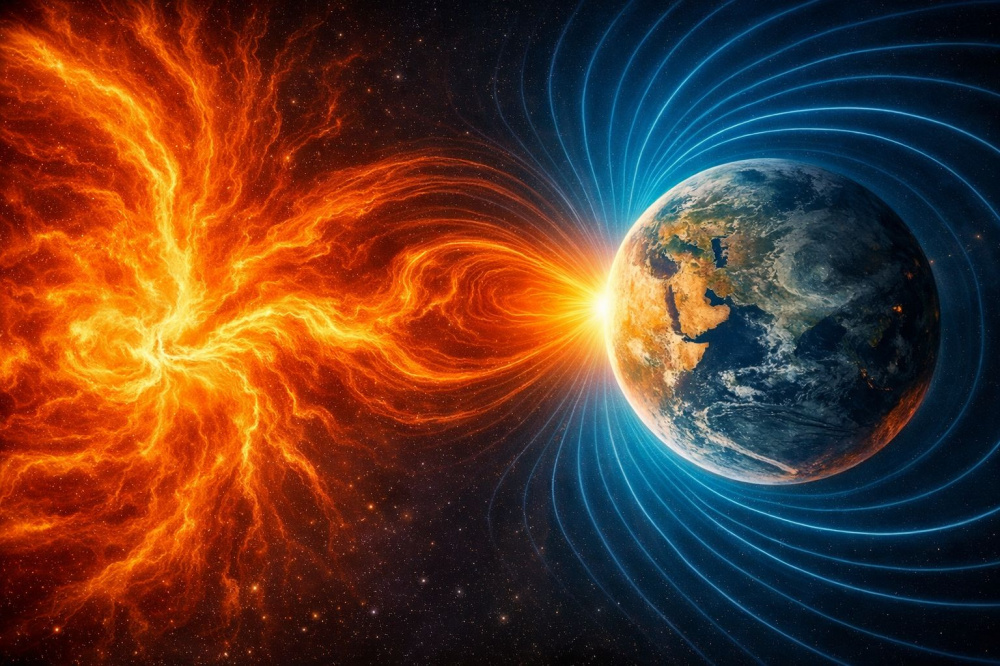
At the heart of every magnetic storm lies the sun, a colossal thermonuclear furnace constantly emitting a stream of charged particles known as the solar wind. Periodically, this solar activity intensifies, manifesting in spectacular events such as solar flares – sudden bursts of radiation – and coronal mass ejectons (CMEs), which hurl billions of tons of magnetized plasma into space at speeds ranging from a few hundred to over a thousand miles per second. When these CMEs or high-speed solar wind streams intersect with Earth's magnetosphere, the protective bubble generated by our planet's own magnetic field, they can cause a disturbance known as a geomagnetic storm.
The severity of these storms is typically measured by indices like the Kp-index, ranging from 0 to 9, with higher numbers indicating more intense disturbances. These geomagnetic storms are not merely spectacular celestial light shows; they represent a significant transfer of energy into Earth's near-space environment, with widespread implications that stretch far beyond the polar auroral zones. The interaction between the solar plasma and Earth's magnetic field induces complex currents within the ionosphere and even directly on the ground, creating effects that can disrupt human technology and infrastructure in unexpected ways.
The sun, an seemingly benign giver of light and life, possesses the raw power to unleash cosmic tempests that can challenge the very resilience of our technological civilization.
Historical context of severe storms
While often unnoticed by the general public, the history of geomagnetic storms is punctuated by events that serve as stark reminders of their destructive potential. The most renowned example is the Carrington Event of 1859, an unparalleled solar superstorm that caused widespread disruption to telegraph systems across Europe and North America, delivering electric shocks to operators and even setting telegraph papers ablaze. This historical benchmark underscores that even in an era of nascent electrical technology, the sun's fury could leave a profound mark.
More recently, a severe geomagnetic storm in March 1989 plunged large parts of Quebec, Canada, into a nine-hour blackout, affecting millions of residents. The storm's rapid onset led to the tripping of safety relays on Hydro-Québec's power grid, causing a cascading failure that left the region without electricity. This incident, occurring in a modern, industrialized nation, highlighted the vulnerability of contemporary power grids to geomagnetically induced currents (GICs). These historical events are not just fascinating anecdotes; they are critical lessons, urging contemporary societies like Baltimore to assess their vulnerabilities and bolster their resilience in an increasingly interconnected and technologically dependent world.
Baltimore's unique vulnerability and resilience
Geographical considerations
Baltimore, situated at a mid-latitude (approximately 39.3° N), is generally less prone to the stunning auroral displays that characterize high-latitude regions. However, this geographical position does not render it immune to the less visible, yet potentially more disruptive, effects of magnetic storms. The Earth's magnetic field channels the most intense GICs towards higher latitudes, but strong storms can generate significant currents even at Baltimore's position. Furthermore, as a coastal city on the Chesapeake Bay, Baltimore's unique geological and hydrological features play a role. The presence of conductive saltwater, the vast network of pipelines, and the extensive port infrastructure introduce specific vulnerabilities that might not be as pronounced in landlocked cities.
The conductivity of the underlying bedrock and soil in the Baltimore-Washington metropolitan area also influences how GICs are generated and propagated. Areas with highly conductive geology can sometimes mitigate the impact by dispersing currents, while resistive areas might concentrate them, making infrastructure more susceptible. Understanding these localized geophysical characteristics is crucial for accurately assessing risk and developing targeted mitigation strategies for Baltimore's specific environment.
Urban infrastructure at risk
Baltimore's identity as a major East Coast port and an economic hub means it harbors a complex web of critical infrastructure elements, all potentially susceptible to geomagnetic disturbances. The power grid, operated by Baltimore Gas and Electric (BGE), relies on vast networks of transmission lines and substations, where large transformers are particularly vulnerable to GICs. A disruption here could cascade into widespread blackouts, affecting homes, businesses, and essential services.
Beyond electricity, the city's extensive network of gas and oil pipelines is also at risk. GICs can accelerate corrosion in these pipelines, compromising their structural integrity over time and potentially leading to leaks or ruptures. Communication systems, including cell towers, internet infrastructure, and radio services, depend on stable electromagnetic environments, making them susceptible to outages or signal degradation. Furthermore, Baltimore's robust transportation network, encompassing air traffic control for BWI Marshall Airport, crucial maritime navigation for the Port of Baltimore, and local transit systems, all rely on GPS and other electronic aids that can be disrupted by solar events, leading to delays, errors, or even safety concerns.
The subtle dance of magnetic fields over the Chesapeake
Impact on the power grid
When a geomagnetic storm rages, the fluctuating magnetic fields induce electric currents in long conductors, such as power transmission lines. These geomagnetically induced currents (GICs) are low-frequency, quasi-direct currents that flow through the power grid, finding paths to ground through the neutral points of transformers. Unlike the alternating currents (AC) for which transformers are designed, GICs can drive the transformer cores into saturation. This saturation leads to increased reactive power demand, harmonics, and localized heating, all of which can severely stress and potentially damage these vital components. A single damaged transformer can take months or even years to replace, given their immense size and specialized manufacturing process, leading to prolonged power outages.
For BGE, managing these risks involves constant vigilance and strategic planning. The utility must monitor space weather forecasts, understand the specific vulnerabilities of its extensive infrastructure, and potentially implement operational adjustments during severe storm warnings. The complexity of Baltimore's urban and suburban grid, with its intricate network of interconnected lines and substations, means that a GIC-induced failure in one area could trigger a domino effect across the entire system, plunging large sections of the city and surrounding areas into darkness.
The silent hum of Baltimore's power grid, a constant companion to urban life, belies its vulnerability to unseen cosmic forces, capable of turning light into darkness with an invisible surge.
Disruptions to navigation and communication
Modern life in Baltimore, like any major city, is inextricably linked to precise navigation and robust communication systems. Both rely heavily on satellites and the stable propagation of radio waves, factors profoundly affected by magnetic storms. GPS (Global Positioning System) accuracy, critical for everything from port logistics and emergency vehicle dispatch to ride-sharing services and personal navigation, can degrade significantly during a storm. The ionosphere, a layer of Earth's atmosphere that GICs can disturb, refracts and delays satellite signals, introducing errors that can amount to tens or even hundreds of feet, making precise positioning unreliable.
Furthermore, magnetic storms can cause widespread radio blackouts. High-frequency (HF) radio, used for long-distance communication by maritime vessels, aviation, and amateur radio operators, is particularly susceptible. The enhanced ionization in the ionosphere absorbs these radio waves, making communication impossible. For a bustling port city like Baltimore, where precise ship movements and constant communication are paramount for safety and efficiency, such disruptions could lead to significant operational delays, economic losses, and even potential hazards for vessels navigating the busy channels of the Chesapeake Bay. The ripple effect could touch every facet of the city's logistical and emergency response capabilities.
Interesting facts about magnetic storms and baltimore
- Solar flares can travel to Earth at the speed of light, meaning their electromagnetic radiation impacts us in about 8 minutes. CMEs, carrying the plasma that causes geomagnetic storms, travel slower, taking 1 to 3 days to reach Earth.
- The largest recorded geomagnetic storm, the Carrington Event of 1859, was so powerful that auroras were reportedly visible as far south as the Caribbean, hinting at the potential for even Baltimore's skies to glow under extreme conditions.
- Baltimore's original telegraph lines in the mid-19th century would have been vulnerable to GICs, much like those that sparked fires during the Carrington Event, although specific local reports from that period are scarce.
- The energy released by a single major solar flare can be equivalent to millions of hydrogen bombs, showcasing the immense power driving these celestial events.
- Baltimore's Francis Scott Key Bridge, a vital artery for the port, relies on electronic systems for monitoring and potentially even for future automated traffic management, making its operational continuity indirectly tied to space weather stability.
- While a large proportion of Earth's magnetic field lines dip into the polar regions, allowing aurora to be common, even mid-latitude cities like Baltimore can experience GICs because electric currents can flow through the entire ground network and power grid.
- The cost of a severe, modern-day geomagnetic storm could be in the trillions of dollars globally, with recovery potentially taking years, highlighting the economic stakes for major urban centers like Baltimore.
Preparing Baltimore for a solar tempest
Mitigation strategies for utilities
For utilities like Baltimore Gas and Electric (BGE), preparing for magnetic storms involves a multi-pronged approach focused on hardening the grid and enhancing monitoring capabilities. One key strategy is the installation of GIC blocking devices, which are designed to prevent or reduce the flow of geomagnetically induced currents into sensitive transformer windings. Upgrading older transformers with more resilient models, built to withstand higher levels of GIC saturation, is another long-term investment. Additionally, BGE likely employs sophisticated real-time space weather monitoring systems, often in collaboration with agencies like NOAA's Space Weather Prediction Center, to receive early warnings of potential storms. This allows operators to take proactive measures, such as temporarily reducing voltage, adjusting load distribution, or even powering down specific vulnerable components if a severe storm is imminent. These contingency plans are regularly reviewed and updated to adapt to evolving threats and technological advancements.
Public awareness and community preparedness
Beyond the technical efforts of utilities, community-wide preparedness in Baltimore is crucial. Educating residents about the potential impacts of severe magnetic storms, even if rare, empowers them to take appropriate precautions. This might include encouraging families to maintain emergency kits with non-perishable food, water, flashlights, and battery-powered radios, similar to preparedness for hurricanes or blizzards. Disseminating information on communication alternatives, such as landline phones (if operational), amateur radio networks, or designated emergency communication hubs, can be vital during widespread power or communication outages. Local government agencies, such as the Maryland Emergency Management Agency (MEMA) and Baltimore City's Office of Emergency Management, play a critical role in developing and communicating these preparedness guidelines, coordinating response efforts, and ensuring that essential services can continue even in the face of significant disruption.
In the face of cosmic events, preparedness is not about preventing the storm, but about weathering it with resilience, ensuring the heartbeat of the city continues, albeit with a different rhythm.
The role of technology and scientific advancement
The global scientific community continuously strives to improve our understanding and predictability of space weather. For Baltimore and other vulnerable regions, advances in technology and scientific research are paramount. Improved space weather forecasting models, leveraging data from an expanding constellation of solar observation satellites (like NOAA's GOES series and NASA's STEREO mission), provide more accurate and timely warnings of approaching CMEs. This extended lead time allows utilities and emergency managers to implement mitigation strategies more effectively. Research into new, more resilient grid technologies, such as advanced materials for transformers or distributed energy resources that can operate independently during outages, also contributes significantly to long-term preparedness. Furthermore, universities and research institutions, including those in the Baltimore-Washington corridor, contribute to this scientific endeavor, pushing the boundaries of our knowledge and developing innovative solutions to protect our increasingly technology-dependent society from the whims of the sun.
Beyond the gloom The unexpected beauty and scientific curiosity
Auroral displays in unusual latitudes
While typically confined to the polar regions, the most extreme geomagnetic storms possess enough energy to push the auroral oval far south, occasionally making the aurora borealis visible from latitudes where such spectacles are exceedingly rare. For Baltimore, witnessing the Northern Lights would be an extraordinary, perhaps once-in-a-lifetime event. Imagine the dark, star-dusted sky above the Inner Harbor or the historic Fells Point, suddenly painted with ethereal greens, reds, and purples, a cosmic light show usually reserved for Alaska or Scandinavia. Such an event would transform the city's nightscape, offering a breathtaking reminder of the powerful, beautiful forces at play in our solar system, momentarily overshadowing the more mundane concerns of urban life and technology. It's a rare gift from the sun, a stunning counterbalance to its potential for disruption.
Baltimore as a hub for scientific inquiry
The intellectual landscape of Baltimore, anchored by institutions like Johns Hopkins University and home to the Space Telescope Science Institute (STScI) – which operates the Hubble Space Telescope and James Webb Space Telescope – positions it as a potential hub for scientific inquiry even into space weather phenomena. While STScI's primary focus is astrophysics, the presence of world-class scientists and engineers fosters an environment ripe for interdisciplinary research. Experts in electrical engineering, atmospheric science, and geophysics at local universities could contribute significantly to understanding localized GIC effects in Baltimore's specific geological context, or developing advanced resilience strategies for urban infrastructure. There's also potential for citizen science initiatives, where local enthusiasts could contribute to monitoring projects or participate in community-based resilience efforts, further integrating Baltimore into the broader scientific understanding of our dynamic space environment.