
A cosmic dance over the capital of Texas
Austin, Texas, a vibrant tapestry of live music, innovative technology, and a distinct cultural identity, often finds itself at the forefront of urban evolution. Yet, beneath its bustling streets and soaring skyscrapers, and indeed, far above them, lies a subtle vulnerability to cosmic events originating millions of miles away. Magnetic storms, ethereal ripples in Earth's protective magnetic shield caused by the sun's volatile outbursts, present a fascinating and increasingly relevant topic for this burgeoning metropolis. Understanding their genesis, their potential impact, and how a city like Austin prepares for such celestial interference is crucial in an increasingly interconnected world.
These phenomena, often invisible to the naked eye, can profoundly affect the very infrastructure that powers Austin's innovative spirit, from its expansive data centers to its intricate communication networks. As a hub of technological advancement and home to critical energy infrastructure, Austin offers a unique lens through which to examine the terrestrial consequences of solar caprice. This article delves into the intricate relationship between our star and our city, exploring how space weather might uniquely touch the heart of the Lone Star State.
The sun's temper and Earth's shield
Magnetic storms, more formally known as geomagnetic storms, are not meteorological events in the traditional sense. They do not bring wind or rain. Instead, they represent a colossal disturbance of Earth's magnetosphere, the protective bubble generated by our planet's molten iron core. The primary culprits behind these cosmic disruptions are solar flares and coronal mass ejections (CMEs) from the sun. Solar flares are intense bursts of radiation across the electromagnetic spectrum, while CMEs are vast expulsions of plasma and magnetic field from the sun's corona.
Coronal mass ejections and their journey
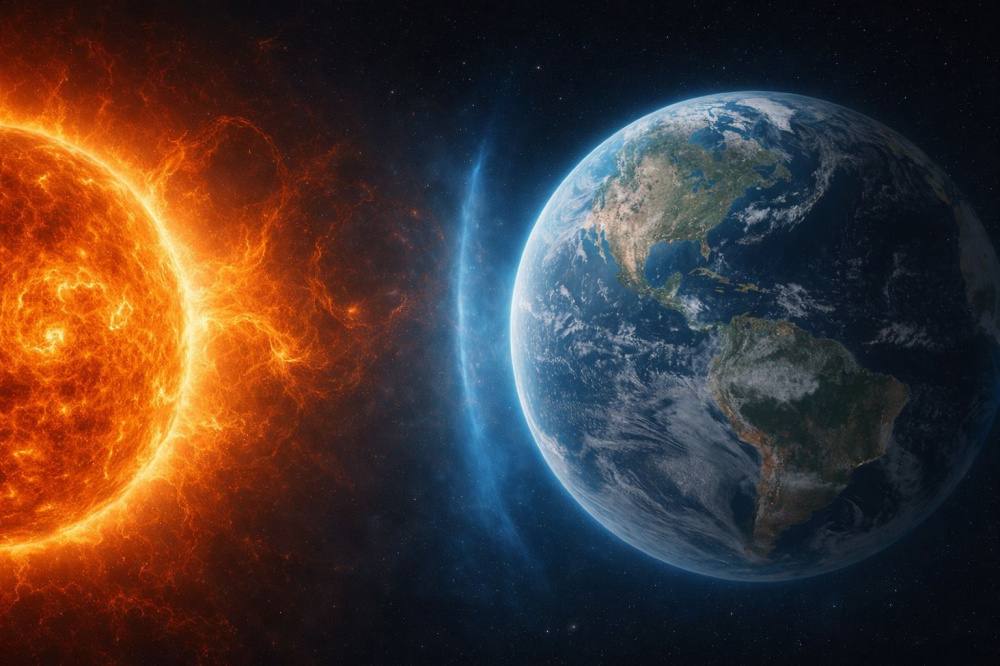
When a CME erupts from the sun and is directed towards Earth, it travels through interplanetary space as a high-speed wave of charged particles and magnetic fields. This journey can take anywhere from one to five days. Upon reaching Earth, this solar material collides with our planet's magnetosphere. The interaction is akin to a cosmic pressure wave striking a force field, compressing it on the sunward side and stretching it into a long tail on the night side.
The sun, our life-giver, occasionally flexes its magnetic muscles with such ferocity that its ripples are felt across 93 million miles, touching everything from our power grids to the very aurora that paints our polar skies.
If the magnetic field within the CME is oriented oppositely to Earth's magnetic field, they can "reconnect," allowing solar plasma to funnel down along magnetic field lines towards Earth's polar regions. This influx of charged particles energizes molecules in the upper atmosphere, leading to the spectacular displays of the aurora borealis and aurora australis. However, it also induces powerful electrical currents within Earth's magnetosphere and ionosphere, creating the very "magnetic storm" that can have far-reaching effects.
Impacts on terrestrial systems in Austin
While Austin is far from the auroral zones, severe geomagnetic storms can still profoundly influence its infrastructure. The city's rapid growth and reliance on sophisticated technology make it particularly sensitive to these cosmic disturbances. The effects are typically indirect, manifesting through induced currents and signal disruptions.
Power grid vulnerabilities
One of the most significant concerns for a modern city like Austin during a strong magnetic storm is its potential impact on the electrical power grid. Geomagnetic Induced Currents (GICs) are created when the Earth's magnetic field fluctuates rapidly. These GICs can flow through long conductors, such as power transmission lines, high-voltage transformers, and pipelines. In power transformers, GICs cause partial saturation, leading to increased reactive power demand, harmonics, and potentially overheating and damage.
Austin, as part of the Texas Interconnection (ERCOT grid), relies on a vast and complex network of transmission lines and substations. A large-scale geomagnetic storm could stress this system, leading to voltage fluctuations, widespread blackouts, or even permanent damage to critical transformers, which are incredibly costly and time-consuming to replace. The economic ramifications for a tech-centric city could be immense.
Communication and navigation challenges
Satellite communications, vital for everything from GPS navigation to television broadcasts and internet services, are susceptible to space weather. During a geomagnetic storm, the increased ionization and turbulence in Earth's ionosphere can degrade or even block radio signals, especially those passing through it. This can lead to errors in GPS readings, disruptions in satellite phone services, and challenges for aviation and maritime navigation. Austin's numerous tech companies and its general population are heavily reliant on these systems for daily operations and personal connectivity.
Data center resilience
Austin hosts a significant number of data centers, integral to the operations of global tech giants and numerous startups. While direct damage to data center hardware from GICs is less likely than to power grid transformers, the reliance on stable power and communication links makes them indirectly vulnerable. Any widespread power outages or significant communication disruptions caused by a magnetic storm could impact data center operations, potentially leading to service interruptions, data loss, or significant recovery efforts.
Austin's unique position and preparedness
Austin's profile as a dynamic technology hub, coupled with its location within a robust energy grid, places a spotlight on its space weather resilience. While not on the front lines of auroral displays, its technological arteries are very much exposed to the sun's magnetic breath.
Monitoring and forecasting
Globally, agencies like NOAA's Space Weather Prediction Center (SWPC) continuously monitor the sun and forecast space weather events. These forecasts provide crucial lead time for utilities and critical infrastructure operators in regions like Austin to take mitigating actions, such as adjusting power loads or placing transformers in standby mode. Local entities, including ERCOT and Austin Energy, incorporate these warnings into their operational planning and emergency response protocols.
Hardening infrastructure
Utilities are increasingly investing in studies and upgrades to harden their infrastructure against GICs. This includes installing GIC-blocking devices, improving transformer resilience, and developing robust emergency response plans. For Austin, a city committed to innovation, this extends to ensuring that the digital backbone supporting its tech industry is equally resilient.
Interesting facts about magnetic storms
- The Carrington event The strongest recorded geomagnetic storm occurred in September 1859, known as the Carrington Event. It caused widespread telegraph system failures, shocking operators and igniting telegraph papers. Auroras were seen as far south as the Caribbean.
- Power grid blackouts A relatively minor geomagnetic storm in March 1989 caused a nine-hour blackout across Quebec, Canada, leaving six million people without power and resulting in significant economic losses.
- GPS accuracy Space weather can induce errors in GPS signals of several meters or even tens of meters, affecting precision agriculture, surveying, and potentially autonomous vehicles.
- Pipeline corrosion Geomagnetic Induced Currents can also flow through long metal pipelines, potentially accelerating corrosion and increasing maintenance costs for oil and gas infrastructure, prevalent in Texas.
- Rare Austin auroras While extremely rare, exceptionally powerful geomagnetic storms have historically produced auroras visible at very low latitudes, meaning under extraordinary circumstances, a faint glow could theoretically be seen even from Austin's skies.
Citizen awareness and engagement
While the primary responsibility for large-scale preparedness falls to utilities and governmental agencies, citizen awareness plays a role. Understanding the potential for localized power outages or communication disruptions can help individuals and businesses make informed decisions, such as having backup power sources or alternative communication plans.
For those intrigued by the cosmic connection, various online resources and apps track space weather in real-time. Though direct observation of magnetic storms is impossible without specialized equipment, being aware of current space weather alerts can offer a deeper appreciation of our planet's place in the solar system and its constant interaction with its star.
Austin
Austin, with its distinct blend of forward-thinking technology, academic prowess, and a deep appreciation for its natural environment, serves as a compelling microcosm for understanding the broader implications of space weather. The city's future trajectory is inextricably linked to its ability to innovate and adapt, not just to terrestrial challenges but also to the more distant, yet potent, forces emanating from the sun.
In Austin, the hum of servers and the glow of screens are a testament to human ingenuity, yet they whisper a quiet vulnerability to the sun's ancient, untamed power, reminding us that even the most advanced cities remain woven into the fabric of the cosmos.
By fostering continued research, investing in resilient infrastructure, and promoting public awareness, Austin can continue to thrive, safeguarding its digital heartbeat against the silent, invisible force of magnetic storms. The ongoing dialogue between science, industry, and public policy in the face of these cosmic ripples ensures that the "Live Music Capital of the World" remains not only a vibrant cultural center but also a beacon of preparedness in the ever-evolving landscape of space weather impacts.