
The invisible tempest
In the heart of a bustling metropolitan area, where the hum of technology is the constant soundtrack and the rhythm of urban life dictates every pulse, a silent, invisible threat lurks, originating billions of miles away. Arlington, a vibrant tapestry of governmental institutions, cutting-edge tech companies, residential communities, and vital transportation hubs, stands as a paragon of modern connectivity. Yet, this very connectivity, this intricate web of digital and electrical infrastructure, makes it uniquely vulnerable to a phenomenon as ancient as the sun itself: magnetic storms. These cosmic disturbances, born from the fiery crucible of our star, can send ripples through Earth's magnetic field, potentially disrupting the very foundations upon which Arlington's daily life is built. Far from the aurora-drenched skies of polar regions, Arlington's experience with a magnetic storm would be less about a visual spectacle and more about a systemic shock.
Understanding the sun's fiery breath
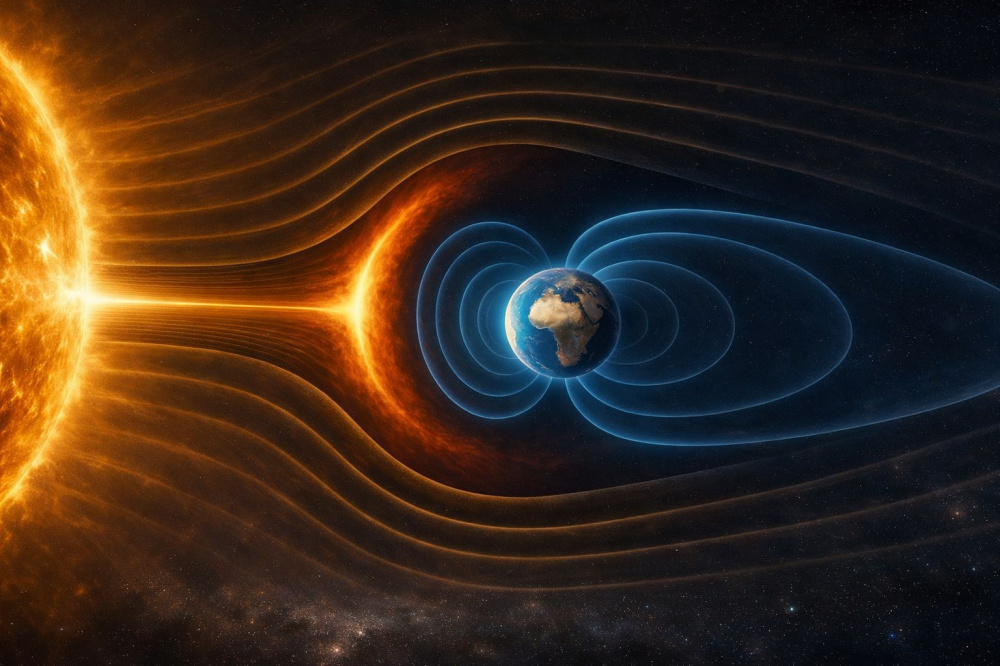
Magnetic storms, scientifically known as geomagnetic storms, are a direct consequence of solar activity. Our sun, a dynamic star, periodically ejects massive clouds of plasma and magnetic fields into space through phenomena like solar flares and coronal mass ejections (CMEs). When these gargantuan bursts of energy are directed towards Earth, they interact with our planet's protective magnetosphere. Imagine Earth wrapped in an invisible shield, constantly deflecting a barrage of charged particles. A particularly powerful CME, traveling at immense speeds, can compress this shield, causing rapid fluctuations in Earth's magnetic field. These fluctuations induce electrical currents, not just in the upper atmosphere, but also, critically, in long conductors on the ground, such as power lines and pipelines.
The journey from the sun to Earth can take anywhere from a few hours to several days, providing a crucial, albeit short, window for prediction and preparation. The National Oceanic and Atmospheric Administration (NOAA) Space Weather Prediction Center (SWPC) continuously monitors solar activity, issuing alerts and warnings based on the intensity of these solar emissions. For a city like Arlington, nestled in the mid-latitudes, the primary concern isn't the direct radiation from a solar flare, which is mostly absorbed by the atmosphere, but the cascade of indirect effects stemming from induced currents and disrupted magnetic fields.
The silent hum of Arlington's modern infrastructure belies a profound interconnectedness, a delicate balance that an unseen cosmic force could profoundly disrupt, reminding us that even in our technological prowess, we remain subject to the universe's grand designs.
Arlington's digital heartbeat
Arlington's existence is inextricably linked to its infrastructure. From the Pentagon's secure communications to the seamless flow of traffic on its highways and the ubiquitous presence of Wi-Fi in its cafes, every aspect relies on a complex network of systems. A severe magnetic storm could test the resilience of these critical components, revealing vulnerabilities that are often overlooked in the daily rush.
The vulnerability of the power grid
Perhaps the most significant threat posed by a severe magnetic storm to Arlington, and indeed to any modern city, is to the electrical power grid. Geomagnetically induced currents (GICs) can flow through long transmission lines, causing transformers to overheat and potentially fail. A cascade of failures across the grid could lead to widespread and prolonged power outages. In Arlington, this wouldn't just mean dark homes; it would cripple traffic lights, disable metro systems, shut down data centers, and bring essential services to a grinding halt. Hospitals would rely on backup generators, which themselves have limited fuel supplies, and communication infrastructure could falter as cell towers lose power.
Communication networks in peril
Our reliance on constant communication is absolute. Cell phones, the internet, satellite communications for GPS, and emergency services all depend on intricate networks that are susceptible to geomagnetic disturbances. Satellites in orbit can be affected by increased radiation, leading to temporary or permanent malfunctions. Radio communication, particularly high-frequency bands used by aviation and military, can be severely disrupted. GPS signals, vital for navigation, logistics, and even the timing of financial transactions, could become unreliable or completely unavailable. Imagine Arlington's metro system, its numerous bus routes, and the countless delivery services suddenly devoid of accurate positioning information, creating an unprecedented logistical nightmare.
Transportation and logistics paralysis
Modern transportation, both on the ground and in the air, leans heavily on satellite navigation and sophisticated electronic systems. Aircraft flying into or out of Ronald Reagan Washington National Airport, just across the Potomac, rely on GPS for precision navigation. Air traffic control systems could experience interference. Autonomous vehicles, an emerging technology, would face insurmountable challenges without reliable sensor data and GPS. Within Arlington, the daily commute, the flow of goods, and the ability of emergency responders to navigate quickly would be severely hampered, leading to chaos and potentially dangerous situations.
Beyond the grid
The tangible damage to infrastructure is only one facet of the magnetic storm threat. The secondary and tertiary effects on Arlington's social fabric and economic stability could be equally devastating, creating a ripple effect that touches every resident and business.
Everyday life reimagined
Life without electricity, internet, or reliable communication would fundamentally alter the rhythm of Arlington. ATM machines would cease to function, credit card transactions would be impossible, and the digital economy would grind to a halt. Grocery stores, unable to process payments or maintain refrigeration, would quickly face challenges. Water treatment plants could lose power, impacting potable water supplies. For families, the loss of heating or air conditioning, refrigeration, and communication would create immediate hardships, transforming routine tasks into complex survival challenges.
Economic vulnerabilities exposed
Arlington's economy, driven by government, technology, and a service industry, is highly integrated into the global financial system. A prolonged outage due to a magnetic storm would incur immense economic costs. Businesses unable to operate, employees unable to work, and transactions unable to be processed would lead to massive financial losses. The restoration effort itself would be incredibly expensive, potentially straining local, state, and national resources. Furthermore, the disruption to critical federal agencies located in Arlington could have national and even international repercussions.
The true strength of Arlington, a mosaic of innovation and community, will be tested not by the visible might of human endeavor, but by its capacity to adapt and endure when the invisible forces of the cosmos make their presence known.
Mitigation and preparedness
Recognizing these profound vulnerabilities, various entities in and around Arlington are engaged in continuous efforts to mitigate the risks associated with magnetic storms and enhance preparedness. This involves a multi-layered approach, from governmental planning to individual readiness.
Governmental strategies and contingency plans
At the federal level, agencies like FEMA, DHS, and the Department of Energy have developed strategies for space weather preparedness. These plans include emergency protocols, communication frameworks, and resource allocation for potential widespread disruptions. Locally, Arlington County government, in conjunction with Virginia state authorities, likely has emergency operations plans that factor in large-scale power outages and communication failures, though the specific challenges of a geomagnetic storm present unique considerations. Exercises and drills are crucial for testing these plans and identifying areas for improvement.
Utility company safeguards and resilience
Power companies serving Arlington, like Dominion Energy, are actively investing in making their grids more resilient to GICs. This includes installing specialized equipment, such as GIC blocking devices, upgrading transformers to be more robust, and improving monitoring capabilities to detect and respond to geomagnetic disturbances more effectively. Utilities also collaborate with space weather forecasters to receive early warnings, allowing them to take pre-emptive measures like temporarily reducing voltage or reconfiguring parts of the grid to minimize exposure.
Community and individual preparedness
Ultimately, a resilient Arlington relies on its residents. Preparedness extends beyond infrastructure to the individual and household level. This includes having emergency kits with essential supplies, developing family communication plans, and understanding how to cope without modern amenities for an extended period. Education campaigns can raise awareness about the threat and empower citizens to take proactive steps to safeguard their families.
Here are some essential preparedness steps:
- Stockpile non-perishable food and water for at least two weeks.
- Keep a battery-powered or hand-crank radio for emergency broadcasts.
- Have a supply of cash, as electronic transactions may be impossible.
- Ensure first aid kits are fully stocked and medicines are on hand.
- Develop a family emergency plan, including meeting points and out-of-state contacts.
- Charge all portable electronic devices and have power banks ready.
Interesting facts about magnetic storms
Delving deeper into the fascinating world of space weather reveals some intriguing details that often go unnoticed:
- The most famous magnetic storm, the Carrington Event of 1859, caused telegraph systems to fail, gave operators electrical shocks, and even set some telegraph papers on fire. Auroras were visible as far south as the Caribbean.
- While rare, extreme geomagnetic storms are considered "black swan" events, meaning they are highly improbable but would have catastrophic consequences if they occurred.
- Geomagnetic storms can affect bird migration and other animal behaviors, as some species use Earth's magnetic field for navigation.
- Even relatively weak magnetic storms can cause beautiful auroras, visible in higher latitudes, but a powerful storm can push them much further south, potentially making them visible from parts of the northern U.S.
- The sun's magnetic activity follows an approximately 11-year cycle, with periods of increased and decreased solar flares and CMEs. We are currently heading towards a solar maximum, which means an increased likelihood of powerful space weather events.
- Astronauts in space are at greater risk from radiation during solar flares and CMEs, necessitating shelter in protected parts of spacecraft or the International Space Station.
Historical echoes and the future's challenge for Arlington
While a Carrington-level event hasn't directly impacted our modern, tech-dependent society, smaller, significant events have provided glimpses into the vulnerabilities. The 1989 Quebec power blackout, affecting millions, was directly attributed to a magnetic storm. This incident served as a stark reminder that our increasingly complex infrastructure is not immune to cosmic forces. For Arlington, a city at the epicenter of national and international affairs, such an event would be profoundly disruptive.
The future for Arlington, and indeed for all technologically advanced urban centers, necessitates a continuous evolution of preparedness. As technology advances, new vulnerabilities may emerge, requiring adaptive strategies. The proliferation of smart grids, autonomous systems, and an ever-increasing demand for instantaneous data transfer only amplifies the potential impact of space weather. The challenge lies in balancing innovation with resilience, ensuring that the convenience and efficiency of modern life are not undermined by unforeseen cosmic events.
Protecting Arlington's future
The conversation around magnetic storms in Arlington is not one of impending doom, but rather of proactive vigilance and informed resilience. It's about understanding that our highly connected world, while immensely beneficial, also harbors unseen fragilities. By investing in robust infrastructure, fostering inter-agency cooperation, and empowering its citizens with knowledge, Arlington can fortify itself against the invisible tempest. The distant fire of the sun will continue its ancient dance, but through foresight and preparation, Arlington can ensure its digital heartbeat continues to pulse, even when the cosmic ballet sends its most profound reverberations across the heavens.